If your apartment doesn’t get much sunlight, you’ve probably been told that growing food indoors is impossible. That’s not quite true. While you won’t be harvesting tomatoes or peppers in a dim corner, there are edible plants that can handle surprisingly little light.
The trick is understanding what “low light” actually means indoors. Most apartments labeled as low-light still get some natural light during the day, just not direct sun. Maybe you have a north-facing window, or your windows are partially blocked by buildings or trees. That filtered, indirect light is enough for certain plants to grow, even if it feels dim to you.
Here’s the reality check: low-light edible plants grow more slowly than their sun-loving cousins, and they won’t produce massive harvests. You’re not going to feed your family from a windowsill. But you can absolutely grow fresh herbs for cooking, snip greens for salads, or harvest shoots and sprouts that add real flavor to your meals.
The key is choosing the right plants and adjusting your expectations. Some leafy greens and herbs have evolved to grow on forest floors or in the shade of larger plants. They’re built for low light conditions and will reward you with steady, modest growth. This guide will walk you through the best options for apartment gardeners who want to grow something edible without needing a sun-drenched balcony.
Leafy greens that stay productive with less sun
Leafy greens are your best friends when you’re working with dim apartment windows. Unlike tomatoes or peppers that need serious sun to make fruit, greens just need to grow leaves. That’s something they can do surprisingly well in lower light.
Loose-leaf lettuces are the easiest place to start. Varieties like ‘Black Seeded Simpson’ and ‘Tom Thumb’ will keep producing tender leaves even if they’re only getting a few hours of indirect light each day. They grow slower than they would outdoors, but that’s actually a bonus. The leaves stay sweeter and less bitter when they’re not rushing to maturity in blazing sun.
Spinach can be tricky in hot, bright spots because it bolts quickly. But in a cooler, shadier apartment corner, varieties like ‘Bloomsdale Long Standing’ will give you weeks of harvestable leaves. The texture might be slightly thinner than grocery store spinach, but the flavor is excellent.
Arugula is another winner for low light. ‘Astro’ is a reliable variety that tolerates shade and still gives you that peppery bite. It grows fast even without much sun, which means you’ll be snipping leaves for salads within a few weeks of planting.
Asian greens are surprisingly forgiving too. Mizuna varieties like ‘Early Mizuna’ have feathery, mild leaves that work raw or cooked. Tatsoi, especially the ‘Rosette’ type, forms pretty little clusters of spoon-shaped leaves with a subtle mustard flavor.
The trick with all these greens is the cut-and-come-again method. Instead of pulling up the whole plant, just snip the outer leaves when they’re big enough to eat. The plant keeps growing from the center, giving you multiple harvests from the same pot. It’s like having a little salad bar that refills itself.
Herbs that don’t demand a sunny sill
Most people assume herbs need a blazing bright windowsill to thrive. That’s true for basil and rosemary, which sulk without direct sun. But several kitchen herbs actually tolerate lower light surprisingly well, making them ideal for apartments where the sunniest spot is already taken by your favorite chair.
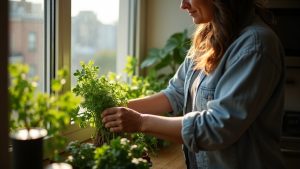
Chives are probably the easiest place to start. These slender green shoots grow steadily even on a counter near a north-facing window. Snip them into scrambled eggs, baked potatoes, or cream cheese, and they’ll keep producing more. A healthy chive plant in low light looks compact and upright, not stretched or pale.
Parsley is another reliable choice. Both curly types like ‘Forest Green’ and flat-leaf varieties such as ‘Italian Giant’ will grow in modest light, though more slowly than outdoors. The leaves stay dark green and sturdy if the plant is happy. Use parsley in just about everything—soups, salads, pasta, grain bowls—and you’ll quickly see why it’s worth the pot space.
Mint, especially spearmint, is famously vigorous. It tolerates shade and keeps pushing out fresh leaves for teas, cocktails, and Middle Eastern dishes. Just keep it in its own container, because mint will bully any neighbors if given the chance.
Lemon balm has a mild citrus flavor that works in teas and salads. It’s closely related to mint and just as forgiving about light. A healthy plant sends up plenty of soft, lemony leaves without getting leggy.
Cilantro can be tricky because it often bolts—shoots up a tall flower stalk and quits making leaves. But slower-bolting varieties like ‘Santo’ give you more time to harvest in low light. Use the leaves in tacos, curries, and salsas before the plant decides it’s done.
Microgreens and sprouts for the darkest corners
If your apartment is genuinely dim—think a north-facing window or just overhead lighting—you can still grow something edible. Sprouts and microgreens are your friends here, though they work in different ways.
Sprouts are the easiest option for truly dark spaces. You soak seeds like mung beans, lentils, or alfalfa in water, then rinse them a few times a day while they germinate. They don’t need light at all. In three to five days, you’ll have crunchy sprouts ready to toss into salads or sandwiches. They taste fresh and mild, with a slight crunch.
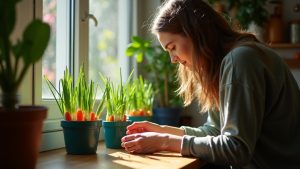
Microgreens need a bit more light, but not much. These are seedlings you harvest when they’re just a couple of inches tall, usually after seven to fourteen days. Unlike sprouts, microgreens grow in a shallow tray of soil or a growing mat, and they do need some light once they start sprouting leaves. A spot near any window—even one that doesn’t get direct sun—is usually enough. You’re looking for what you’d call “room-bright,” not blazing sunshine.
Radish microgreens, especially the Daikon variety, are reliable and peppery. Broccoli microgreens have a mild, fresh flavor. Pea shoots are sweet and tender, almost like eating tiny, delicate peas. All three grow quickly and don’t ask for much.
The main difference to remember is this: sprouts live in a jar and need no light. Microgreens grow in soil and want a little daylight, but they’re far more forgiving than full-grown plants. Both give you something green and alive to eat, even when your apartment feels more like a cave than a greenhouse.
Edible plants that don’t rely on flowers and fruit
Here’s the truth about growing tomatoes or peppers in a dim apartment: it’s an uphill battle. Fruiting plants need a lot of energy to flower and then turn those flowers into actual food. Without strong, consistent light, they’ll often grow tall and leggy but never quite deliver the harvest you’re hoping for.
The good news? You don’t need fruit to grow real food indoors. Plants that put their energy into leaves and stems are much more forgiving in low-light conditions. They’re doing less work overall, so they can get by with the softer light from a north-facing window or a spot several feet back from your brightest glass.
Swiss chard is a perfect example. Varieties like ‘Bright Lights’ give you colorful stems and tender leaves you can snip off as needed. The plant keeps producing for months, and you’re not waiting around for anything to ripen. Just grab what you need for dinner and let it keep growing.
Baby kale works the same way. Try a compact type like ‘Dwarf Blue Curled’ and harvest the leaves when they’re young and mild. You can cut them small for salads or let a few grow larger for cooking. Either way, the plant doesn’t need to flower to feed you.
Leaf celery is another quiet champion. Sometimes called Chinese celery, it looks more like flat parsley but tastes unmistakably like celery. You use it as a flavoring herb, snipping stems and leaves for soups and stir-fries. It’s not trying to make a big crunchy stalk, so it’s happy with modest light and keeps producing for a long time.
How to match varieties to containers and placement
The biggest mistake apartment gardeners make is putting tall plants in tiny pots or shade-lovers in the brightest spot. Your container size needs to match how deep the roots grow, and your plant choice needs to match the light that actually reaches that corner of your kitchen.
Lettuces and salad greens work beautifully in shallow containers, around four to six inches deep. They have modest roots and don’t mind being a bit crowded. Microgreens need even less, just an inch or two in a tray. Herbs like parsley and chives are happy in small pots, maybe six inches across and deep.
Kale, chard, and Asian greens need more room to stretch out. Give them pots at least eight to ten inches deep so their roots can spread. These plants get bigger and heavier as they grow, so a wider base helps keep things stable.
Now for placement. Think of your apartment in zones. The spot closest to your brightest window gets the plants that need the most light, even if that light is still pretty dim. Put your kale and chard there. A few feet back from the window, try lettuces and spinach. The shadiest corners, farthest from windows, are where microgreens and certain herbs like mint can still manage.
One simple trick makes a big difference: rotate your pots every few days. Plants lean toward the light, and if you never turn them, they grow lopsided and weak. A quarter turn twice a week keeps everything growing evenly. It takes five seconds and saves you from plants that flop over or stretch awkwardly in one direction.
Signs the light is too low, and simple fixes that don’t overcomplicate things
Your plants will tell you when they’re not getting enough light. The most obvious sign is leggy growth, where stems stretch out long and thin with big gaps between leaves. The plant is literally reaching for more light, and it ends up looking scraggly instead of compact and bushy.
Pale or washed-out leaves are another giveaway. Instead of deep green, your lettuce or herbs might look yellowish or weak. You’ll also notice slow regrowth after you harvest. A basil plant that took three weeks to put out a handful of new leaves probably needs more brightness.
Watch how your plants lean, too. All plants turn toward light, but if yours are practically doing backbends to face the window, they’re struggling. That’s your cue to make a change.
The easiest fix is just moving plants closer to the window. Even a foot or two can make a real difference. If your windowsill is full, try setting a small stool or upturned crate nearby to create more spots at window level.
You can also go back and swap in one of the more shade-tolerant varieties from earlier in this article. Mâche handles dimness better than arugula. Mint is more forgiving than basil.
Harvest smaller leaves more often instead of waiting for plants to bulk up. This works better with the limited energy they’re getting. And thin out crowded pots so leaves aren’t shading each other. Sometimes the problem isn’t the window, it’s that your plants are blocking their own light.