If you’re growing herbs or tomatoes on your balcony, you’ve probably noticed something. Those little pots dry out fast. They need feeding. And buying bags of fertilizer or fancy plant food adds up quickly, especially when you’re already dealing with rent and groceries.
Here’s the good news. You’re already throwing away some of the best plant food you could ask for. Those vegetable peels, coffee grounds, and eggshells heading to your trash bin? They’re not just food waste. They’re free nutrients that your balcony garden actually wants.
You don’t need a backyard compost pile or one of those big tumbler bins to make this work. You don’t even need a lot of space or time. Kitchen scraps gardening is simpler than most people think, and it fits perfectly into small apartment life.
This isn’t about becoming a composting expert or turning your kitchen into a science experiment. It’s about taking things you’d normally toss and giving them a second life. Some scraps can go straight into your pots. Others need just a few minutes of prep. Either way, you’ll cut down on waste, save a bit of money, and give your plants exactly what they need to thrive.
Whether you’re growing basil on a fire escape or peppers on a tiny patio, your kitchen already has what you need. Let’s talk about how to put those scraps to work.
Start with scraps that are safe and actually helpful
Not all kitchen scraps belong on your balcony. Some will attract pests, smell awful, or just sit there doing nothing useful. The trick is knowing which ones actually help your plants without turning your outdoor space into a mess.
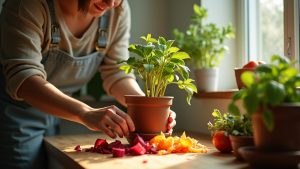
Banana peels are a great place to start. You can bury small pieces directly in your pots or let them dry out and crumble them into the soil. They break down fairly quickly and add nutrients that flowering plants especially appreciate. Coffee grounds work well too, especially mixed into soil rather than piled on top. Just use them in moderation because too much can make soil weird and clumpy.
Eggshells are another balcony favorite. Rinse them, let them dry, then crush them into small bits. They take longer to break down than banana peels, but they’re clean, odorless, and never attract bugs. Some people swear they help tomatoes and peppers grow better. Onion and garlic skins are fine in small amounts, though they take a while to decompose and don’t add much excitement.
Now for what to skip. Anything that smells strong or greasy does not belong in a pot on your balcony. That means no meat scraps, no cheese or dairy, no oily foods, and no cooked leftovers with sauce or seasoning. These all attract flies, rodents, and create odors your neighbors will definitely notice. Large amounts of citrus peels can also be tricky because they break down slowly and some plants don’t love them.
Here’s your simple rule: if you wouldn’t want it sitting in a bowl on your counter for a day, it probably doesn’t belong in your balcony pots either.
Use coffee grounds without turning pots into sludge
Coffee grounds are probably the most popular kitchen scrap people try in their balcony gardens, and for good reason. They add organic matter to your soil and give plants a gentle nitrogen boost. But here’s the catch: wet coffee grounds can turn into a water-repelling mess if you’re not careful.
The trick is to let your grounds dry out completely before using them. Spread them on a plate or baking sheet for a day or two until they’re crumbly, not clumpy. Wet grounds pack down into a dense layer that actually blocks water instead of letting it through, which is the opposite of what you want.
When you’re ready to use them, sprinkle just a thin layer on top of your soil and gently scratch it into the top inch or two with your fingers or a fork. Think of it like seasoning food, not frosting a cake. A light dusting every few weeks is plenty. You can also mix a handful into your potting soil when you’re repotting plants, which spreads them out nicely.
How do you know if you’ve overdone it? Your nose and eyes will tell you. If you notice a moldy or sour smell coming from your pots, that’s a sign. A crusty brown layer forming on top of the soil means too much has built up. And if water just sits on the surface instead of soaking in, you’ve created a barrier. When any of these happen, scrape off the top layer and go lighter next time.
Used correctly, coffee grounds are a helpful addition to container gardens. Just remember that a little goes a long way, and dry is always better than wet.
Turn eggshells into a simple soil booster
Eggshells are one of the easiest kitchen scraps to reuse because they don’t smell, don’t attract bugs, and store beautifully. If you eat eggs with any regularity, you’ve got a free supply of something that can slowly add minerals to your balcony pots.
The key word here is slowly. Eggshells take months to break down in soil, so this isn’t a quick fix. Think of them as a long-term investment rather than an instant boost. They won’t cure problems overnight, but over time they contribute calcium and other trace minerals as they decompose.
Start by rinsing your eggshells right after you crack them. This keeps them from smelling or growing mold while they dry. Let them air-dry completely on a plate or in a small container near a sunny window. Once they’re brittle and dry, crush them up.
Here’s where it matters: the finer you crush them, the faster they’ll break down. You can use your hands for a rough crush, or put them in a sealed bag and roll over them with a jar. For a finer texture, use a coffee grinder or mortar and pestle. Aim for something between coarse sand and small flakes.
You can mix crushed eggshells directly into your potting soil when you’re planting or refreshing a container. You can also sprinkle a light layer around the base of sturdier plants like tomatoes or peppers. Some people add a thin layer at the bottom of pots for a bit of extra drainage, but make sure you’re still using proper drainage materials like pebbles or broken pottery if your pot needs it.
Store any extra crushed shells in a jar. They’ll keep indefinitely and you can add them whenever you’re potting something new.
Try small, contained composting that won’t take over your home
You don’t need a backyard bin to turn food waste into something useful. A few compact methods work surprisingly well in apartments, and they all share one thing in common: tight seals and smart containment that keep smells and mess in check.
The simplest option is a small lidded container where you layer food scraps with shredded paper, cardboard, or dry leaves. These brown materials soak up moisture and prevent the slimy, smelly breakdown that happens when scraps sit alone. You’re not completing the composting process at home. You’re just holding scraps in a low-odor state until you can drop them at a community collection site or give them to a friend with a garden. This works best for vegetable peels, coffee grounds, and fruit scraps.
Bokashi composting uses a sealed bucket and a special mix of microbes to ferment food scraps instead of rotting them. It handles a wider range of scraps, including small amounts of meat, dairy, and cooked food. The process is fast and completely enclosed, so there’s no smell if you keep the lid on. The downside is that the fermented output still needs to finish breaking down somewhere, either buried in soil or added to an outdoor compost pile.
Worm bins are another sealed option if you’re comfortable sharing your space with red wriggler worms. They live in a ventilated container with bedding, eating through veggie scraps and producing rich compost. They’re quiet, compact, and surprisingly low-maintenance. Just avoid citrus, onions, and anything too acidic, which the worms don’t enjoy. The bin fits under a sink or on a balcony shelf, and a good setup won’t smell or attract pests.
Keep your balcony clean, pest-free, and neighbor-friendly
The biggest reason people give up on kitchen scraps gardening isn’t lack of results. It’s the smell, the fruit flies, or a nervous neighbor who spotted something crawling. The good news? These problems are completely avoidable with a few simple habits.
Start by storing your scraps in a container in the freezer until you’re ready to use them. This stops odors before they start and prevents decomposition from attracting pests. When you do add scraps to your pots, mix them into the soil rather than leaving them on the surface. Covering them with an inch or two of potting mix keeps everything out of sight and out of reach.
Moisture is usually the real troublemaker. Wet, rotting organic matter smells bad and draws flies. Balance out your wet kitchen scraps with dry materials like shredded paper, dry leaves, or coconut coir. These soak up excess moisture and create air pockets that help everything break down cleanly. Water your plants only when needed, and always empty those saucers under your pots so they’re not sitting in standing water.
If you do notice gnats hovering around your pots, don’t panic. Remove any visible scraps from the surface and cover the soil with a fresh layer of potting mix. Let the top inch of soil dry out between waterings, since gnats need moisture to breed. Yellow sticky traps work well to catch the adults while you break the cycle.
Keep your balcony tidy by wiping down pot rims and railings every week or two. A clean space is less inviting to pests and more pleasant for you and anyone who shares the building. Your neighbors will never know you’re turning yesterday’s vegetable peels into tomorrow’s tomatoes.
Match the scrap method to what you’re growing in pots
Not all plants want the same treatment, and that matters when you’re feeding them kitchen scraps in containers. Herbs like basil, parsley, and cilantro are light eaters. They do fine with occasional feeding, so a weak banana peel tea once a month or a thin layer of coffee grounds mixed into the top inch of soil works well. Go easy though. Too much nitrogen makes them grow tall and floppy with less flavor.
Leafy greens like lettuce, spinach, and kale appreciate a bit more. They grow fast and need steady nutrients, but nothing extreme. Diluted veggie scrap water or crushed eggshells stirred gently into the soil every few weeks keeps them happy without overdoing it.
Fruiting plants are the hungry ones. Tomatoes, peppers, and anything that flowers and sets fruit burns through nutrients quickly, especially in the limited soil of a pot. Kitchen scraps help, but they’re more like a supplement than a full meal plan. Think of them as a boost alongside regular container plant fertilizer, not a replacement.
Succulents and drought-loving plants like rosemary or lavender need special caution. They hate sitting in moisture, so anything wet from the kitchen is risky. If you use scraps at all, stick to dry crushed eggshells on the soil surface and keep liquids far away.
One more container reality to keep in mind: pots have limited space and drainage. Adding too much organic material can change the soil texture, making it dense and swampy. And if you’re rinsing scraps with tap water, salts can build up over time in containers. Moderation is your friend here. A little scrap love goes a long way in a pot.