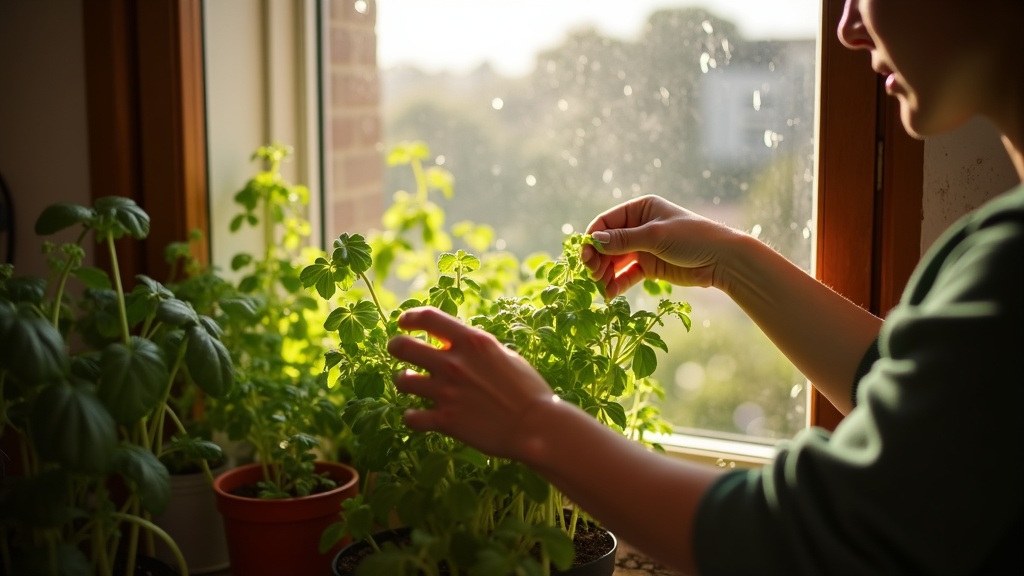
If you’ve ever bought a cheerful pot of basil from the grocery store only to watch it wither within a week, you’re not alone. Most indoor herbs don’t die because they’re difficult to grow. They struggle because we harvest them the wrong way.
The good news is that herbs like basil, mint, cilantro, and parsley are actually built to handle regular trimming. In fact, they thrive on it. When you cut them correctly, you trigger new growth instead of weakening the plant. It’s the difference between a scraggly stem that never recovers and a bushy plant that keeps producing fresh leaves for months.
The trick isn’t about having a green thumb or perfect conditions. It’s about understanding a few simple patterns in how these plants grow. Most beginners make the same handful of mistakes: they pick off random leaves here and there, or they wait too long and then harvest too much all at once. Both approaches stress the plant in ways that slow it down or stop it completely.
Once you know where to cut, how much to take, and when to give your herbs a break, the whole process becomes surprisingly straightforward. You’ll spend less money replacing plants, waste less food, and actually enjoy the process of snipping fresh herbs whenever you need them. Your kitchen windowsill can become a genuinely productive little garden, not just a temporary display.
Start by knowing what kind of herb you’re harvesting
Not all herbs grow back the same way after you cut them. If you treat every herb like it’s basil, you might end up with a sad little stick that never recovers. The good news is you don’t need to memorize complicated care instructions for every single plant. You just need to understand two basic groups.
The first group is your leafy, fast-growing herbs. Think basil, mint, parsley, and cilantro. These are the generous ones. They grow quickly, they don’t mind being trimmed, and they actually get bushier when you cut them correctly. You can take a decent amount from these plants every week or two, and they’ll bounce back with fresh growth within days. The key word here is “decent,” not “all of it.” Even these forgiving herbs need some leaves left behind to keep making energy.
The second group is your woody herbs. Rosemary, thyme, sage, and oregano fall into this category. They grow much slower and have tougher stems that feel almost like tiny tree branches. These herbs don’t appreciate aggressive haircuts. They need a gentler approach because they can’t quickly replace what you remove. Taking too much at once can stress them out or even stop their growth completely.
Indoors, where light and space are already limited, woody herbs are even more sensitive. A plant that might recover outdoors in full sun could struggle on your windowsill. When you’re harvesting these slower growers, think in terms of snipping a few sprigs here and there, not filling a whole bowl.
Cut where the plant can branch and refill
The secret to harvesting indoor herbs that keep producing is simple: cut where new growth can sprout. If you snip in the wrong spot, you might not kill the plant, but you’ll definitely slow it down. Cut in the right spot, and you’ll actually encourage the plant to grow bushier and fuller.
For basil and mint, look for a place on the stem where two leaves branch out from opposite sides. Cut just above that pair of leaves, leaving about a quarter inch of stem above them. This is where the magic happens. Two new shoots will emerge from that spot, right where those leaves meet the stem. One plant becomes two branches, and those branches can be harvested the same way later.
Parsley and cilantro work differently. These herbs grow from a central point, sending up new stems from the middle. Always take the outer, older stems first and leave the younger ones in the center alone. Cut each stem close to the base, near the soil. The center will keep pushing up fresh growth as long as you don’t disturb it.
Chives are the easiest of all. Just snip the green leaves about an inch or two above the soil line with scissors. Never yank or pull them out. Think of it like giving your chives a haircut. They’ll grow back from the base, and you can trim them again in a few weeks.
The basic rule across all these herbs: cut above something, not below it. Leave behind the parts that can sprout new growth, and your kitchen herbs will reward you with fresh leaves for months.
Take a little now so you can take more later
The most common mistake with harvesting indoor herbs is taking too much at once. It feels satisfying to snip off a big handful for your pasta sauce, but your plant needs most of its leaves to keep making energy and growing. Strip it down to bare stems, and it might take weeks to recover. Or it might not recover at all.
A good rule of thumb is to take no more than about a third of what you see. If your basil plant has twelve nice stems, snip from three or four of them. Leave the rest untouched. After you harvest, the plant should still look full and green, not sad and skeletal.
This approach lets you come back in a week or two and harvest again. Think of it like interest on a savings account. Small, regular withdrawals keep the account healthy and growing. One huge withdrawal leaves you with nothing to build on.
Your harvest limit changes based on how your plant is doing. If it’s young and still getting established, be even more gentle. Take just a few leaves here and there. The same goes if you recently repotted it or if it’s been looking a bit droopy. Give it time to settle in before you ask it to bounce back from a trim.
On the other hand, a mature basil or mint that’s been thriving for months can handle more frequent attention. But even then, never strip it bare. Leave plenty behind, and your kitchen herbs will keep producing fresh leaves for months instead of burning out after one big harvest.
Common harvesting mistakes that slow regrowth
The most common mistake is stripping a stem completely bare. When you take every single leaf off one stem, that stem can’t make energy anymore and often just dies back. Your plant then has to work twice as hard to recover. Instead, leave at least a few healthy leaves on each stem you harvest from. Think of it as keeping the engine running.
Another frequent problem is cutting branching herbs like basil or mint all the way down to the base. When you chop the main stem at soil level, you’re removing all the growth points where new branches would sprout. The fix is simple: cut just above a leaf pair, leaving several inches of stem with leaves intact. This encourages the plant to branch out and get bushy.
Many people repeatedly pick only the biggest, prettiest top leaves. This seems logical, but it creates tall, weak plants with bare lower stems and all the growth concentrated at the top. These leggy herbs struggle to support themselves. Harvest from different heights instead, and pinch back those tall tops to encourage fuller growth lower down.
Harvesting from a stressed plant is like asking someone to run a marathon when they’re already exhausted. If your herb looks droopy, bone dry, or was just moved to a new spot, give it time to recover before taking leaves. A stressed plant needs all its resources just to stabilize.
Finally, tearing or ripping leaves off damages the stem tissue and invites problems. Those ragged wounds heal slowly and sometimes develop brown, mushy spots. Use clean scissors or pinch cleanly with your fingernails instead. A neat cut heals fast and keeps your plant healthy.
Find a harvesting rhythm that fits indoor conditions
Your herbs won’t bounce back at the same speed all year round. A basil plant sitting in a south-facing window during summer might regrow a full set of leaves in five days. That same plant in a dim corner during winter could take three weeks.
Light is the main factor. Herbs near bright windows or under grow lights make new leaves faster because they have more energy to work with. Low light slows everything down. Your plant isn’t sick, it just doesn’t have the fuel to push out growth quickly.
Temperature matters too. Most kitchen herbs grow best when it’s comfortably warm, somewhere between 65 and 75 degrees. If your apartment runs cold in winter or you keep herbs in a chilly sunroom, expect slower regrowth even if the light is decent.
So how do you know when an herb is ready for another harvest? Look for new pairs of leaves forming near the top and stems that feel firm rather than soft or floppy. The plant should look full again, not sparse or stretched out. Those are signs it has energy stored up.
On the flip side, pause harvesting if you see thin, pale new growth or if new leaves have stalled for more than a week. That usually means the plant needs time to build up strength. Harvesting again too soon will stress it further.
The best rhythm is the one that matches what your plant is actually doing, not what a calendar says. Watch how quickly it refills after a trim, then adjust your timing based on that pattern.
Use clean cuts to keep plants healthy
A clean cut heals faster than a tear or crush. When you harvest your indoor herbs with sharp scissors or garden snips, you create a smooth edge that the plant can seal up quickly. This means less stress on the herb and faster regrowth for your next harvest.
Pinching with your fingers works perfectly for soft, tender stem tips. Basil, mint, and young cilantro shoots snap off cleanly between your thumb and forefinger. But when stems get thicker or woodier, fingers tend to crush and tear the tissue instead of making a neat break. That ragged edge takes longer to heal and creates an opening where moisture can linger and problems can start.
Think of it like a paper cut versus a clean slice from a sharp knife. One heals neatly, the other stays angry for days. Your herbs are the same way.
Keep your scissors or snips reasonably clean. A quick wipe with a dry cloth between plants is usually enough, especially if everything looks healthy. If you’re moving from a sad-looking herb to a thriving one, rinse your blades with water or wipe them down to avoid spreading any issues.
Try to harvest when your herbs are dry rather than right after misting or watering. Wet foliage is more likely to develop problems after cutting, and moisture can gum up your scissors too. Early morning after the leaves have dried, or any time they feel crisp to the touch, works well.
You don’t need to overthink this. Sharp tools, a quick wipe between plants, and dry leaves when possible. That’s really all it takes to keep your indoor herbs happy and producing.
Harvest in a way that keeps the plant compact and productive
The secret to bushy, productive indoor herbs is simple: always cut from the top. When you snip off the tallest stems, you’re telling the plant to send out new growth from the sides instead of just shooting upward. This is exactly what you want in a small kitchen garden.
Basil is the perfect example. Left alone, it grows straight up like a single skinny tower, then flowers and calls it quits. But when you pinch off the top pair of leaves, two new stems sprout from where you cut. Do this regularly and you end up with a full, leafy plant instead of a tall, gangly one.
The trick is to rotate where you harvest. Don’t just grab leaves from the side you can reach easily. Walk around the pot and take a little from different spots each time. This keeps the plant balanced and prevents one side from looking stripped while the other side gets overgrown.
If your herb already looks lopsided, you can fix it gradually. Cut back the tall or crowded side more aggressively over your next few harvests, and go lighter on the sparse side. Mint is famous for this, sending out long runners in whatever direction gets the most light. A few strategic cuts will even things out without shocking the plant.
Think of harvesting as a light haircut that happens every time you cook. You’re not just taking what you need, you’re actively shaping the plant into something compact and full. The more often you harvest this way, the more leaves the plant produces to replace what you’ve taken.
What to do right after harvesting to support regrowth
Once you’ve snipped your herbs, give the plant a quick once-over. Look for any leaves that have turned yellow or brown and gently pinch them off. These stragglers won’t bounce back, and removing them helps the plant focus energy on fresh growth instead of trying to save damaged leaves.
Check the soil next. If it feels dry an inch down, give your herb a drink. Harvesting is work for a plant, and it needs water to recover and push out new stems. Don’t drown it, but don’t let it sit there thirsty either.
Put the plant back in its usual bright spot right away. Herbs need consistent light to regrow, and leaving them on the counter or in a dim corner after harvest will slow things down. They’re already working hard to replace what you took, so keep conditions as steady as possible.
For the next day or so, avoid moving the plant around or doing any extra pruning. Let it settle. Think of it like resting after a workout. The plant isn’t fragile, but a little stability goes a long way when it’s recovering.
Here’s the thing: there’s no magic trick that makes herbs regrow faster indoors. What really matters is keeping up with the basics you were already doing. Regular light, consistent watering, and not over-harvesting in the first place will do more for regrowth than any special routine. Treat your herbs well day to day, and they’ll keep producing without much fuss after each snip.