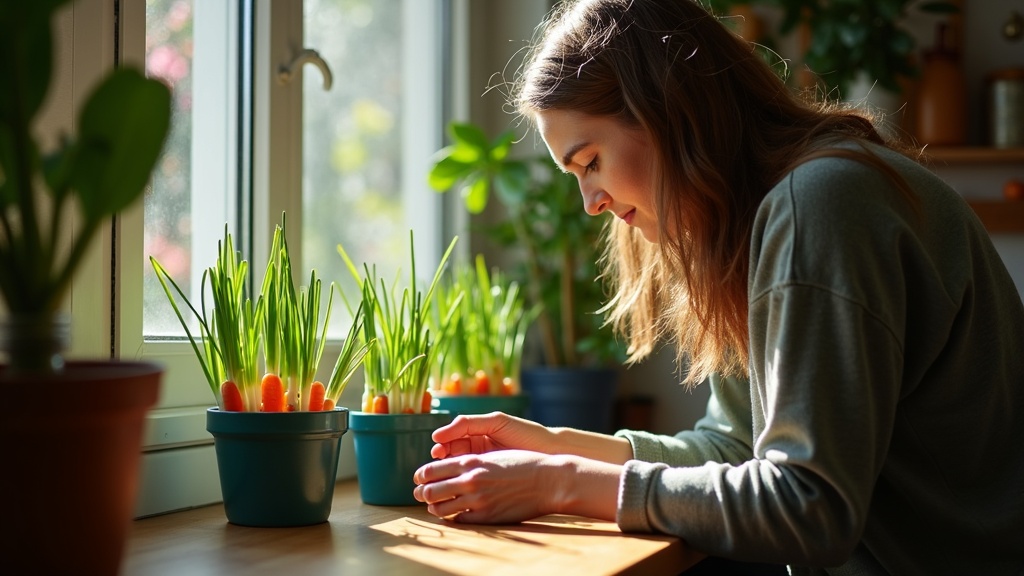
You’ve probably seen those videos where someone plunks a green onion root in water and it sprouts back like magic. Or the ones where avocado pits supposedly turn into full trees on your windowsill. It all looks so easy and sustainable.
The truth is more nuanced. Some kitchen scraps really do regrow beautifully indoors, even in a tiny apartment with no balcony. Others need dirt, sunlight, and patience you probably don’t have. And a few are straight-up myths that waste your time and counter space.
I’ve spent the last year testing which scraps actually work in a small apartment setting. No garden. No grow lights. Just a regular kitchen with average window light and limited counter real estate. Some things thrived. Others flopped hard.
The good news is that a handful of scraps regrow so reliably that even chronically plant-killing renters can succeed. You get fresh food, less waste, and a little green life in your kitchen without much effort or space. The key is knowing which scraps are worth your time and which ones need resources most apartments simply don’t offer.
This isn’t about turning your kitchen into a farm. It’s about identifying the no-fail options that actually deliver results indoors, and being honest about the popular scrap gardening ideas that only work if you have outdoor space or serious gardening setup.
A small-space setup that prevents rot and gnats
You don’t need much space or gear to regrow scraps successfully. What you do need is a bright windowsill or a small grow light if your apartment is naturally dim. Most kitchen scraps want decent light to put out roots and leaves, so a south-facing window works best in the northern hemisphere.
Start with clean glass jars or shallow dishes for rooting. Rinse them well before use. The key habit is changing the water every two to three days. Stale water turns cloudy and breeds bacteria, which leads to rot. When you swap the water, give the scrap a quick rinse too.
Only submerge the bottom part of the scrap where roots will form. If you dunk leafy tops or cut surfaces that aren’t meant to be wet, they’ll turn slimy fast. For green onions or celery, that means keeping the green shoots above the waterline. For sweet potato slips, suspend the potato so only the bottom third touches water.
Once roots appear and you’re ready to pot up, use small containers with drainage holes and basic potting mix. Garden soil is too heavy and stays soggy indoors. Potting mix drains better and helps roots breathe.
Fungus gnats are tiny black flies that hover around pots. They show up when soil stays too wet for too long. Their larvae eat decaying plant matter and can nibble roots. To avoid inviting them, let the top inch of soil dry out between waterings. Don’t leave scraps sitting in standing water for days, and toss anything that starts to rot right away. If you catch rot early, it smells sour and the texture goes mushy. Pull it out before it spreads.
Fast, reliable regrowth: green onions, leeks, and celery hearts
Green onions are the gold standard for scrap gardening. Save the white base with the roots still attached, about two inches worth. Drop it in a narrow jar with just enough water to cover the roots, and place it on a sunny windowsill. Within days, you’ll see fresh green shoots pushing up.
After a week or so in water, the roots get stronger and the tops grow tall enough to snip. You can keep harvesting the green parts every few days as long as the white base stays healthy. For longer-term growth, move the whole thing to a small pot with soil once the roots look bushy. The soil gives it more nutrients, so it keeps producing instead of fizzling out.
Leeks work almost exactly the same way. Keep the bottom two inches with the root end intact, start it in water, and transplant to soil when the roots fill out. The regrowth is slower than green onions, but you’ll still get usable green tops within a couple of weeks.
Celery hearts are a bit different but just as satisfying. Cut off the base where all the stalks meet, about two inches up. Set it in a shallow dish with water covering just the bottom. The outer stalks might look sad and brown, but the center will start sprouting pale yellow-green leaves within a week. Once you see solid root growth, move it to soil.
A couple of apartment-friendly tricks: use a narrow jar or glass so the plant doesn’t tip over. Rotate it every few days so it doesn’t lean hard toward the light. And when you trim, always leave at least an inch of growth at the base so it can keep producing. Think of it like giving a haircut, not a buzz cut.
Herbs that root from stems in a glass of water
Mint and basil are the easiest herbs to start on a windowsill. You don’t need dirt, fancy equipment, or even a sunny balcony. Just snip a healthy stem from the grocery store bunch before you use it in cooking, stick it in a glass of water, and wait.
The stem you choose matters. Look for one that’s green and firm, about four to six inches long. You’ll notice little bumps or rings along the stem where leaves attach. Those are called nodes, and that’s where roots will sprout. Remove any leaves from the lower half of the stem so they don’t sit underwater and turn to mush.
Place the glass somewhere with indirect light. A kitchen counter near a window works perfectly. The water will get cloudy or slimy if you ignore it, so change it every two or three days. Fresh water keeps bacteria from taking over.
In about a week, you’ll see tiny white roots emerging from those nodes. Let them grow until they’re an inch or two long and look like a fuzzy little bunch. That’s when they’re ready for soil if you want to pot them. You can also keep herbs in water indefinitely, though they’ll grow slower and need occasional liquid fertilizer.
Once potted, don’t expect the same bushy growth you’d get outdoors in summer. Indoor light is limited, especially in winter. But you’ll still get enough leaves for garnish and cooking, and one small pot per herb fits easily on a windowsill. Cilantro and parsley are trickier this way, so stick with mint, basil, or oregano when you’re starting out.
Leafy greens that give you a second round, not a lifetime plant
If you’ve ever chopped the bottom off a head of lettuce or bok choy and tossed it in the compost, you’ve thrown away a fun little experiment. Those cores can push out fresh leaves if you give them a second chance in water.
Here’s what actually happens. You save about two inches of the base with the core intact, set it in a shallow dish with just enough water to cover the bottom, and place it somewhere bright. Within a few days, tiny new leaves start poking out from the center. It feels like magic the first time you see it.
But let’s be honest about what you’re getting. These aren’t full, crisp heads like you bought at the store. The leaves grow smaller and thinner, and they tend to be a bit more delicate in texture. Think of them as bonus greens for a sandwich or garnish, not the base of your next salad.
The growth usually slows down after a week or two indoors. The plant is running on whatever energy it stored in that core, and without soil or strong light, it can’t keep producing at the same pace. That’s completely normal.
One thing to watch: keep the water shallow, just touching the base. If the whole core sits submerged, it’s more likely to get slimy and rot. Change the water every couple of days to keep things fresh.
Lettuce and bok choy are both great for this. You’re not growing a lifetime plant here, just extending the life of something you already paid for. And honestly, that’s enough.
Viral scrap gardening hacks that usually fail in apartments
Social media makes scrap gardening look effortless. Stick a pit in water, and boom—instant houseplant. But some of the most popular regrowth projects don’t hold up well in small apartments, and it’s worth knowing which ones before you commit counter space.
Avocado pits are the poster child for scrap gardening, but they’re tricky indoors. Yes, they’ll sprout roots and a stem in a jar of water. The problem? They grow slowly and get leggy without tons of bright light. Most apartments don’t offer enough natural sun to keep them compact and healthy. You’ll likely end up with a straggly stick plant that takes years to look like much.
Pineapple tops are another viral favorite. They do root, and they’re genuinely cool to grow. But they need a surprising amount of space and can take two to three years before they even think about fruiting. In a small apartment, that’s a long commitment for something that mostly just sits there looking spiky.
Carrot tops will happily sprout frilly greens in a shallow dish of water, and they’re pretty on a windowsill. Just know you’re growing decorative greens, not a new carrot. The root itself is gone once you’ve chopped it off. If you’re hoping for an actual vegetable, you’ll be disappointed.
Potato scraps can regrow, but they’re messy and prone to attracting pests indoors. They need soil, decent space, and vigilant attention. For apartment dwellers, the hassle usually outweighs the payoff.
None of these are impossible. But they’re not the no-fail, set-it-and-forget-it wins that videos make them seem. If you’ve got limited space and want quick, satisfying results, there are better places to start.
Common indoor regrowth problems and what to change first
Most indoor regrowth problems come down to light, water, or knowing when to call it quits. The good news is you can usually fix things with one simple change.
If your leaves are turning yellow or looking pale, light is almost always the issue. Move your container closer to the window or add a cheap grow light. Even an extra foot closer to the glass can make a noticeable difference within a week.
When the base of your scrap gets slimy or mushy, you’re dealing with too much water or stagnant conditions. Change the water more often, rinse the container every couple of days, or transplant into soil sooner than you planned. A mushy base usually means bacteria are having a party, and fresh conditions will stop that fast.
Slow or stalled growth after the first week often means your plant is running out of nutrients. Water alone doesn’t feed a plant forever. If roots look healthy but nothing’s happening, move it to soil. Even a small pot with basic potting mix will give it what it needs to keep going.
Leaning or stretching stems mean your plant is literally reaching for more light. Rotate the container every few days and increase light exposure. This won’t fix stems that are already stretched, but it’ll keep new growth compact.
Sometimes it’s just time to compost and start over. If the whole thing smells bad, turns brown and soggy despite fresh water, or shows no sign of life after two weeks, toss it. Not every scrap will root, and that’s completely normal. Starting fresh with a new piece is faster than trying to revive something that’s already checked out.