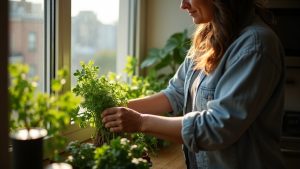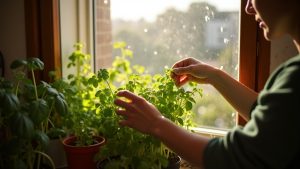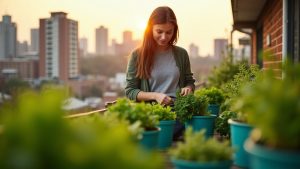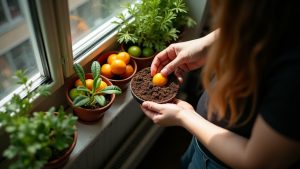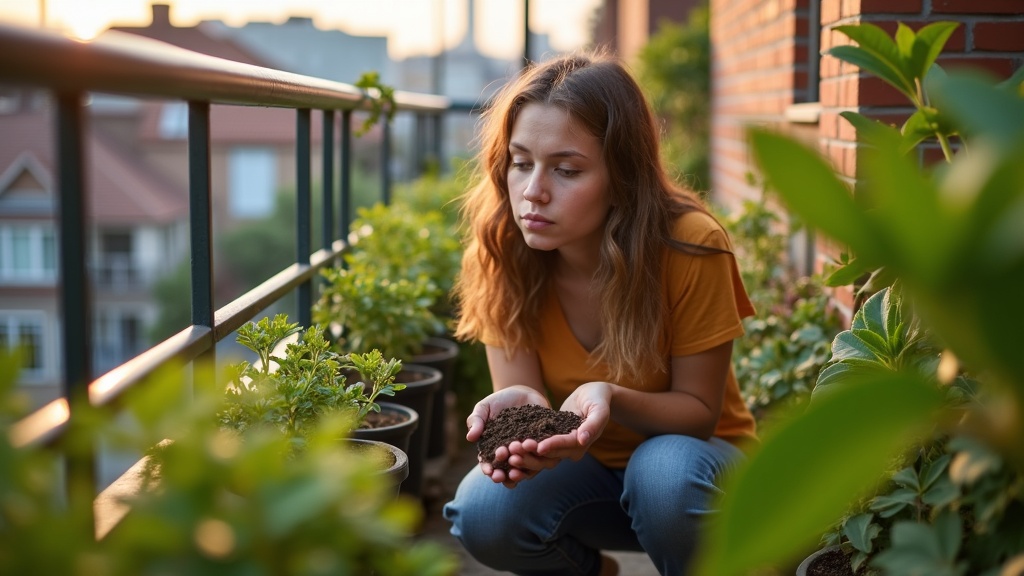
Growing vegetables indoors sounds straightforward until you start shopping for potting soil. You’ll find dozens of options, each claiming to be perfect for your plants. But here’s the thing: the best potting soil for indoor vegetables isn’t just about what makes plants grow fastest.
When you’re gardening in an apartment, you’re dealing with constraints that outdoor gardeners never think about. That bag of rich, earthy soil might work wonders in a backyard, but it could also attract fungus gnats to your living room. A heavy mix might be fine for a ground-level patio, but not so great when you’re carrying it up four flights of stairs.
Indoor vegetable growing means thinking about mess, smell, weight, and whether bugs might decide to move in with you. It means considering that your tomato plant lives three feet from your couch, not out in a shed. And it means you probably can’t just swing by a garden center in the suburbs—you need something you can actually get to your apartment without a car.
The good news? Once you understand what makes a potting mix work well indoors, choosing becomes much easier. You’ll know exactly what to look for and what to avoid. And you’ll end up with soil that keeps both your plants and your living space happy.
What indoor vegetables need from a potting mix
Indoor vegetables face different challenges than their outdoor cousins. They’re stuck in containers, often in rooms with less airflow and light. That means the mix you choose has to work harder.
First, it needs to drain fast but hold moisture evenly. If water pools at the bottom, roots sit in soggy conditions and start to rot. You’ll notice leaves wilting even right after watering, or a sour, swampy smell coming from the pot. On the flip side, if the mix dries out into a hard brick, your plants will always look thirsty no matter how often you water.
Second, the mix should have plenty of air pockets. Roots breathe, and without oxygen they suffocate. A heavy, dense mix turns into sludge over time, especially indoors where things stay wet longer. If your tomato or pepper plant grows slowly and looks pale, compacted soil might be choking the roots.
Third, it needs to hold nutrients without breaking down too fast. Indoor veggies live in the same pot for months. If the mix turns to mush halfway through the season, it stops draining properly and feeding becomes a guessing game.
Finally, a good indoor mix shouldn’t invite pests. Fungus gnats love wet, organic material that’s breaking down on the surface. If you see tiny flies hovering around your pots or green algae forming on top, your mix is staying too wet or has too much raw compost.
When you’re comparing bags at the store, these five traits matter more than anything else. Look for words like “well-draining,” “aerated,” or “soilless” on the label. Those are clues the mix was designed with container life in mind.
Soil vs soilless mix indoors and why the label can mislead
Walk into any garden center and you’ll see bags labeled potting soil, potting mix, garden soil, and a dozen other variations. The names sound interchangeable, but they’re not. Using the wrong one in your apartment can turn your indoor garden into a frustrating mess.
Garden soil is actual dirt from the ground. It’s meant for outdoor beds where earthworms and weather can keep it loose. In a container indoors, it compacts into a dense brick that drowns roots and refuses to drain. It’s also heavy enough to make your pots a workout to move, and it often carries hitchhikers like fungus gnats or weed seeds you definitely don’t want in your living room.
Potting soil and potting mix are designed for containers, but here’s where the labels get confusing. Most products called potting soil don’t actually contain any real soil at all. They’re soilless mixes made from things like peat moss or coconut coir, mixed with perlite for drainage and sometimes bark or compost for structure.
These soilless blends are what you want for apartment gardening. They’re lighter to carry up the stairs, cleaner to work with on your kitchen counter, and they drain consistently without turning into mud or concrete. They also start out pest-free, which matters a lot when you’re growing food next to where you sleep.
The takeaway? Ignore the front of the bag and flip it over. Look at the ingredient list. If it says things like peat, coir, perlite, and vermiculite, you’re good. If it mentions topsoil or says it’s for garden beds, leave it at the store.
How to read a potting mix bag quickly in a store
Standing in the gardening aisle with five different bags staring at you can feel overwhelming. The good news is you only need to check a few key things to pick a winner.
First, look for words like “container mix” or “indoor potting mix” on the front of the bag. These are designed for pots, not garden beds. If it says “topsoil” or “garden soil,” keep walking. Those products are meant for outdoor use and tend to be too heavy and dense for containers in your apartment.
Flip the bag over and scan the ingredient list. You want to see perlite or vermiculite listed. These are the little white or tan bits that keep the mix light and fluffy so roots can breathe. If you see “bark fines” or “coir,” that’s also good. These help with drainage. Avoid mixes that are mostly compost with nothing else. They pack down too hard and hold too much water.
Watch out for phrases like “moisture control” or “water-holding crystals.” These can make the mix stay too wet for vegetables, which prefer consistent moisture but not soggy conditions.
Check if it says “sterilized” or “pasteurized” somewhere. This means fewer weed seeds and fungus gnats, which matters a lot when you’re growing food indoors.
Finally, think about the practical stuff. An eight-quart bag weighs around ten pounds and fits in a closet easily. A two-cubic-foot bag is cheaper per quart but weighs close to forty pounds and takes up real space. If you’re walking home or taking the subway, size matters as much as what’s inside the bag.
Match the mix to your apartment setup and habits
Your best potting mix depends less on what vegetables you want to grow and more on how you actually live. A sunny windowsill setup behaves completely differently from a balcony planter, and your watering personality matters more than most guides admit.
If you’re growing in small pots on a windowsill, look for mixes with extra perlite or vermiculite. These white chunky bits create air pockets so roots don’t suffocate in cramped spaces. Windowsill pots dry out fast under direct sun, so you want something that holds moisture but drains quickly when you do water. Avoid heavy mixes marketed for outdoor use.
Larger balcony containers need different thinking. If you tend to forget watering, choose mixes with coconut coir instead of peat moss. Coir rehydrates much more easily after drying out completely. Peat can turn into a water-repellent brick that’s nearly impossible to rewet properly.
Notice fungus gnats around your plants? Those tiny flies breed in mixes with lots of compost or bark. Switch to a lighter soilless mix with more perlite and less organic matter near the surface. The gnats need moist decomposing material to lay eggs.
Renters dealing with stairs or no elevator should prioritize lightweight mixes. Soilless blends weigh dramatically less than traditional potting soil, especially when wet. Your back will thank you, and you’re more likely to actually move plants around to chase sunlight.
If you hate mess during watering or can’t repot often, skip mixes with chunky wood chips or coarse materials that float to the surface. Finer-textured mixes stay put better and break down more slowly, meaning fewer surprises and less frequent container changes.
Cost, cleanliness, and sourcing in city living
When you’re hauling bags up three flights of stairs or fitting them into a tiny hall closet, weight matters as much as price. The cheapest potting soil usually comes in huge, heavy bags that are hard to carry and harder to store. Premium soilless mixes cost more per bag, but they’re dramatically lighter. A twenty-pound bag is much easier to manage than a forty-pound one, especially when you’re walking six blocks from the store.
Most apartment gardeners find what they need at local hardware stores or garden centers within a few miles. These places usually stock both budget soil and lighter mixes year-round. If carrying bags home isn’t realistic, many stores offer delivery for a small fee, and online ordering works well for compressed coir bricks that expand when you add water. Those bricks are incredibly light and store easily until you need them.
Buy only what you’ll use in the next few months. Open bags of potting mix can attract fungus gnats and other pests if they sit around too long. For a typical apartment setup with four to six containers, a single ten to fifteen-pound bag is usually enough to start. You can always buy more later.
Keeping things tidy makes a real difference in a small space. When you’re filling containers, work over a large tray or inside a plastic storage bin to catch spills. Store your bag inside a sealed plastic tote or a heavy-duty trash bag with a clip. This keeps moisture and bugs out, and it prevents the mix from leaving dusty trails across your floor. If the soil surface in your pots starts looking messy or crusty, a thin layer of decorative pebbles or bark on top helps keep things neat and reduces the chance of pests taking up residence.