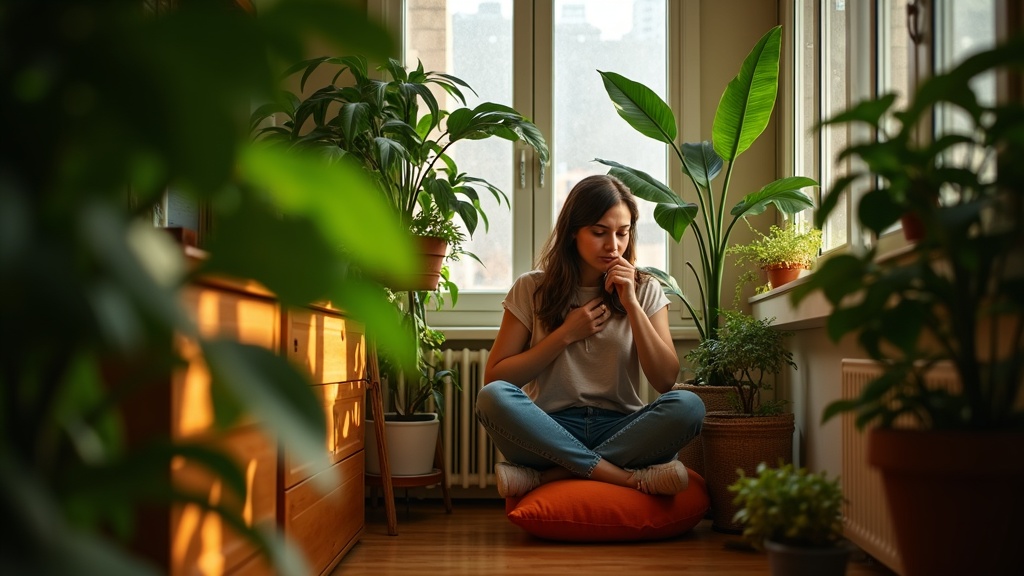
That awkward corner in your apartment doesn’t have to stay awkward. You know the one. Maybe it’s next to the bookshelf that doesn’t quite fit, or that odd gap between your couch and the window. Right now it probably collects dust, random cables, or that bag you keep meaning to put away.
Here’s the good news: a few well-placed plants can turn that forgotten spot into the coziest part of your home. And you don’t need a big budget or a green thumb to make it happen.
Renting comes with its own challenges. You can’t paint the walls or install fancy shelving. Your corner might not get much natural light. Your space is probably tight, and you’re not looking to spend a fortune on something your landlord technically owns.
But plants are different. They’re portable, affordable, and they work with whatever light you’ve got. A simple arrangement can make a small room feel intentional instead of cramped. It adds life without taking up the floor space you actually need.
The trick isn’t buying expensive pots or rare plants. It’s about working with what you have. Your corner, your light, your budget. This guide will show you how to arrange plants in a way that feels natural and livable, not like you’re trying to recreate a magazine spread. Because the goal isn’t perfection. It’s creating a little green corner that makes you smile when you walk past it.
Choose the right corner and decide what you want it to do
Before you buy a single plant, spend five minutes looking at the corner you have in mind. Stand where you usually sit and ask yourself a few quick questions. Does anyone walk through that spot ten times a day? Is there an outlet nearby if you want to add a small lamp or string lights later? If you have pets or small kids, can they reach everything at floor level?
Check for drafts too. Corners near exterior doors or old windows can get surprisingly cold in winter or blasted by AC in summer. Most houseplants hate sudden temperature swings. Also think about how much you’ll actually see this corner. If it’s visible from your couch or right when you walk in, it’s worth putting a bit more effort into the layout. If it’s tucked behind a bookshelf, maybe keep it simple.
Now give your corner a job. This sounds silly, but it helps you make better choices. Maybe you want to soften a big blank wall that feels cold and uninviting. Or you’re trying to hide an awkward angle where two walls meet at a weird spot. A tall plant next to a reading chair can frame the space and make it feel more like its own little zone. If your corner is near a window that faces a busy street or a neighbor’s wall, a few plants can add a layer of privacy without blocking all the light.
Once you know what the corner needs to do, the rest gets easier. You’re not just randomly placing pots anymore. You’re solving a small problem and making your space feel more intentional.
Work with the light you already have
Before you buy a single plant, spend a few days watching your corner. Notice when it gets brightest during the day. Can you comfortably read a book there in the afternoon without squinting? That’s a decent sign you have enough natural light for most common houseplants.
Corners often feel darker than the rest of the room because light comes from one direction instead of wrapping around. If your corner is more than six or seven feet from a window, it’s probably getting less light than you think. That doesn’t mean you can’t have plants there, but it does mean you’ll need to be more thoughtful about which ones go where.
Place your most light-hungry plant closest to the window side of the arrangement. Then build outward from there. Plants with lighter or variegated leaves tend to show up better in dim spots and can go toward the front, making your whole display feel brighter. If you already have a mirror, white shelf, or light-colored wall nearby, use it. Reflective surfaces bounce whatever light you have back into the space.
For corners that stay dim all day, a small clip-on lamp with a daylight bulb can make a real difference. You don’t need anything fancy or expensive. Even a basic desk lamp pointed at your plants for a few hours helps. Just don’t expect miracles. No plant actually thrives in total darkness, but the right setup can keep low-light varieties healthy and happy without major investment.
Pick a small cast of plants that look good together
Think of your corner like a little stage. You don’t need a crowd of plants to make it feel lush and inviting. Three plants, chosen carefully, usually look better than seven crammed together.
A good starting point is to mix shapes. One taller plant gives you height, like a snake plant or a dracaena. One bushier plant in the middle adds fullness, something like a pothos or a philodendron. Then one trailing or textured plant softens the edges, maybe a string of pearls or a small fern. This isn’t a rigid formula, just a helpful way to think about balance.
Leaf size matters more than you’d expect. Pair one plant with big, bold leaves against another with smaller, more delicate foliage. The contrast makes both look more interesting. If you keep everything the same size and shape, it can feel a little flat.
Stick mostly to green, especially if you’re just starting out. Too many colors can look busy in a small space. If you want a pop of something different, choose one plant with variegated leaves or a hint of purple or burgundy.
You don’t need to buy everything at full price from a garden center. Ask friends for cuttings, check local plant swap groups online, or buy small starter plants that cost a few dollars. They’ll grow, and that’s actually the point.
Speaking of growth, imagine your plants six months from now. That tiny pothos will spread. That snake plant will push out new leaves. Leave a little breathing room from the start so your corner doesn’t turn into a jungle you didn’t plan for.
Build depth with height and layering, not more stuff
The trick to making a corner look intentional isn’t adding more plants. It’s arranging the ones you have so each one gets noticed. Think of it like staging a photo where everyone needs to be visible, not hidden behind someone else’s shoulder.
Start with your tallest plant at the back or deepest point of the corner. This could be a fiddle leaf fig, a snake plant, or anything with height. Then bring a medium-sized plant slightly forward and to one side. Finally, add something trailing at the front edge where it can spill over without getting lost. A pothos or string of pearls works beautifully here.
You don’t need fancy plant stands to create different levels. Look around your place first. A sturdy wooden stool can lift your tallest plant. An upside-down crate adds rustic charm and height. Stack a few hardcover books and set a small tray on top for stability. A simple side table you’re not using elsewhere does the job perfectly.
Here’s what matters for keeping your plants healthy in a layered setup: leave enough space between them for air to move around. Crowding them together looks messy and traps moisture, which invites problems. You also need to reach each plant easily for watering without doing gymnastics or moving everything around.
Place your arrangement so you can step into the corner comfortably. If you have to squeeze past furniture to water the back plant, you won’t do it regularly. Keep it simple and accessible. The goal is a corner that looks put together but doesn’t become a chore to maintain.
Use pots and planters to make the grouping feel calm
When you’re working with a small corner, too many different pots can make the whole space feel cluttered. Your plants might be beautiful, but if every container is fighting for attention, the arrangement starts to look like a collection of random stuff instead of a cozy little garden.
The easiest fix is to pick one color and repeat it. All terracotta, all white, all black—it doesn’t matter which. When the containers share a color, your eye relaxes and the plants themselves become the stars. You don’t need to replace everything at once, either. Start with two or three matching pots and swap out the others as you find affordable options.
Another approach is to limit yourself to two or three materials total. Maybe you use ceramic and wicker, or terracotta and plain plastic. This gives you a bit more variety without tipping into chaos. Similar shapes in different sizes work well too—a trio of round pots or a few simple cylinders creates rhythm without being boring.
If you’ve picked up a thrifted pot you love but it doesn’t quite match, pair it with the simplest, most neutral container you own. A plain white or terracotta pot acts like a bridge. It makes the special piece look intentional instead of random.
One last thing that matters for renters: make sure every pot has protection underneath. A saucer, a cork mat, anything waterproof. If your pot doesn’t have a drainage hole, use it as a cachepot—that just means you slip a plastic nursery pot inside it. You get the look you want and your floors stay safe. That’s the whole point of making a cozy corner: it should feel good and cause zero damage.
Keep it cozy without making it cramped
The fastest way to ruin a cozy corner is to pack it too tight. When pots are touching each other and leaves are tangling together, the space stops feeling relaxing and starts feeling messy. Your corner should look like a place you want to sit near, not a storage area you need to navigate around.
A simple rule helps: leave about a hand’s width between your pots whenever you can. This gives each plant room to breathe and makes it way easier to water without knocking things over. Speaking of watering, make sure you can actually reach every plant without moving three others first. If you’re doing a complicated shuffle every time you need to tend your plants, you have too many crammed in there.
How many plants should you actually keep in your corner? It depends on the size, but a good starting point is three to five plants of varying heights. If you’re already past that number and things feel crowded, look for these signs: pots touching on multiple sides, leaves overlapping so much you can’t tell which plant is which, or random items getting stashed behind the plants because there’s nowhere else to put them.
When you spot clutter creeping in, try these quick fixes before you panic. Remove just one plant and see if the whole arrangement suddenly looks better. Elevate one plant on a small stand to create vertical layers instead of horizontal crowding. Or simply rotate which plants live in the corner seasonally, giving some a break on a windowsill elsewhere.
The goal is a corner that feels intentionally styled, not accidentally stuffed. Cozy living room plants should make you feel calmer when you look at them, not stressed about watering day.
Set it up so it’s easy to water and live with
The prettiest plant corner in the world stops being cozy the minute it becomes a hassle. So think about your actual routine when you’re arranging things.
Keep a small watering can right there in the corner or tucked nearby. You’re much more likely to water consistently if you don’t have to walk to the kitchen sink every time. A simple one-liter can works perfectly for most small corners and won’t take up much floor space.
Put your thirstiest plants where you’ll actually see them every day. Ferns and calatheas that need frequent moisture should sit at eye level or in your main traffic path, not hidden behind a chair. The easygoing pothos or snake plant can hang out in the back.
Use a tray or shallow dish under your plants if you’re renting. This catches drips and protects floors or furniture without any permanent setup. You can find cheap plastic trays at any garden center, or use a pretty ceramic plate if you want something nicer.
Turn your plants a quarter spin every week or so when you check on them. This keeps them growing evenly instead of leaning hard toward the window. It also gives you a natural moment to stick your finger in the soil and see who needs water. If the top inch or so feels dry, water it. If it’s still damp, leave it alone.
That’s really it. No apps, no strict schedules, just a quick weekly look while you’re making coffee or tidying up. When watering and turning become a quick part of your weekend routine instead of a whole production, your corner stays green and inviting instead of turning into that thing you avoid.