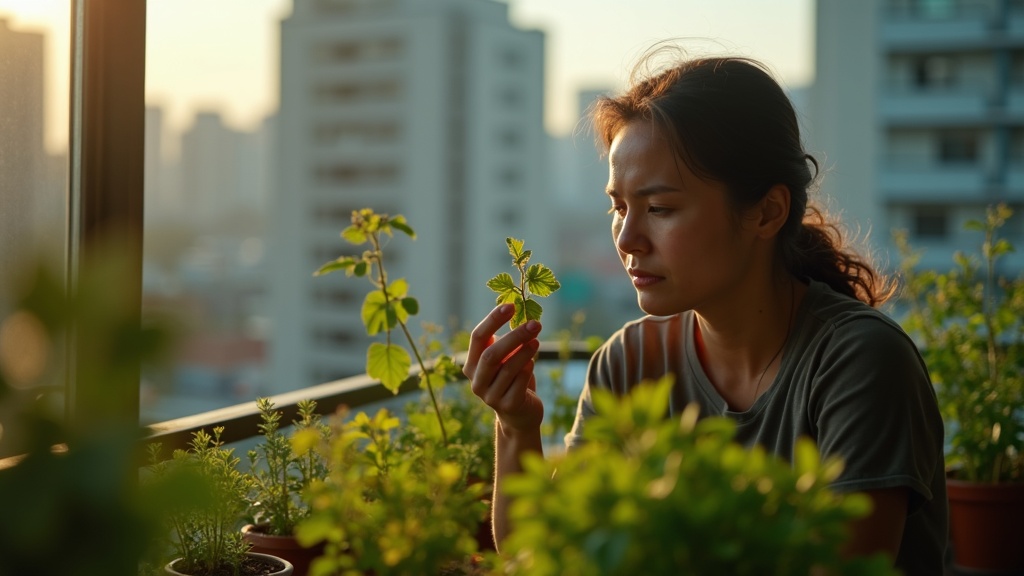
You’re not alone. Every spring, thousands of us buy cheerful little pots of basil, mint, and rosemary with the best intentions. We place them on our balconies, water them regularly, maybe even talk to them a little. And then, somehow, by midsummer they’re crispy, yellowing, or just sad looking.
It’s frustrating because you think you’re doing everything right. You water when the soil feels dry. You picked a sunny spot. You even bought decent potting mix. Yet your herbs seem determined to disappoint you, season after season.
Here’s the thing though: balconies are trickier than they look. That cute little outdoor space isn’t quite like a garden bed or even a backyard patio. It’s its own weird microclimate, with quirks that can quietly sabotage your herbs without you realizing it.
The wind might be stronger than you think. The sun might be more intense, or maybe blocked at the wrong times. The pots might be heating up like tiny ovens, or your watering routine might be accidentally drowning roots you can’t even see. These aren’t dramatic mistakes, they’re small, invisible factors that add up.
The good news? Once you understand what’s actually happening on your balcony, keeping herbs alive gets a lot easier. You don’t need a green thumb or fancy equipment. You just need to know what your specific space is doing to your plants, and how to work with it instead of against it.
Balcony light is often less reliable than it looks
When you stand on your balcony at noon, it might feel bright and sunny. But that doesn’t necessarily mean your herbs are getting the steady, direct sunlight they actually need. The light on a balcony can be deceiving.
Most apartment balconies have something blocking or filtering the sun for part of the day. Maybe it’s the building itself casting shade in the morning or evening. Maybe it’s the balcony above yours creating an overhang that blocks overhead sun. Railings, privacy screens, and even nearby buildings can cut down the hours of true direct light your plants receive.
The sun also changes its path dramatically throughout the year. A spot that gets six hours of direct light in June might only get two or three by September. Your herbs don’t know it’s still technically summer. They just know they’re not getting enough fuel.
When herbs don’t get consistent, strong light, they show it pretty clearly. They grow tall and spindly, reaching desperately toward whatever light they can find. Their leaves stay small and pale instead of full and vibrant. When you cut some basil or parsley for dinner, the plant struggles to bounce back and grow new leaves.
Different herbs do have different tolerance levels. Some can manage with less light than others. But the popular kitchen herbs most of us want to grow, like basil, cilantro, parsley, and thyme, really do want steady, reliable light throughout the day. Bright indirect light might look nice to your eyes, but it’s not the same thing as direct sun hitting the leaves for several solid hours.
Wind exposure can dry herbs out faster than you expect
If you live above the third floor, your balcony is probably windier than you realize. Constant airflow sweeps across those railings all day long, pulling moisture straight out of your soil and leaves. You might water your herbs thinking you’re doing everything right, but the wind is basically undoing your work within hours.
Corner units get hit especially hard. Wind wraps around the building from multiple directions, creating a kind of invisible tunnel effect. Your basil or parsley is sitting there getting buffeted from dawn to dusk, even on days that feel calm when you step outside for a moment.
The symptoms wind causes look a lot like other problems, which is why people miss it. Crispy brown edges on leaves? That’s often wind burn, not underwatering. Herbs that suddenly go limp on hot afternoons even though the soil feels damp? The wind has been sucking moisture from the leaves faster than the roots can replace it. Stems that snap when you brush against them aren’t necessarily diseased. They’re just dried out from constant air movement.
Wind does physical damage too. It whips delicate stems back and forth, creating tiny tears and weak spots. Small pots can tip over or shift position, which stresses the roots every time they have to resettle. Some herbs never get a chance to establish themselves because they’re in constant motion.
Open railings with wide gaps make this worse. There’s nothing slowing the wind down before it hits your plants. Even a gentle breeze at ground level becomes a steady current up high, and your herbs are taking the full force of it day after day.
Most balcony herb deaths come from predictable watering mistakes
Here’s the frustrating truth about balcony herbs: the same pot can swing from soaking wet to bone dry within a couple of days. It’s not you being careless. It’s just how containers work.
When you grow herbs in pots, you’re working with a tiny amount of soil compared to a garden bed. That small volume heats up fast in the sun, gets blasted by wind, and drains through those holes in the bottom. One hot afternoon can turn moist soil into dust. But water too much, and that same small space becomes a swamp with nowhere for excess moisture to escape.
The first trap nearly everyone falls into is watering on autopilot. You pick a schedule, maybe every other day or twice a week, and stick to it no matter what. But your basil doesn’t care what day it is. It cares whether the soil is actually dry. A cool, cloudy week means the pot stays wet longer. A windy Sunday can dry everything out by Monday morning.
The second sneaky mistake is giving your herbs little sips of water that barely penetrate the surface. You see dry soil on top, splash some water on, and walk away. Meanwhile, the roots sitting three inches down are completely parched. The top inch gets repeatedly soaked while the bottom stays dry and crusty.
So how do you know which problem you have? Overwatered herbs turn yellow, develop soft mushy stems, and often smell sour when you get close to the soil. You might notice tiny flying bugs around the pot—those are fungus gnats, and they love constantly wet soil. Underwatered herbs wilt dramatically but perk right back up after a good drink. The soil pulls away from the edges of the pot and feels hard and crusty when you touch it.
The pot and drainage setup can quietly sabotage healthy roots
Your herbs might be drowning or baking, and you’d never know just by looking at the leaves. The container you picked could be creating a hidden disaster zone right where the roots live.
That pretty ceramic pot without drainage holes is a death trap. Water pools at the bottom with nowhere to go, and roots sit in soggy soil that smells faintly swampy after a few days. Even if the top inch of soil feels dry, there’s a mini swamp below. Herbs hate wet feet, and most will rot from the bottom up before you notice anything’s wrong.
Pots with drainage holes aren’t automatically safe either. If you’re using a saucer underneath and it fills with water after every watering, you’ve basically recreated the same problem. That standing water gets sucked back up into the soil, keeping everything too moist for too long.
Size matters more than you’d think. A basil plant in a tiny four-inch pot will hit the wall fast. The roots circle around and around at the bottom, choking themselves out. Growth stops. The plant wilts an hour after you water it because there’s simply no room for enough soil to hold moisture.
Dark pots on sunny balconies turn into little ovens. Black plastic or metal containers absorb heat all afternoon, and the soil inside gets hot enough to cook delicate root tips. Your herbs look stressed and droopy even though you’re doing everything else right.
Watch for the warning signs. If your soil stays wet for three or four days after watering, drainage is bad. If your plant wilts constantly despite moist soil, the roots are probably damaged. Stunted growth and pale leaves can mean the roots have run out of space or are sitting in conditions they can’t tolerate.
Heat buildup on balconies can cook herbs even when they’re watered
You might be watering your herbs religiously and still watching them suffer through summer. That’s because balconies can turn into ovens, and water alone won’t fix the problem.
Most balconies trap heat in ways you wouldn’t notice just standing there for a minute. Glass doors and windows reflect sunlight back onto your plants. Concrete floors and walls soak up heat all day and radiate it back out. If your balcony has walls on three sides, the air barely moves, so that heat just sits there cooking everything.
When herbs get heat-stressed, they don’t look the same as when they’re simply thirsty. Sure, they might wilt at midday, but they won’t perk up after watering the way a dry plant would. You’ll see brown, papery patches on the leaves that look almost burned. The plants often rush to flower, a survival response called bolting, and the leaves turn bitter and tough.
The real problem is what’s happening underground. Those small pots heat up fast in direct sun, and when the soil gets hot, the roots struggle. It’s like asking someone to run a marathon while standing on a hot plate. The plant can’t take up water properly even when it’s available.
Some herbs handle heat better than others. Rosemary and thyme evolved in hot climates, so they’re more forgiving. Basil likes warmth but not scorching roots. Parsley and cilantro practically give up when things get too hot. But honestly, almost any herb in a small pot on a sun-baked balcony is fighting an uphill battle during peak summer.
Weak potting mix and overfeeding can both cause slow decline
Sometimes your herbs don’t die dramatically. They just fade. The leaves look a little off, growth slows down, and nothing you do seems to help much. This slow decline often comes from soil problems that build up over weeks or months.
Potting mix in containers doesn’t stay fluffy forever. Every time you water, tiny particles settle and pack down. Eventually the soil gets dense and heavy. Water pools on top instead of soaking through. Roots can’t breathe properly. The mix might also run out of nutrients after all that watering washes them away, leaving your herbs with nothing to feed on.
When herbs aren’t getting enough nutrients, they tell you. Leaves turn pale or yellowish, especially the older ones. New growth comes in small and weak. The plant just looks tired.
But here’s the confusing part: overfeeding causes problems too, and they look different. If you’ve been adding fertilizer every week trying to perk things up, you might see burnt brown tips on leaves. The soil surface can develop a crusty white layer from salt buildup. New growth might look lush and green but grow too soft and floppy, making stems bend over instead of standing upright.
Herbs actually prefer boring, steady conditions. They don’t want feast or famine. They want decent soil that drains well and just enough nutrients to keep going without drama. Think of it like eating regular meals versus bouncing between crash diets and all-you-can-eat buffets. Your body works better with consistency, and so do your herbs.
Balcony pests and disease are easy to miss until they spread
Sometimes your herbs aren’t dying because you’re doing something wrong. They’re dying because something tiny is eating them, and you just haven’t noticed yet.
Balconies create weird little microclimates that pests absolutely love. That corner where your basil sits might be humid and still, perfect for powdery mildew to coat the leaves in what looks like someone dusted them with flour. Meanwhile, your rosemary on the windy side might be so dry that spider mites move in and throw a party.
Aphids are probably the most common balcony troublemaker. These tiny soft-bodied insects cluster on new growth and leaf undersides. The first sign isn’t usually the bugs themselves, it’s that your plant’s leaves feel weirdly sticky. That’s honeydew, which is exactly what it sounds like: aphid poop. Gross, but useful to know.
Spider mites are even sneakier. They’re almost invisible without a magnifying glass, but they leave calling cards. Look for faint webbing between stems or tiny yellow speckles on leaves like someone took a pin and poked holes everywhere. They thrive when it’s hot and dry with not enough airflow.
Whiteflies love hanging out near windows and glass doors where it’s warm. Brush against an infested plant and a little cloud of white specks will fly up. They’re small but not microscopic, so once you know what to look for, they’re hard to miss.
The problem with balconies is that plants are often crammed together in a small space. When one gets stressed from inconsistent watering or too much wind, pests notice. And when pots are touching, those pests just walk right over to the next victim.