You’ve decided to grow herbs or vegetables indoors. Maybe you’re dreaming of fresh basil on your windowsill or tomatoes ripening in the corner of your living room. The next step is finding the right grow light, and that’s where things get tricky.
Most grow light guides focus entirely on what plants need. They’ll tell you about lumens and wavelengths and photosynthesis. All of that matters, sure. But when you’re living in an apartment, there’s a much bigger question: can you actually live with this thing?
Grow lights don’t exist in a vacuum. They exist in your bedroom, your kitchen, or your living room. They sit next to where you sleep, work, and relax. Some of them hum. Some of them glow purple and make your apartment look like a nightclub. Some of them heat up your space or spike your electric bill.
The truth is, the best apartment grow lights aren’t just the ones that make your plants grow fastest. They’re the ones that fit into your life without driving you crazy. They’re quiet enough that you don’t notice them. They don’t turn your neighbor’s window into a light show at midnight. They don’t cost more to run than the groceries they’re replacing.
This guide will help you find grow lights that work for both you and your plants. Because growing food at home should make your life better, not more complicated.
Start with the realities of your apartment
Before you start comparing wattages or color temperatures, look around your actual space. The best apartment grow lights aren’t necessarily the brightest ones. They’re the ones that fit into your life without making you miserable or annoying everyone around you.
Think about where your plants are actually going to live. A sunny windowsill needs different lighting than a dark corner or a bookshelf across the room. And you need to know how much vertical space you have above those plants, because some grow lights hang down several inches while others sit almost flush.
If you share your space with roommates, kids, or pets, that matters too. A bright purple glow might not bother you, but your partner might hate trying to watch TV next to it. A dangling cord could be a hazard for a curious cat or toddler. These aren’t small details. They’re the reasons people buy grow lights and then never turn them on.
Consider how long you can realistically run the lights each day. Most plants need somewhere between six and sixteen hours of light, depending on what you’re growing. If that bright light shines right into your living space all evening, you might start resenting it. And if your setup is visible through a window, think about whether a purple or pink glow at night will look strange to neighbors or passersby.
The honest truth is that consistency matters more than perfection. A decent light that you actually use every day will grow healthier plants than a powerful one that stays off because it’s too annoying to live with.
Choose a light style that fits without taking over the room
The best apartment grow lights are the ones you can actually live with. That means finding a style that gives your plants light without making your living room look like a science lab or blocking your view of the window.
Clip-on gooseneck lights are perfect for single pots on a desk or windowsill. They clamp onto the edge of furniture and bend to aim light right where you need it. The problem is they tip easily if the pot gets bumped, and the light often shines right at eye level when you’re sitting nearby. Position them carefully or you’ll be squinting every time you look up.
Under-shelf LED bars mount with adhesive strips or magnets, making them ideal for renters. They work great for a row of herbs or a seedling tray tucked under a kitchen cabinet. Just make sure the cord reaches an outlet without stretching across your counter. These stay out of sight but don’t cover much area, so they’re best for shallow containers.
Small panel lights can sit on a shelf or hang from an adjustable cord if your lease allows temporary hooks. They’re good for a whole shelf of greens or a medium-sized collection of houseplants. The main issue is glare if they’re at eye level, and cords that dangle where people walk.
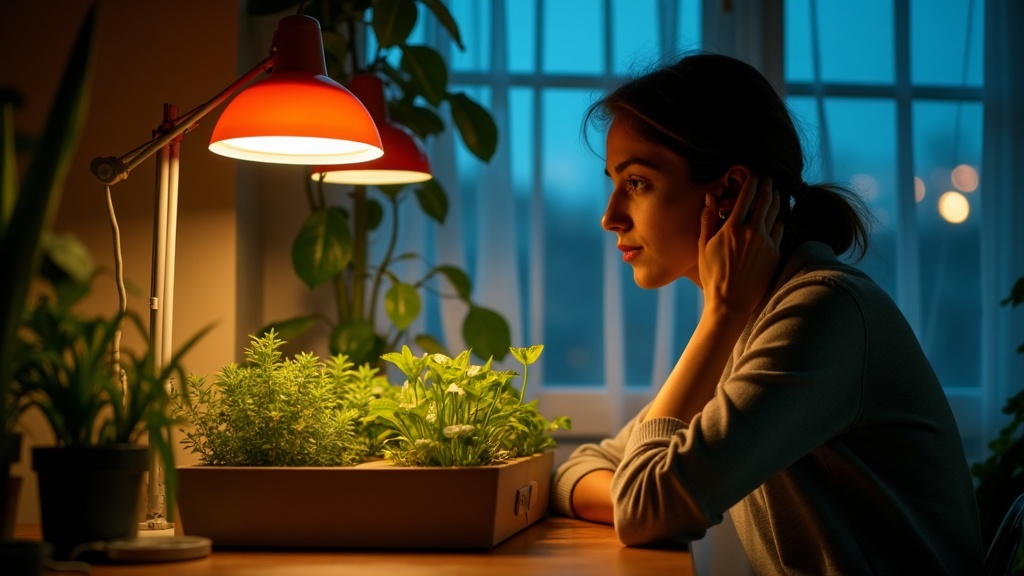
You can also screw a grow light bulb into any regular desk lamp. This is the easiest option if you already have lamps around. It works well for one or two plants nearby, but the light doesn’t spread far. Keep the lamp close to avoid long stretches of visible cord snaking across tables.
Whatever style you pick, think about where the outlet is before you buy. Extension cords piled in visible rooms look messy fast, and furniture placement matters more than you’d expect.
LED vs fluorescent matters more in an apartment than you think
When you’re choosing apartment grow lights, the LED versus fluorescent decision isn’t just about which plants grow faster. It’s about living with the lights every single day in a space where your couch, your bed, and your tomato seedlings all share the same few hundred square feet.
LEDs run cool to the touch, even after hours of operation. That matters when your grow light sits six inches from a wooden bookshelf or hangs near your curtains. Fluorescent tubes get warm enough that you need to think about ventilation and clearance, especially if you’re running them for twelve or fourteen hours straight.
Heat also affects your comfort. A bank of fluorescent tubes running all evening can make a small room feel stuffy in summer. LEDs barely change the temperature, which means your air conditioning isn’t working overtime and your electricity bill stays manageable.
Then there’s the look of the thing. LEDs come in sleek bars, compact panels, and even bulbs that screw into desk lamps. They blend into modern apartments pretty naturally. Fluorescent fixtures tend to be bulkier, with that distinctive long-tube shape that screams “workshop” or “garage.” If your grow setup lives in your kitchen or living room, aesthetics matter more than you’d expect.
Fluorescents do have one big advantage: upfront cost. A basic shop light with fluorescent tubes is cheaper than most LED panels. If you’re just starting out with a few herbs or seedlings, that lower price makes sense. But LEDs last years longer and use less electricity every single day, so the math shifts over time. For apartment dwellers watching both the monthly budget and the long game, that difference is worth thinking through.
Pick a spectrum that your plants and your eyes can live with
Walk into any grow room and you might see plants bathed in an eerie purple glow. That’s because many older LED grow lights use a mix of red and blue wavelengths that plants love but humans find unsettling. If you’re growing herbs on your kitchen counter or greens in your bedroom, that magenta light can make your space feel like a sci-fi movie set.
Here’s the good news: you don’t need purple light to grow basil and lettuce. Full-spectrum white LED lights work beautifully for common apartment crops like herbs, leafy greens, cherry tomatoes, and peppers. They look just like normal bright white bulbs to your eyes, but they deliver the light wavelengths plants need to grow.
Think of it this way. Purple lights are optimized for maximum plant growth in commercial operations where nobody lives. White lights are optimized for spaces where you actually want to spend time. The difference in plant performance is minimal for casual growers, but the difference in how your apartment feels is huge.
White grow lights also make it easier to spot pests, check if your plants need water, and take decent photos of your dinner herbs. You can turn them on during evening hours without feeling like you’re sitting under a tanning bed or interrogation lamp.
When shopping, look for terms like “full spectrum,” “natural white,” or “daylight.” Some lights offer warm white tones that feel cozier in living spaces, while others lean toward bright white that mimics midday sun. Either works fine for greens and herbs. Your comfort matters more than squeezing out an extra leaf or two.
Control brightness, light spill, and timing so it doesn’t bother anyone
Grow lights can be surprisingly bright, especially if you’re running them in a shared space or near windows where neighbors might see them. The good news is that a few simple adjustments can keep your indoor garden from turning into a light show that bothers anyone else.
Start with placement. Position your lights away from windows whenever possible, or angle them so they point downward toward your plants instead of outward. Even a small shift can make a big difference in how much light escapes your space. If you’re growing on a shelf or cart, consider adding a simple backing made from cardboard, foam board, or even a curtain. This creates a barrier that keeps light contained where you want it.
Reflectors and shades are your friends here. Many apartment grow lights come with built-in hoods or reflective panels that direct light down onto plants instead of spreading it everywhere. If your light doesn’t have one, you can add reflective material around your growing area to bounce light back toward the plants. This actually helps your plants grow better while reducing glare for everyone else.
A timer is one of the most practical tools you can use. It keeps your lights on a consistent schedule without you having to remember, and it prevents awkward situations like your grow light turning on at midnight and lighting up a shared living room. Most plants do fine with twelve to sixteen hours of light, so you can time it to run during normal waking hours when the brightness won’t disrupt anyone trying to sleep. Timers are inexpensive and plug right in between your light and the outlet.
Understand energy use without doing complicated math
You don’t need a spreadsheet to figure out if a grow light will cost you much to run. The key number is right on the box or product page: wattage. That tells you how much electricity the light pulls when it’s on.
A small LED light for a countertop herb garden might use around 10 to 20 watts. That’s about the same as an old nightlight. Run it for 12 hours a day and you’re barely ticking up your electric bill. A bigger setup with multiple panels for a shelf full of vegetables might pull 60 to 100 watts or more, closer to what a laptop uses.
The real cost depends on two things: how many watts your light uses and how many hours a day you leave it on. Most plants need somewhere between 12 and 16 hours of light daily. If your electricity is expensive where you live, those hours add up faster. If it’s cheap, you’ll barely notice.
Energy-efficient plant lights matter most when you’re running them all day, every day, for months on end. That’s why LEDs have become so popular. They use less power to produce the same amount of light compared to older fluorescent bulbs, and they run cooler too.
Speaking of heat, that’s another hidden benefit of efficient lights. A light that wastes less energy as heat won’t warm up your apartment as much. In summer, that can make a real difference in how comfortable your space feels, especially in a small room. You’re not just saving a few dollars. You’re also avoiding the need to crank up a fan or air conditioner to compensate.
Watch for noise, heat, and other comfort surprises
Some apartment grow lights hum or buzz in ways that seem fine in a store but drive you crazy at home. The noise usually comes from the power driver, which is the little box that converts electricity to the right voltage for the LEDs. Cheaper drivers sometimes produce a persistent buzz that gets annoying fast in a bedroom or quiet living room. Lights with built-in cooling fans can also whir constantly, and that sound carries surprisingly well in small spaces.
Heat is another hidden issue. Even energy-efficient LEDs get warm, and the fixtures themselves can become hot to the touch after a few hours. If you mount a light near a wooden shelf, books, or curtains, that heat builds up over time. It’s not usually a fire hazard with quality lights, but it can warp shelves or discolor fabric. Always leave a few inches of clearance around the fixture so air can move freely.
Some grow lights also flicker in ways your eyes don’t consciously notice but your brain does. It can cause mild headaches or just make a room feel uncomfortable. This is more common with older fluorescent fixtures or very cheap LEDs. If you’re sensitive to light quality, look for products that mention flicker-free operation.
Little things matter too. Bright blue or red indicator lights on timers or power switches can be surprisingly disruptive at night, especially in bedrooms. And if you have cats or curious dogs, make sure floor lamps or clip-on fixtures are stable and won’t tip over easily. A knocked-over grow light can break bulbs, spill water from nearby plants, or just scare the life out of everyone at two in the morning.
Match the light to what you want to grow indoors
Not all plants ask for the same thing from your apartment grow lights. Some are easy to please, while others basically want to live in the Sahara.
Herbs like basil, parsley, and cilantro are forgiving. Same goes for leafy greens like lettuce, spinach, and kale. They’ll grow happily under modest lighting, the kind you can fit on a kitchen counter or bookshelf without rewiring your apartment. A small LED panel or a couple of compact fluorescent bulbs will usually do the job. These plants don’t need intense light to stay healthy and productive.
Fruiting plants are a different story. Peppers, tomatoes, and strawberries want much brighter light because they’re trying to do something harder than just making leaves. They need energy to flower and produce fruit. That means stronger lights, often positioned closer to the plant, and more space to let them stretch out. You can grow them in an apartment, but it usually means dedicating a corner or a shelf setup rather than squeezing them next to your coffee maker.
Think about what fits your space before you pick a plant. One basil plant on the windowsill with a small grow light? That’s simple. A shelf garden with a few types of lettuce and herbs? Still manageable. A mini tomato plant that needs a bigger light and room to sprawl? That takes more planning.
Be honest about yield, too. You’re not going to harvest bushels of tomatoes from a studio apartment. But a steady supply of fresh basil or a handful of salad greens every week? That’s realistic, rewarding, and won’t turn your living room into a greenhouse.