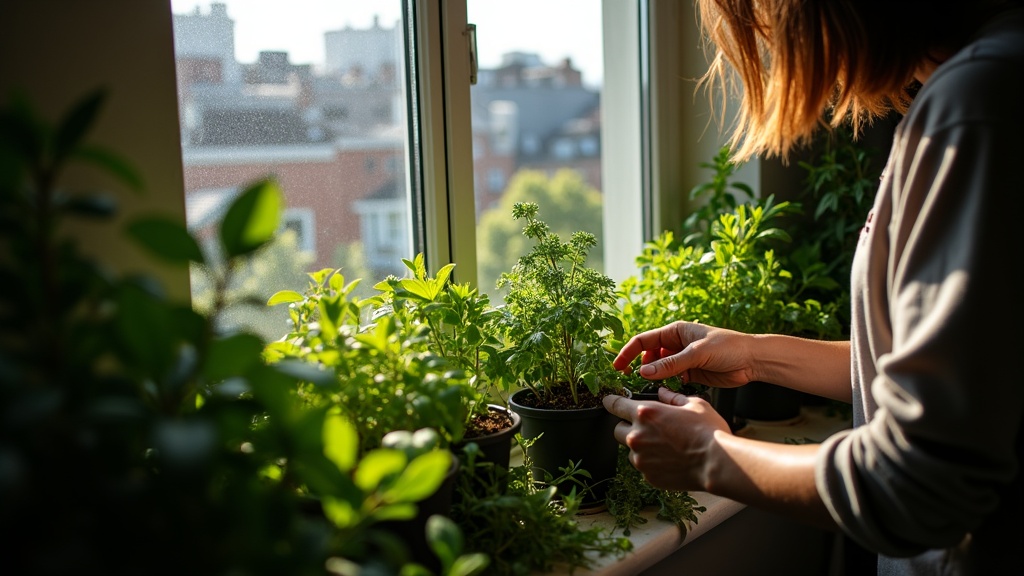
You don’t need a backyard or a balcony to grow fresh herbs. A sunny windowsill in your apartment is enough space to keep a small collection of useful plants that you can actually cook with. No fancy equipment required, no green thumb necessary.
Growing herbs indoors sounds more complicated than it really is. You’re not trying to become a master gardener or fill your apartment with greenery. You just want fresh basil for your pasta or a sprig of mint for your tea without buying an entire plastic package that wilts in your fridge.
A simple windowsill herb garden takes up less space than a row of books. It needs about as much daily attention as watering a houseplant, which is to say, very little. The mess stays contained in a few small pots, and the whole setup can cost less than a few trips to the grocery store.
The best part? You get to snip off exactly what you need while you’re cooking. No more throwing away half a bunch of herbs that turned to slime in the produce drawer. Just walk over to your window, grab a few leaves, and get back to your recipe.
This guide will walk you through the basics of setting up your own windowsill herb garden. We’ll cover which herbs are easiest to start with, what kind of containers work best, and how to keep everything alive without overthinking it. By the end, you’ll have a clear plan for turning that empty windowsill into something genuinely useful.
Choose herbs that actually do well on a windowsill
Not all herbs are created equal when it comes to indoor life. Some thrive on a sunny windowsill with minimal fuss, while others sulk and wither no matter what you do. Starting with the right ones makes all the difference between a little green corner you’re proud of and a pile of brown stems you feel guilty about.
The easiest indoor herbs fall into two loose categories. Leafy herbs like basil, parsley, cilantro, and chives grow relatively fast and give you something to snip within a few weeks. They’re softer, greener, and tend to be more forgiving if you forget to water for a day. Woody herbs like thyme, rosemary, and oregano have tougher stems and grow more slowly, but they’re incredibly hardy once they settle in.
For a windowsill setup, basil and parsley are fantastic starting points. Basil loves warmth and sun, grows quickly, and you’ll actually use it often if you cook pasta, salads, or anything Italian. Parsley is slower but nearly indestructible. Chives are almost impossible to kill and add a mild onion flavor to eggs, potatoes, and soups. Mint grows like a weed, which is great indoors where it can’t take over your yard. Thyme is small, tough, and perfect if you roast vegetables or make chicken.
Here’s the thing: don’t pick herbs just because they sound nice. Think about what you actually cook. If you never make mojitos, skip the mint. If you eat eggs twice a week, chives make sense. Start with two to four herbs you’ll genuinely use, not a whole windowsill of variety that sits there looking decorative until it doesn’t.
Figure out whether your window can support herbs
Before you buy a single seed, spend a few days watching your windowsill. You need to know what kind of light you’re actually working with, because most herbs are pretty demanding about sunshine.
Here’s the simple test: count how many hours of direct sunlight hit the windowsill each day. Direct sunlight means you can see the sun’s rays creating a bright patch on the sill or wall. If you get four to six hours of that strong, direct light, you’re in good shape for basil, thyme, and most common herbs. Three hours or less? Your plants will still grow, but they’ll stretch toward the window, grow more slowly, and look a bit scraggly. They’re not dying, just reaching for more light than they’re getting.
The brightness of the room doesn’t tell you much. A room can feel sunny and still not give your plants the intense, direct light they need. What matters is how close the pot sits to the glass and whether anything blocks the sun during peak hours.
Now for the practical stuff. If your sill gets uneven light, rotate your pots every few days so all sides get a turn. Keep herbs away from heating vents and air conditioning units because the blasts of hot or cold air stress them out. And make sure you leave enough room to open and close your blinds or curtains without knocking plants over. You’d be surprised how often that becomes a problem.
If your window just doesn’t get enough light, don’t beat yourself up. It’s not your fault. You can try shade-tolerant herbs like mint or parsley, which are more forgiving, or accept that your setup might need a small grow light down the road.
Use small containers with reliable drainage to prevent the usual mess
The biggest mistake people make with windowsill herb gardens is using pots without drainage holes. When water can’t escape, it pools at the bottom and turns the soil into a swamp. The roots sit in that stagnant water, start to rot, and your plant dies looking sad and yellow. Drainage holes let excess water flow out so the roots can actually breathe.
Look for small pots or planters that have at least one hole in the bottom and come with a matching saucer or tray underneath. The saucer catches the drips so you’re not damaging your windowsill or leaving water rings on the paint. You want containers that sit stable and flat, especially if your sill is narrow or slightly sloped.
Individual four to six inch pots work beautifully for windowsills because you can arrange them however they fit and move them around as needed. If you prefer a tidier look, a long narrow trough planter can hold multiple herbs, but make sure it has drainage too. Some people use a trough as the outer container and set smaller pots with drainage inside it, which makes watering easier to control.
You can absolutely reuse containers from other plants or even yogurt containers and takeout tubs, as long as you poke or drill holes in the bottom. Just test that water actually flows through before you plant anything.
To protect your windowsill, place a waterproof tray under everything or use a rubber mat cut to size. You don’t need anything fancy. A simple plastic tray from a hardware store or even a baking sheet works perfectly fine and saves you from worrying about every drip.
Start with potting mix and one simple planting method
The first thing you need is potting mix. Not garden soil from outside. Indoor potting mix is designed to stay light and fluffy in a container, which means water drains properly and roots can breathe. Garden soil gets dense and heavy in pots, doesn’t drain well, and can bring in bugs or diseases you don’t want living on your kitchen windowsill.
You can find basic indoor potting mix at any garden center or hardware store. Nothing fancy required. Just look for something labeled for indoor plants or containers.
Now for the plants themselves. You have two paths. The fastest way is to buy small starter plants, sometimes called seedlings or herb starts. You bring them home, move them into your windowsill planters, and they’re already growing. You’ll see new leaves within days.
The slower path is starting from seed. Seeds cost less and give you more variety, but patience is required. Most herbs take one to three weeks just to sprout, then several more weeks before they look like actual plants. Both methods work fine. Pick whichever fits your timeline and budget.
The planting steps are simple either way. Fill your container most of the way with potting mix. If you’re transplanting a starter plant, gently remove it from its original pot and nestle it into the new one at the same depth it was growing before. If you’re planting seeds, follow the packet instructions for depth, usually just a light covering.
Water gently until the soil is moist but not soaking. Label your pots if you’re planting more than one type, because tiny seedlings all look identical at first.
One last thing about small pots. Don’t try to cram multiple plants into a tiny space. Each herb needs room for its roots. One basil or one parsley plant per small pot is plenty.
Water in a way that fits apartment life
The biggest mistake people make with windowsill herbs is watering on a schedule. Your basil doesn’t care that it’s Wednesday. It cares whether the soil is dry.
Before you water, stick your finger into the soil up to your first knuckle. If it feels damp, wait. If it feels dry, it’s time to water. You can also pick up the pot. A dry pot feels surprisingly light compared to one that was just watered. After a week or two, you’ll know the difference without thinking about it.
When you do water, don’t just sprinkle the top. Water until it runs out the drainage holes at the bottom. This makes sure the whole root system gets moisture, not just the surface. Then stop. Let the pot sit in the sink or bathtub for ten minutes so the excess drains away completely.
This is the part that saves your windowsill. Never put a wet pot back on the sill right away. Empty any water sitting in the saucer underneath before you return the plant to its spot. Standing water leads to root rot, which is just a fancy way of saying the roots drown and turn to mush.
Indoors, most small herb pots need water every three to five days. But that changes. In winter when the heat is on, soil dries faster. Bigger pots stay moist longer than small ones. A sunny, warm sill dries out faster than a cooler spot.
If leaves turn yellow and feel mushy, you’re watering too much. If they’re crispy, brown at the edges, or drooping even though the stems are firm, you’re watering too little. The finger test fixes both problems.