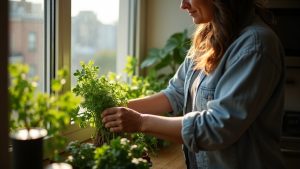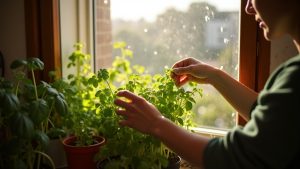
You brought home basil or mint with the best intentions. You put it on your sunniest windowsill because herbs need light, right? Then within a week, the leaves turned brown at the edges, the soil dried out overnight, and the whole plant looked miserable.
This happens to almost everyone trying to grow herbs indoors. That bright windowsill isn’t quite like the garden outside. The glass magnifies heat, the air is drier than outdoors, and the small pots most herbs come in can’t hold much moisture. Your plant isn’t doomed because you lack a green thumb. It’s struggling because windowsill conditions are surprisingly harsh.
The good news is that keeping herbs alive indoors doesn’t require fancy equipment or a complete overhaul of your space. A few small adjustments make all the difference between crispy brown basil and a thriving windowsill garden you can actually cook with.
Most herb failures come down to three things: too much direct heat through the glass, soil drying out faster than you expect, and pots that are too small for the conditions. Once you understand why your sunny spot is trickier than it looks, you can make simple tweaks that help your herbs handle the intensity. We’re talking about practical stuff like where exactly you place the pot, how you check if it needs water, and what to do when that afternoon sun gets brutal.
Your windowsill sun is not the same as outdoor sun
When you put a pot on a sunny windowsill, the glass acts like a magnifying lens. It concentrates the light and traps heat around your plant. The pot itself can get surprisingly hot to the touch, which means the soil inside is heating up too. Your herbs essentially end up sitting in a bright, hot spotlight for hours at a time.
This is very different from outdoor sun, where air flows freely and the soil stays cooler. Indoors, that trapped heat dries out the soil fast and can actually cook the leaves closest to the glass. You might notice crispy brown edges, pale bleached spots, or leaves that suddenly go limp even though you watered recently. These are signs your herbs are getting too much intense indoor sun.
On the flip side, too little light shows up differently. The stems get long and floppy, reaching toward the window. The leaves stay small and pale green instead of full and vibrant. New growth looks weak and spindly.
The easiest way to understand your windowsill is to watch it for a day. Notice where the bright patch of direct sun lands and when. Does it hit your pots for two hours or six? Does the spot feel warm or actually hot when you touch it in the afternoon?
If your herbs show crispy edges or the pot feels hot, try moving them back a few inches from the glass or shifting them to a spot that gets bright light but not that intense direct beam all afternoon. Sometimes just a foot of distance makes all the difference.
Soften strong light without turning the spot into shade
A sunny windowsill can be a blessing and a curse. The light that makes herbs grow can also scorch their leaves if it’s too intense or if the glass gets really hot. The good news is you don’t need to move your herbs into a dim corner. Just dial things back a little.
The simplest trick is to pull your pots a few inches away from the glass. That small gap makes a huge difference. The glass itself can heat up like a griddle on a sunny afternoon, and herbs pressed right against it basically get cooked. Move them back four to six inches and they still get all the light they need, but without the direct contact with hot glass.
If your window gets brutal afternoon sun, a sheer curtain works wonders. You’re not blocking the light, just filtering it. Think of it like sunglasses for your plants. They’ll still photosynthesize just fine, but without the leaf burn that comes from hours of unfiltered rays beating down on them.
Rotating your pots every few days helps too. Herbs naturally lean toward light, and if one side is always facing the window, that side takes all the punishment. A quick quarter turn when you check on them spreads the exposure around and keeps growth more balanced.
These adjustments might seem minor, but they add up fast in a windowsill garden. You’re not creating shade. You’re just taking the edge off conditions that would stress the plants. The result is herbs that actually thrive instead of limping along with crispy brown leaf tips and stunted growth.
Use a watering approach that matches a fast-drying windowsill
Sunny windowsills are surprisingly harsh environments. The combination of direct sunlight and indoor heat causes soil to dry out much faster than you’d expect. If you’re used to watering houseplants once a week, your herbs might be gasping for water by day three or four.
The biggest mistake people make is giving their herbs frequent little sips of water. A tablespoon here, a splash there. This approach keeps the top layer of soil moist but never reaches the roots sitting deeper in the pot. The plant gets stressed, you water more often, and nothing improves.
Instead, water thoroughly each time. That means pouring water slowly until it starts running out the drainage holes at the bottom. Let it drain completely, then empty any water sitting in the saucer underneath. This ensures the entire root system gets hydrated, not just the surface.
How do you know when it’s time to water again? Forget about watering every Monday or following a fixed schedule. Check the soil itself. Push your finger about an inch down into the soil. If it feels dry at that depth, it’s time to water. If it still feels cool and slightly damp, wait another day.
You can also lift the pot to feel its weight. A fully watered pot feels noticeably heavy. A dry one feels surprisingly light. After a few checks, you’ll recognize the difference instantly.
Watch for dry gaps forming between the soil and the pot’s edge too. That’s a clear sign the soil has dried out and pulled away from the sides. These simple checks take five seconds and prevent both bone-dry disasters and soggy root problems.
Drainage and saucers can make or break apartment herbs
Most herbs die quietly from the bottom up. You check the leaves, adjust the light, wonder why your basil looks sad. Meanwhile, the roots are either drowning in standing water or bone dry because you’re scared of overwatering.
Every pot needs drainage holes. Not just one tiny hole, but proper openings at the bottom. When you water, excess should run straight through and out. That’s how roots stay healthy. If your favorite decorative pot has no holes, use it as an outer shell and keep the plant in a plain plastic pot inside it.
The saucer underneath is there to catch drips, not to create a little moat. If water sits in that saucer for more than fifteen minutes after watering, pour it out. Roots sitting in standing water will rot, even if the soil on top looks fine.
Here’s the simplest routine that actually works: take your herb to the kitchen sink when it needs water. Water it thoroughly until you see liquid running out the bottom. Let it drain completely for a few minutes. Then return it to the windowsill and its saucer.
Those pretty cachepots without drainage can hide trouble. Water pools at the bottom where you can’t see it, and the plant slowly suffocates. If you must use one, lift the inner pot out every time you water, or check the bottom regularly with your finger.
When herbs start looking stressed, we usually blame watering. But sometimes the problem isn’t how much you water. It’s that the water has nowhere to go, or the roots have been sitting wet for days. Fix the drainage setup first, then worry about your watering schedule.
Pot size and material affect how quickly herbs dry out
If your herbs seem thirsty all the time, the pot itself might be working against you. Small pots dry out fast because there’s less soil to hold moisture. On a sunny windowsill, that little container heats up quickly, and the roots bake through the afternoon. What feels like consistent care can still leave your plants stressed if the pot can’t keep up.
The material matters more than most people realize. Terra cotta pots are beautiful and classic, but they’re porous. They breathe, which sounds nice until you realize that means moisture evaporates through the walls as well as the soil surface. You’re losing water from all sides. Plastic and glazed ceramic pots hold moisture much longer because they don’t wick it away. On a hot, bright windowsill, that difference can mean watering every day versus every few days.
You’ll know it’s time to move up a pot size when the soil dries out within a day even after a good soak, when roots start circling visibly at the drainage holes, or when the plant gets top-heavy and tips over easily. But don’t jump from a four-inch pot to a ten-inch bucket. Go up just one size, maybe two inches wider. A pot that’s too large holds wet soil the roots can’t reach, which invites rot and other problems.
Repotting doesn’t need to be complicated. Gently loosen the roots if they’re packed tight, set the plant in the new pot at the same depth it was before, and fill around it with fresh potting mix. Water it in, let it drain, and you’re done. Sometimes the simplest fix is just giving your herbs a little more room to breathe.
Use soil that stays evenly damp, not soggy or sandy-dry
Most herbs die because the soil itself stops working. Not because you forgot to water, but because the soil turned into something that can’t hold moisture anymore.
Good soil for growing herbs indoors should feel crumbly when you squeeze it, like brownie mix. It should hold water long enough for roots to drink, then let the excess drain away. When you stick your finger in, it should feel slightly damp an inch down, not bone dry or swampy.
The problem is that many potting mixes sold for windowsill gardens are mostly peat. Peat works great when it’s fresh, but once it dries out completely, it turns hydrophobic. That means it actually repels water instead of absorbing it. You’ll pour water on top and watch it run straight down the sides of the pot without soaking in. Meanwhile, your basil wilts because the roots are sitting in dust.
The opposite problem happens when soil stays soggy at the bottom while the top looks dry. This happens when soil gets packed down too hard or when there’s not enough drainage material mixed in.
The simplest fix is to gently break up the top inch of soil with a fork every few weeks. This stops it from forming a hard crust. If water runs straight through without soaking in, try bottom watering occasionally. Set the whole pot in a shallow dish of water for ten minutes so it can absorb moisture from below.
And when you first pot your herbs, don’t press the soil down hard. Fill it loosely and let watering settle it naturally. Packed soil becomes waterproof soil.
Dry indoor air and heaters can quietly stress herbs
Your basil looked fine yesterday. Today the leaves are curling and the tips are turning brown. You check the soil and it feels moist, so what went wrong? The answer might be floating in the air around the plant, not hiding in the pot.
Indoor air during winter is shockingly dry. Heating systems pull moisture out of the air as they warm your home. If your herbs sit near a radiator or directly above a heating vent, they’re getting blasted with hot, dry air for hours every day. The leaves lose water faster than the roots can pull it up from the soil, even when the pot is properly watered. The plant essentially gets dehydrated from the outside in.
The fix doesn’t require fancy equipment. Start by moving your herbs a foot or two away from direct heat sources. Even a small distance makes a real difference. If you have several pots, group them together on the windowsill. Plants release moisture as they breathe, and clustering them creates a slightly more humid pocket of air they all share.
A pebble tray is the classic apartment solution and it actually works. Fill a shallow tray with stones, add water until it almost covers the pebbles, then set your pots on top. As the water evaporates, it adds moisture to the air right around the leaves. Just make sure the pot bottoms aren’t sitting in the water itself.
One last thing: herbs do need some air movement to stay healthy and avoid mildew, but a strong draft or fan pointed right at them will dry them out fast. Gentle, indirect airflow is what you’re after.
How you harvest affects whether herbs keep growing
Here’s the surprising thing about using your herbs: the way you snip them matters just as much as how you water them. Most people who think they’re killing their herbs by harvesting are actually doing the opposite problem. They’re being too cautious.
When you harvest, always pinch or cut from the tips of stems, not down at the base. This tells the plant to send out two new stems where you made the cut. Do this regularly and your basil or mint stays bushy and full instead of tall and spindly. Leggy herbs are weak herbs, especially on a windowsill where they’re already stretching toward light.
Never strip just one side of the plant because you can reach it easily. It sounds obvious, but we all do it. Take a little from different spots around the plant so it stays balanced and doesn’t lean or develop bare patches that never really fill back in.
The other mistake is taking too much at once. A good rule is to never remove more than about a third of the plant in one go. If you need a big handful for a recipe, take it from your healthiest, biggest plant and give that one a break for a week or two.
Here’s something most people don’t realize: regular light trimming actually helps herbs in small pots. When you keep the leafy top growth in proportion to the roots below, the plant isn’t constantly stressed trying to support more leaves than its root system can handle. This is especially true for apartment herbs in those small containers that fit on a windowsill. A little trim here and there keeps everything in balance.
Match common symptoms to the most likely windowsill cause
When your herbs start looking sad, it helps to match what you’re seeing to what’s probably causing it. This keeps you from changing five things at once and never knowing what actually worked.
Crispy brown edges are usually about dryness. That could be dry air from the sunny window heating up, soil drying out too fast, or both. If the leaves feel papery and crunch when you touch them, the plant is losing water faster than it can replace it.
Sudden wilting in the middle of the day that perks back up by evening is classic heat stress. The plant isn’t actually dying, it’s just struggling to keep up when the sun is strongest. If this happens regularly, your windowsill might be getting too hot during peak hours.
Yellow leaves paired with soil that stays wet for days usually means a drainage problem or overwatering. The roots can’t breathe properly when they sit in water. Check if your pot has drainage holes and whether you’re watering too often.
Pale, washed-out leaves combined with long stretches of stem between leaf sets means the plant isn’t getting enough usable light. Yes, even on a sunny windowsill. If there’s a sheer curtain or the window faces the wrong direction, the light might look bright to your eyes but not be strong enough for the plant.
Brown spots that show up after you water might be sunburn from water droplets. Water acts like a tiny magnifying glass when the sun hits it. Try watering at the soil level instead of from above, especially in the morning.
Pick the issue that sounds most like yours and change just that one thing. Then wait a week before adjusting anything else.