You’ve probably stood in front of your apartment window, eyeing that shady corner or dim kitchen counter, wondering if your plants could actually survive there. Maybe you’ve already lost a fiddle leaf fig or watched a succulent stretch itself into a sad, leggy mess. The truth is, most apartment windows just don’t let in enough light for many plants to thrive.
That’s where grow lights come in. But here’s the problem: shopping for them feels like you need a degree in physics. There are lumens and kelvins and PAR ratings and full-spectrum this and LED that. Most guides assume you want to build a vertical farm in your living room.
You probably just want to keep your pothos happy and maybe grow some basil without it dying every two weeks.
The good news is that picking the right grow light for your apartment doesn’t have to be complicated. You don’t need to understand all the technical specs. What you do need to know is what kind of light your window actually provides, what plants you’re trying to grow, and which type of grow light makes sense for your space and budget.
This guide starts with your real situation. We’ll look at the different kinds of windows you might have, figure out what your plants actually need, and then match you with a grow light that works. No jargon overload, no expensive mistakes, just straightforward advice for keeping plants alive in an apartment.
Start by reading your window light like a plant would
Before you buy apartment grow lights, spend a normal day watching how light actually moves through your space. This matters more than which direction your window faces, because what counts is the window light your plants will actually get.
Stand where you plan to put your plants at midday on a typical day. Can you read a book comfortably without turning on a lamp? If yes, that’s bright light. If you need to squint or lean toward the window, that’s medium light. If you’d automatically reach for a light switch, that’s low light.
Now look at how far the brightness reaches into your room. Bright window light usually lights up the space four to six feet from the glass. Medium light fades out around two to three feet. Low light barely makes it past the windowsill.
Check if any direct sun actually hits the spot where your plant will sit, and if so, for how long. Even an hour of direct sun changes everything for indoor lighting plants need. Watch how shadows look at midday too. Sharp, defined shadows mean stronger light. Soft, blurry shadows mean less intensity.
Plenty of apartment factors mess with window light in ways that aren’t obvious at first glance. A tree right outside drops the light level dramatically. So does a building across the street, a deep overhang above your window, or tinted glass. Even window screens cut down the light more than you’d expect.
One last thing: light changes through the year as the sun’s angle shifts, so your winter window might be dimmer than your summer one. You don’t need to obsess over this, just know that what you see today gives you a reliable snapshot for choosing the right grow light setup.
Match the grow light to what you’re trying to grow
Not all plants need the same amount of light, and that makes a big difference when you’re shopping for apartment grow lights. A pothos sitting on your bookshelf has very different needs than a basil plant you’re hoping to harvest from.
Leafy houseplants like pothos, philodendrons, and snake plants are the easiest to please. They’ll do fine with a basic grow light that’s just filling in what your window can’t provide. These plants naturally grow under forest canopies in the wild, so they’re built for lower light. A small LED bulb or clip-on lamp a foot or two away usually does the trick.
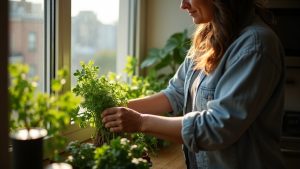
Herbs and leafy greens like lettuce, basil, and parsley need more brightness. They want something closer to full sun, especially if your window is north-facing or blocked by buildings. If the light is too weak, you’ll see tall, spindly stems reaching desperately upward. The leaves stay small and the flavor suffers. For these, you want a stronger panel or bulb positioned closer to the plants.
Fruiting plants like tomatoes or peppers are the hungriest for light. They need serious brightness to actually produce fruit indoors, not just survive. Without it, they’ll grow leaves but won’t flower or set fruit. These usually need dedicated grow light setups, not just a supplement to weak window light.
On the flip side, too much light causes problems too. If your grow light is too strong or too close, leaves develop pale, bleached patches or crispy brown spots. Seedlings are especially sensitive because their leaves are tender. The fix is simple: move the light farther away or reduce how many hours it’s on each day.
Think about what you’re actually trying to achieve. Are you keeping a houseplant alive, or are you trying to grow dinner? That question tells you how much light you really need.
Know the grow light types you’ll actually see while shopping
Walk into any store or browse online for apartment grow lights and you’ll see the same basic types over and over. Each one works a little differently in real apartment situations.
LED panels are flat squares or rectangles that hang above your plants. They’re great if you have a dedicated plant corner near a big window or a bookshelf you’ve turned into a mini garden. They cover a lot of plants at once, but they need somewhere to hang from.
LED bars look like slim fluorescent tubes but run cooler and last years longer. They fit perfectly under shelves or kitchen cabinets where you’re growing herbs or small greens. If you have awkward narrow windowsills, a bar light can tuck in without taking up plant space.
Clamp lamps with grow bulbs are exactly what they sound like. You screw in a special bulb and clamp the lamp wherever you need it. These work well for a single desk plant or a sad corner that gets zero window light. They’re also the easiest to move around as your setup changes.
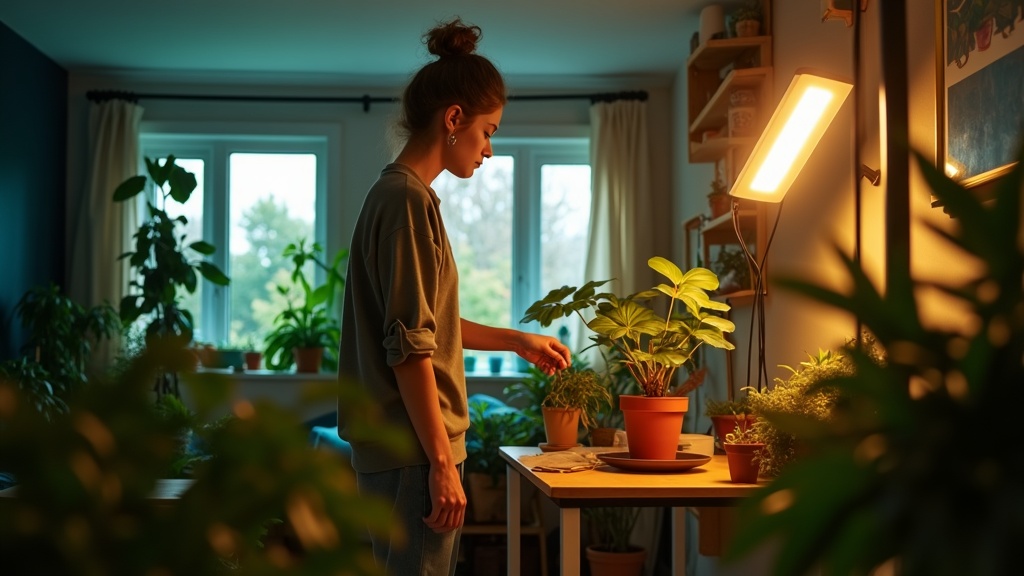
Gooseneck multi-head lights have flexible arms you can bend toward different plants. They’re popular for people with several small pots clustered on a table or dresser near a window. You can aim each head exactly where it’s needed.
You might still see older fluorescent tube options mentioned online. They work fine, but they run hotter, use more electricity, and need replacing more often. That’s why most people just go with LEDs now, especially in tight apartment spaces where heat matters.
None of these is automatically better than the others. It depends on your actual window situation and how much room you have to work with.
Pick a light size and shape that fits your window and your space
The right grow light isn’t just about brightness. It also needs to fit the actual space you have without turning your apartment into an obstacle course.
Think about what you’re trying to light. A single fiddle leaf fig needs a different setup than a windowsill packed with succulents or a corner shelf crowded with pothos. If you have one big plant, a clip-on light or a small adjustable lamp works great. For a cluster of plants on a table or shelf, you’ll want something wider that spreads light across the whole group.
Distance matters more than most people realize. The closer the light sits to your plants, the brighter it gets. Move it a foot farther away and the intensity drops fast. That’s why adjustable stands and clamp lights are so useful in apartments. You can tweak the height as your plants grow or move things around when you rearrange.
Now think about your actual window situation. Got a big sunny window with a little plant table? A standing lamp or a bar light mounted above works well. Narrow windowsill? Look for slim panel lights or small clamps that won’t block the view or knock into the glass when you open it. Deep room where daylight fades before it reaches your bookshelf? You might need a stronger light on an adjustable arm that reaches back from the window.
Keep practical stuff in mind too. Don’t hang lights where they’ll brush against curtains or dangle near a radiator. Make sure cords aren’t stretched across walkways. If your window gets drafty, position the light so cold air doesn’t blow directly on warm bulbs. A tidy, stable setup makes apartment gardening way less stressful.
Use a few simple specs to avoid bad picks
Shopping for apartment grow lights online can feel overwhelming. Listings throw around numbers that sound impressive but don’t always mean much. A few simple signals can help you skip the junk without needing a physics degree.
Look for lights described as “full spectrum” or “white light.” These mimic natural daylight and work well for most plants. They’re also easier on your eyes than the bright purple lights you might have seen. Purple lights do work for plants, but they make your apartment look like a nightclub. If you’re growing in a living space where you actually spend time, white light is usually the better choice.
Be skeptical of brightness claims that sound too good to be true. Some listings brag about “1000W equivalent” lights that only draw 20 watts from your wall. That’s not lying exactly, but it’s misleading. For LEDs, the actual power draw matters more than these inflated comparisons. A decent grow light for a small apartment setup usually draws somewhere between 20 and 50 actual watts.
Check if the listing shows real photos of the light in use, not just studio renders. Good sellers also tell you clearly how much area the light covers at different heights. If a listing is vague about coverage or only uses stock photos, that’s a red flag.
Remember that in an apartment, you’re not just choosing equipment. You’re choosing something that will sit in your home and affect how your space looks and feels. A slightly less powerful light that looks decent and doesn’t hum or flicker is often the smarter pick than the cheapest high-output option you can find.
Choose based on your window situation: big, small, or no direct sun
The best apartment grow lights depend less on your plant type and more on what your windows are already giving you. Think of it this way: you’re filling in the gaps, not lighting up the whole room from scratch.
If you have a big, bright window that gets several hours of direct sun, your plants are already in good shape most of the year. You don’t need much. A small clip-on light or a single bulb fixture works well here for cloudy stretches or winter months when the sun sits lower and weaker. You can also use one to help plants that sit a bit further back from the glass, where the light starts to fade. This kind of apartment gardening lighting is about extending what you already have, not replacing it.
If your window is small or faces a shaded courtyard, you’ll want something stronger and closer. A bar light or a compact panel gives you more punch in a tight zone. Position it right over your plants, maybe a foot or two away, so they get steady, focused light. This setup works best when you cluster your plants together rather than spreading them around the room.
If you have a bright room but no spot where the sun actually hits, you’re starting from zero. Here, you need a dedicated fixture that acts as the main light source. A full-spectrum panel or a larger bar light mounted above a shelf or table can create a little grow zone. The light needs to stay on longer each day, usually twelve to fourteen hours, because it’s doing all the work the sun would normally handle.
Make it easy to use with timers and a simple routine
The best apartment grow lights are the ones you’ll actually use every day. That sounds obvious, but it’s easy to start strong and then forget to turn the light on one morning, then another, and before long your plants are struggling. A timer fixes this problem completely.
You have two main options. Some grow lights come with a built-in timer that you set once and forget about. Others need a separate plug-in timer that sits between the outlet and the light cord. Both work fine. The plug-in timers are cheap and available at any hardware store, so don’t let the lack of a built-in timer stop you from buying a light you otherwise like.
Most plants do well with somewhere between twelve and sixteen hours of light per day. If you’re trying to help seedlings grow or encourage a plant to put out new leaves, lean toward the longer end. If you’re just keeping an existing plant happy and healthy, twelve to fourteen hours is plenty. You don’t need to obsess over the exact number.
Think about when you want the light on. If it runs from seven in the morning to seven at night, you won’t have a bright purple glow lighting up your living room while you’re trying to watch TV. Position the light so it’s not shining directly into your usual sight lines. A light aimed at a window alcove or corner shelf works better than one pointed toward your couch.
The goal is to set it up once and then not think about it. Your plants get consistent light even on cloudy weeks or busy mornings. You get to enjoy them without added effort.
Keep it safe, comfortable, and apartment-friendly
Grow lights are generally safe, but a few practical considerations matter a lot when you’re working in a rental or shared space. The first thing to think about is heat. Older incandescent bulbs and some high-intensity lights get seriously hot to the touch. If your light will be near curtains, papers, or anywhere a pet or child might brush against it, heat becomes a real concern. LED lights run much cooler, which is one reason they’ve become so popular for indoor setups.
Stability is surprisingly important. A tall lamp or clip fixture holding a heavy bulb can tip over easily, especially if you’ve got pets or limited floor space. Look for wide-base stands or clamps that grip securely. If you’re using a clamp fixture on a shelf or window frame, make sure it’s rated for the weight and won’t slide off when you open the window.
Cords near windows can be a tripping hazard and they don’t mix well with moisture from watering or condensation. Keep cords tucked away and avoid letting them drape where water might collect. Basic cord management clips help a lot here.
Then there’s the living-with-it factor. Some grow lights cast a bright purple glow that can feel like you’re running a tiny nightclub in your living room. If that bothers you or your roommates, look for full-spectrum white lights instead. They do the same job but look more like regular lighting.
If you’re renting, avoid anything that requires drilling holes. Tension rods, adhesive hooks rated for the fixture weight, freestanding tripods, and clamp mounts let you set up a solid grow light system without losing your security deposit. Your landlord and your future self will thank you.