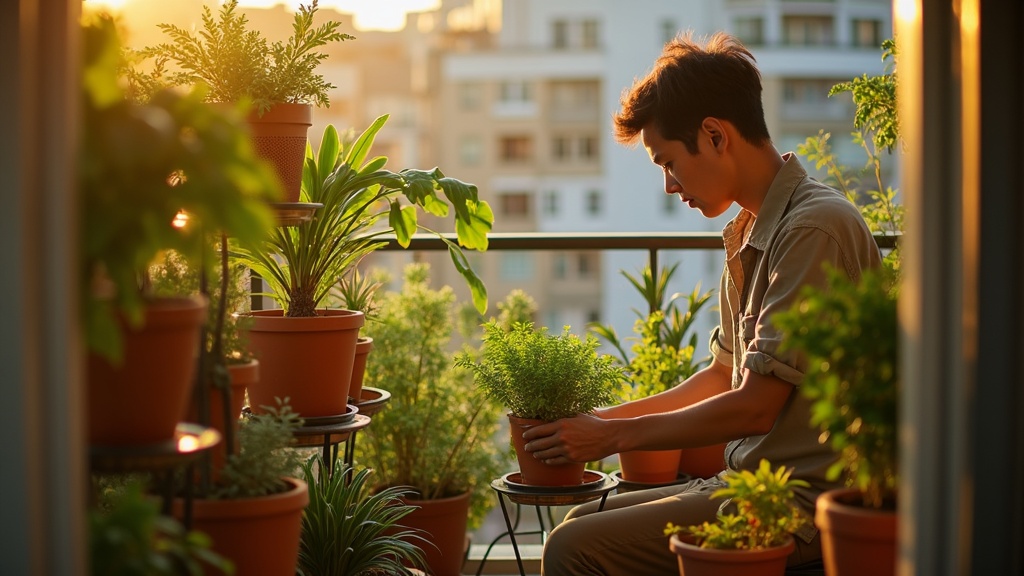
You don’t need a sprawling yard or permission to drill into walls to create a thriving balcony garden. If you’re renting or working with a tiny outdoor space, the secret isn’t about how much room you have. It’s about how you use it.
A good small balcony garden layout comes down to smart placement and keeping things flexible. Instead of built-in planters or heavy permanent structures, you’re working with pots and containers you can shift around whenever you need to. That means you can follow the sun as it moves, rearrange things when a plant outgrows its spot, or pack everything up when it’s time to move.
The beauty of this approach is that it’s completely reversible. You’re not committed to one setup forever. If something isn’t working, you just move it. A plant not getting enough light? Slide it closer to the railing. Need more space to sit? Push a few pots to the side.
This flexibility also means you can experiment without stress. Try grouping tall plants in the back and shorter ones up front. Test different corners to see where herbs actually thrive. Swap out seasonal plants without rebuilding anything. Your balcony garden can evolve as you learn what works.
Whether you have a narrow balcony barely wider than a doormat or a slightly larger space, the same principles apply. You’re arranging pots, not installing infrastructure. And that makes all the difference when you’re trying to garden without leaving a mark.
Start by mapping the usable space you actually have
Before you buy a single pot or plant, spend ten minutes figuring out where things can actually go. Most people glance at their balcony and think they have way more room than they really do. Then they end up with pots crammed everywhere, blocking the door or making it impossible to water anything without doing yoga poses.
Start by thinking about movement. Open your balcony door all the way and notice where it swings. That spot is off limits for pots. Then walk the route you’ll take every time you step outside. You need a clear path, even if it’s narrow. Mark that invisible walkway in your mind.
Next, look at what you need to keep accessible. If there’s a storage box, outdoor outlet, or drain, don’t block it with heavy containers you’ll have to move later. Same goes for any spot where you might want to sit with your morning coffee.
Here’s a simple trick that saves a ton of hassle: use painter’s tape on the floor to outline your no-go zones. It peels off cleanly and shows you exactly how much space you’re working with. If you don’t have tape, grab some empty Amazon boxes or cardboard and lay them down where pots might go. Stand back and walk around. Does it feel cramped? Can you still open the door comfortably?
You can also set out a few empty pots or buckets in different arrangements. Move them around until the layout feels natural. This quick test run means you won’t be wrestling full, heavy planters into new positions later when you realize the first attempt didn’t work.
Arrange pots based on sunlight patterns, not just aesthetics
Your balcony probably doesn’t get even sunlight across the whole space. One corner might bake in afternoon sun while another stays shaded all day. Before you arrange a single pot, spend a few days watching where the sun actually lands.
Check your balcony at different times. Morning light often hits from the east, while afternoon sun comes in hot from the west. Take note of where shadows fall from railings, overhead structures, or neighboring buildings. These dark spots can shift dramatically as the sun moves across the sky.
Once you know your light map, match your plants to it. Sun-hungry plants like tomatoes, peppers, and most herbs need that brightest strip where light lingers for hours. Tuck shade-tolerant plants like ferns or leafy greens into the dimmer corners. You’re not compromising on looks, you’re just working with what you’ve got.
Here’s the renter-friendly trick that changes everything: put your heaviest pots on rolling plant caddies. These little wheeled platforms let you chase the light without throwing out your back. When seasons shift and that sunny spot moves a few feet over, you can adjust without any heavy lifting or permanent changes.
Don’t overthink this. You’re not locked into one arrangement forever. If a plant looks stretched or pale after a week or two, it’s probably reaching for more light. Just roll it a bit closer to the sunny zone. If leaves look scorched or wilted by midday, scoot it back toward the shade. Your balcony garden can be as flexible as you need it to be.
Use height layering to fit more pots without blocking light
The secret to fitting more plants onto a tiny balcony is thinking vertically. Instead of spreading everything out at ground level, you can stack pots at different heights so each plant gets its share of sunlight. The basic rule is simple: tallest plants go in the back or against the wall, medium-height ones in the middle, and the shortest ones up front. This way, nothing gets trapped in shadow.
You don’t need to drill a single hole to make this work. Tiered plant stands are perfect for renters because they sit on the floor and hold multiple pots at graduated levels. Look for metal or wooden ones with two or three tiers. Narrow shelving units work too, as long as they’re stable and won’t tip in wind.
Old wooden crates, sturdy stools, or upturned buckets can lift pots to different heights without costing much. You can even use an inexpensive step stool as a plant riser. Just make sure whatever you’re using can handle the weight when the soil is wet.
Rail-hanging planters are another smart option if your balcony has a railing. Choose ones that clamp or hook on without screws. They hang over the edge and free up floor space while keeping trailing plants at eye level.
To keep everything stable, put your heaviest pots on the bottom and choose stands with wide bases. Lighter pots can go higher up. If something feels wobbly, move it lower or swap it for a smaller pot. You want a setup that stays put when you water or when the wind picks up.
Group pots by watering needs to keep the layout tidy
When you scatter thirsty plants and drought-tolerant ones randomly across your balcony, you create extra work for yourself. You’ll end up watering the same spots multiple times a day while others sit bone-dry. This constant back-and-forth leads to spills, puddles, and plants that never quite get what they need. Over time, the whole setup feels messy and frustrating instead of enjoyable.
A simpler approach is to group your pots by how much water they actually need. Create a thirsty zone near your water source, like right by the door or closest to where you fill your watering can. This is where tomatoes, basil, and other water-loving plants live. Put your moderate drinkers in a middle zone, and tuck the succulents and herbs that prefer drier soil off to the side in a dry zone.
Use saucers or shallow trays under each zone to catch runoff. This keeps water from dripping onto your neighbor’s balcony below and makes cleanup easy. You can even use one large tray under several pots if they’re small enough. The whole watering routine becomes faster and tidier.
Grouping plants this way also improves airflow between pots, which helps prevent mold and keeps leaves healthier. When you do your weekly check for pests or sad-looking leaves, you can scan each zone quickly instead of zigzagging around the entire balcony. What starts as a layout trick ends up making your whole balcony garden easier to manage day after day.
Avoid the small-space mistakes that waste room and stress plants
The biggest mistake renters make is lining all their pots along the railing like soldiers in a row. It feels tidy, but it blocks sunlight from reaching anything behind the first row. It also eats up your walking space and turns watering into an awkward reach-over-the-edge routine.
Instead, stagger your pots in a zigzag or cluster them in corners. This lets light reach more plants and keeps a clear path for you to move around. Think of it like arranging furniture in a small room—you wouldn’t push everything against one wall.
Another common trap is packing pots so tightly that air can’t circulate between them. When leaves touch and stay damp, you’re inviting pests and mildew to move in. Leave a few inches of breathing room between pots, especially if you live somewhere humid.
Heavy pots are another source of regret. If you put a massive ceramic planter in the middle of your balcony, you’ll curse it every time you need to sweep or move things around for watering. Keep your heaviest pots in corners or along walls where they can stay put. Use lighter resin or fabric pots for anything you might want to shift.
Finally, don’t stack drip-prone plants above places you want to keep clean. That tomato plant dripping onto your yoga mat or the chair you actually sit in gets old fast. Put saucers or trays under anything that leaks, and position messy pots away from your relaxing spots. A little planning now saves daily frustration.