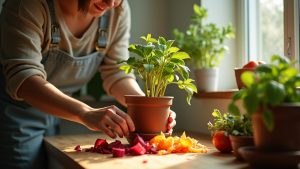
If you live in an apartment, you’ve probably tossed out banana peels, eggshells, or coffee grounds and wondered if there was a better way to use them. The usual advice is to start composting, but let’s be honest: most renters don’t have space for a compost bin, and indoor setups can get messy or smell funky.
Here’s the good news. You don’t actually need a compost pile to put your kitchen scraps to work. Many leftovers from your cutting board and coffee maker can go straight into your plant pots with barely any prep at all.
Instead of waiting months for scraps to break down in a bin, you can use simple tricks that feed your plants right away or help them grow stronger over time. Some scraps dissolve into the soil naturally. Others can be dried, crushed, or soaked into liquid fertilizer in a matter of days.
This approach works whether you’re growing herbs on a windowsill, tomatoes on a balcony, or a few succulents on a bookshelf. You’re not trying to become a master gardener or zero-waste influencer. You’re just making the most of what you already have in a way that actually fits your space and routine.
Let’s look at some of the easiest and most effective ways to turn everyday kitchen waste into something useful for your apartment garden.
Start with a few scrap safety rules for small spaces
Before you start tossing kitchen scraps into your pots, let’s talk about keeping things pleasant. Nobody wants their living room smelling like a dumpster or dealing with fruit flies hovering around their basil plant. A few simple rules will help you avoid these problems entirely.
The golden rule for apartment gardening is to use tiny amounts. We’re talking a sprinkle of coffee grounds or a few crushed eggshells, not a whole banana peel draped over your tomato plant. When you use small quantities, scraps break down faster and smell less. If you’re adding anything wet or chunky, bury it under the soil instead of leaving it on top. This keeps odors contained and makes your planters look normal.
Some scraps are just not worth the trouble indoors. Skip anything with meat, dairy, or oil on it. These foods attract pests, smell terrible as they rot, and can actually harm your plants. That leftover pizza crust or greasy french fry? Toss it in the trash instead. The same goes for heavily seasoned or salty foods, which can damage roots.
Drying or rinsing certain scraps makes a huge difference. Banana peels left wet will get moldy and gross within days. But if you let them dry out first, they’re much easier to work with. Coffee grounds straight from the filter? Rinse them quickly if they’re clumpy or smell sour.
Finally, test new ideas on just one plant before going all in. Every home is different, and what works on a sunny balcony might not work in a darker corner. Start small, watch what happens, and adjust from there.
Use eggshells for gentle soil texture and a cleaner pot setup
Eggshells are one of the easiest kitchen scraps to reuse in a small apartment garden. They don’t smell, they don’t attract bugs when handled properly, and they take up almost no space while they dry. Think of them as a simple soil helper rather than a miracle fix.
Start by rinsing your shells right after you crack them. This removes any raw egg residue that could smell or attract pests. Let them air dry on a plate or in an egg carton near a window for a day or two. Once they’re completely dry, crush them into small pieces. You can use your hands, a rolling pin, or even the bottom of a glass. The finer you crush them, the better they’ll blend into your soil.
Mix a small handful of crushed shells into your potting mix when you’re repotting a plant, or sprinkle a thin layer on top of the soil. The shells help keep the soil from packing down too tightly over time, which means air and water can move through more easily. This is especially helpful in pots that tend to get dense and heavy after a few months of watering.
Don’t expect fast results. Eggshells break down very slowly, so they’re not going to change your soil overnight. They’re also not a magic pest barrier, even though some gardeners swear by them. What they will do is quietly improve soil texture and drainage, especially for plants that don’t like sitting in soggy conditions. Just keep the layer light and avoid dumping a thick crust of shells on top, which looks messy and doesn’t really help.
Make a quick ‘scrap water’ from plain vegetable trimmings
Here’s one of the easiest ways to squeeze a little extra value from your kitchen scraps without any smell or fuss. When you chop vegetables for dinner, save the plain trimmings in a bowl. Think carrot peels, lettuce cores, bell pepper tops, or cucumber ends. The key word is plain—anything that touched salt, oil, butter, or sauce goes straight to the trash.
Once you have a handful of scraps, put them in a jar or pitcher and cover them with water. Let it sit on your counter for two to four hours, then strain out the solids and toss them. What you’re left with is a very mild, slightly cloudy water that carries a hint of nutrients from the vegetables.
Use this scrap water the same day you make it, ideally within a few hours. Pour it directly onto your outdoor balcony plants or patio containers. Don’t let it sit overnight or store it for later—it can start to smell or grow bacteria quickly, especially in warm weather.
This isn’t a magic fertilizer. It’s more like a gentle boost between your regular feeding schedule. Hardier plants handle it best: basil, mint, parsley, lettuce, and kale are all good candidates. Skip anything fussy or sensitive, and never use it indoors where odors might linger.
If you can’t use the water right away, keep it in the fridge for up to 24 hours. Any longer and you’re asking for trouble. The whole point is quick, fresh, and simple—a way to stretch your scraps without turning your apartment into a science experiment.
Reuse coffee and tea in ways that won’t turn pots into a soggy mess
Coffee grounds and tea leaves are probably the easiest kitchen scraps to reuse in your apartment garden. But dump them straight from your morning cup onto your plants, and you’re setting yourself up for mold, fungus gnats, and a weird crusty layer that water can’t get through.
The trick is drying them first. Spread used coffee grounds on a plate or small baking sheet and let them sit for a day or two until they’re completely dry. They should feel like sand, not like a wet clump. Once dry, you can sprinkle a thin layer on top of your potting soil or mix a small amount directly into the soil when you’re repotting.
Keep it light. A tablespoon or two per medium pot is plenty. Think of it like seasoning food, not dumping in the whole container. A thick layer of grounds, even dry ones, can form a barrier that blocks water from reaching the roots. And if you see any white fuzz starting to grow, you’ve used too much or it wasn’t dry enough.
Tea works the same way. If you use loose leaf tea or compostable tea bags, dry out the leaves before adding them to your pots. Just remember to remove any staples or tags first, and check that the bag itself will actually break down. Many tea bags contain tiny bits of plastic.
One more thing: keep coffee and tea away from seedlings and young plants. They’re too delicate for any additions. Wait until your plants are established and growing strong before you start experimenting with kitchen scraps.
Turn citrus peels and herb stems into a short-lived ‘garden freshener’
If you’ve got leftover citrus peels or woody herb stems, here’s a simple trick that keeps your balcony or windowsill feeling pleasant while giving those scraps one last use before the trash. It’s not magic, and it won’t ward off pests, but it does reduce waste and adds a light, natural scent to your small garden space.
Take a handful of lemon, lime, or orange peels—or tough rosemary and thyme stems you’d normally toss—and drop them in a small jar or pitcher with cool water. Let them sit for an hour or two, then use that lightly scented water to rinse the outside of your pots, wipe down your watering can, or freshen up a corner of your patio where things feel a bit stale.
Think of it like giving your garden tools and surfaces a quick refresh, not a deep treatment. The scent fades fast, which is actually the point. You’re not leaving peels sitting around to attract fruit flies or other unwanted visitors.
A few tips to keep this tidy: always dilute your scraps in plenty of water, never let peels sit out in the open, and use your scented rinse right away. Toss the soggy peels in the trash immediately after. Don’t pour the water directly onto soil or plants, especially if you have pets nearby—citrus can irritate some animals, and you don’t want any surprises.
This isn’t about pest control or fertilizing. It’s just a low-effort way to enjoy a hint of freshness while squeezing a bit more value from scraps that would otherwise go straight to the bin.
Use banana peels in small, renter-safe ways
Banana peels get a lot of hype in gardening circles, and they do contain nutrients your plants can use. But tossing fresh chunks into your apartment pots is asking for trouble. Those thick, moist pieces break down slowly in small containers, and they tend to attract fruit flies and create a sour smell while they rot.
The key is keeping everything tiny and dry, or using peels outside your living space. If you want to add them to indoor pots, dry the peels first. Cut them into small strips and let them sit on a plate near a sunny window for a few days until they’re crispy. Then crush them into little bits with your fingers or a spoon. You can sprinkle a pinch of these dried pieces onto the soil surface or mix them into the top layer. They’ll break down slowly without the smell or pest drama.
For balcony or outdoor containers, you can make a quick banana peel soak instead. Chop one or two peels into small pieces, drop them in a jar with water, and let it sit for a day. Pour the pale tea onto your plants and toss the soggy peel pieces in the trash right away. Don’t let them sit around. Use this trick sparingly, maybe once a month.
Whatever you do, keep portions small. One dried peel crumbled across several pots is plenty. This isn’t a complete fertilizer and won’t transform your garden overnight. Think of it as a gentle supplement, not a magic solution. The goal is to reuse a scrap without creating a mess in your small space.
Regrow a few kitchen leftovers as mini plants
Some vegetable scraps can sprout new growth in nothing more than a jar of water on your windowsill. It’s not going to replace your grocery shopping, but it’s a surprisingly fun way to get a few extra snips of green onion or a handful of fresh celery leaves without spending a dime.
Green onions are the easiest place to start. Save the white root ends with about an inch attached, stand them in a small glass with enough water to cover the roots, and place it near a window. Within days, green shoots will start growing upward. You can snip the greens as you need them, and they’ll keep growing for a few weeks. Just change the water every couple of days so it doesn’t get murky or smell.
Lettuce and celery work the same way. Keep the base or heart of the vegetable, the part you’d normally toss. Set it in a shallow dish with a bit of water touching the bottom. You’ll see new leaves emerging from the center. They won’t form a whole new head, but you’ll get enough for a garnish or a small salad addition.
Once you see a decent tangle of roots after a week or two, you can move these into a small pot with soil if you want them to keep growing longer. Herb cuttings like basil also root happily in water. Snip a stem, pull off the lower leaves, and let it sit in a glass until roots appear.
Keep your expectations realistic. Most regrown vegetables won’t produce as much as the original plant, and some will eventually tire out. Think of this as a playful experiment and a way to stretch your food a little further, not as serious farming.
Reuse kitchen packaging as seed-starting and watering tools
Before you toss that yogurt container or egg carton, think about giving it a second life in your apartment garden. These everyday items make surprisingly good tools for starting seeds and caring for plants without spending money on special equipment.
Yogurt cups, takeout containers, and plastic berry boxes are perfect for starting seedlings. Just wash them thoroughly with soap and water, then poke a few small drainage holes in the bottom using a nail or scissors. Without drainage, water sits at the bottom and causes root rot or mold. Set your makeshift pots on a tray or plate to catch any drips that could damage your countertop or windowsill.
Egg cartons work beautifully for tiny seeds like herbs or lettuce. The cardboard kind can go directly into soil later, but they get soggy fast. Water them carefully from the side or use a spray bottle to keep things damp but not dripping. Once your seedlings outgrow their egg compartments, transplant them into something larger.
Glass jars are ideal for rooting plant cuttings in water. Basil, mint, and pothos all grow roots easily this way. You can watch the progress through the glass, and the jar keeps everything contained. Change the water every few days to prevent any funky smells or bacterial buildup.
Save squeeze bottles from condiments or dish soap for precision watering. Clean them well, fill with water, and you have a targeted watering tool that won’t flood your plants or make a mess on your furniture. Label your containers with masking tape if you’re growing multiple varieties. It sounds simple, but forgetting which pot holds what gets frustrating fast in a small space.
Keep it apartment-friendly with a simple routine for storing and using scraps
The trick to making this work in a small space is having a system that doesn’t turn your kitchen into a science experiment. Start by keeping a small sealed container on your counter or in the fridge for fresh scraps like banana peels, vegetable trimmings, and coffee grounds. When it’s full, toss the whole batch in the freezer. Freezing stops the smell immediately and prevents anything from getting funky.
For dry scraps like eggshells and used coffee filters, skip the freezer entirely. Let them air-dry on a plate or small tray near a window. Once they’re completely dry, crush the eggshells with your hands and store everything in a jar. These dried scraps won’t attract bugs and they’re ready to use whenever you need them.
Pick one day a week to actually use your saved scraps. Right after you water your plants works great because you can mix everything in while the soil is already damp. Pull your frozen scraps out, chop or tear them into smaller pieces if needed, and work them into the top layer of soil. Then cover them lightly so nothing’s sitting on the surface.
Clean up matters more than you’d think. Rinse your scrap container every time you empty it, even if it looks clean. Wipe up any spills on counters or windowsills right away. And never leave fresh scraps sitting out overnight, even if you think it’s just for a few hours. That’s when fruit flies appear out of nowhere.
This whole routine takes maybe five minutes a week once you get the hang of it. You’re not managing anything complicated. You’re just being tidy and deliberate about when and how you use what you’ve saved.