If you’ve ever tried to water your apartment plants with a gallon jug or a repurposed milk carton, you know the problem. Water goes everywhere except where you want it. Your countertop becomes a puddle. Your shelf drips onto the floor. And somehow, you still manage to underwater half your plants.
The internet is full of watering tools marketed to gardeners, but most of them assume you have a garage, a outdoor hose, or at least a linen closet with actual space. When you live in a small apartment, that oversized watering can with the long spout just becomes another thing wedged awkwardly under your sink.
Here’s the truth about watering tools for apartments: you don’t need more gear. You need the right gear. The kind that stores flat or hangs on a hook. The kind that doesn’t drip all over your hardwood floors or require two hands to operate while you’re balanced on a chair reaching your hanging pothos.
Good apartment watering tools solve three specific problems. They fit in tight storage spaces without taking over your cleaning supplies. They give you enough control that you’re not flooding your windowsill. And they don’t create a mess that requires a towel every single time you water.
That’s what this guide focuses on. Not the fanciest tools or the ones with the most features, but the ones that actually make sense when you’re working with limited space, no outdoor access, and plants scattered across different rooms.
Compact watering cans that don’t feel flimsy or hard to pour
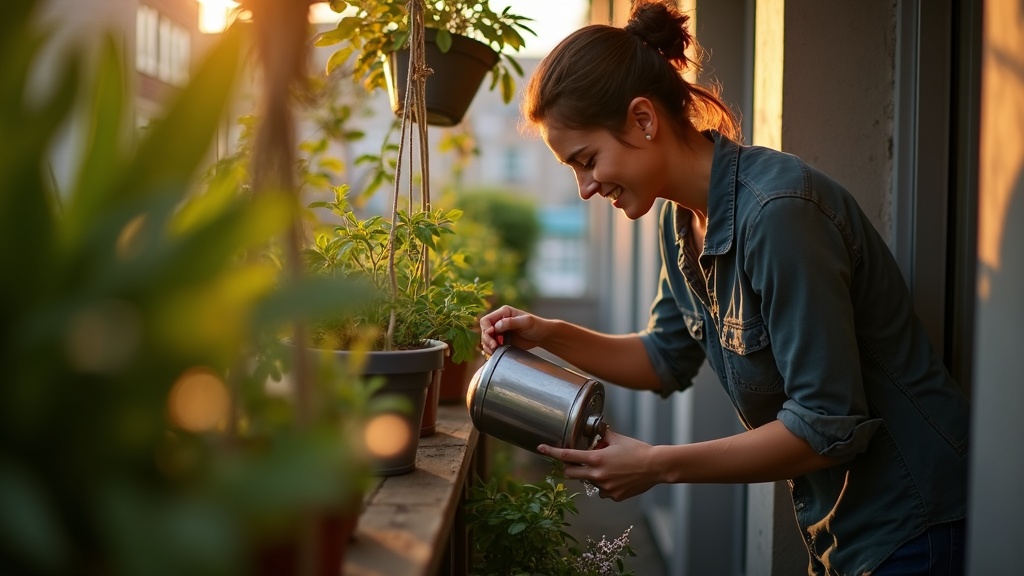
The best compact watering cans feel solid in your hand and pour exactly where you aim. Size matters, but not the way you might think. A can that holds around half a gallon works well for most apartment plant owners because it’s enough to water four or five medium plants without making multiple trips to the sink.
The handle makes or breaks the experience. Look for cans where the handle sits slightly above the body’s center of gravity. This keeps the weight balanced when it’s full, so you’re not fighting gravity or straining your wrist. A second grip near the front helps you control the pour, especially when you’re reaching into a crowded windowsill.
The spout should be narrow and slightly curved. This gives you accuracy when watering small pots or plants tucked into tight corners. Wide spouts splash and flood the soil surface, which defeats the purpose of having control indoors.
One detail people overlook is the fill opening. It needs to fit comfortably under your kitchen or bathroom faucet without awkward tilting. Otherwise, you’ll end up filling it with a cup, which gets old fast.
Compact cans shine when you’re watering a handful of plants in one session. They frustrate when they’re too small and you’re making four trips for a modest collection. Anything under a quart feels like a toy.
Storage is easier than you’d expect. Many compact cans nest inside a large planter when not in use. Others slide into the narrow gap beside your fridge or fit in a cabinet under the sink. Some have a loop at the top for hanging on a command hook inside a closet door. The key is choosing a shape that matches the storage spots you actually have.
Squeeze bottles and slim spouts for tight shelves and crowded pots
If your plants live on crowded shelves or windowsills, a regular watering can might be too clumsy to reach the soil without knocking things over. This is where squeeze bottles shine. Think of the kind you’d use for ketchup or hair dye—narrow spout, soft plastic body you can squeeze to control the flow.
These bottles let you aim water right at the base of the plant without splashing leaves or drenching your furniture. That matters more than it sounds. Wet leaves can develop spots or attract mold, and nobody wants water dripping down their bookshelf. With a slim spout, you can thread between stems and get water exactly where roots need it.
They’re especially handy for small pots, seedlings, or terrariums where you need precision. A gentle squeeze gives you a thin stream. A harder squeeze speeds things up. You stay in control the whole time, which makes watering feel less like a gamble.
Storage is another win. Squeeze bottles stand upright and fit in door bins, dish racks, or narrow gaps between pots. No awkward handles or wide bases taking up counter space. You can even tuck one behind a row of plants and forget it’s there until you need it.
One tip: use a dedicated bottle rather than repurposing one from the kitchen. Give it a rinse every few weeks to keep things fresh, especially if your water sits in there for days. You don’t need anything fancy—just a quick swish under the tap. That keeps algae and funky smells from building up inside.
Small-space self-watering setups that reduce how often you water
Self-watering pots are probably the easiest place to start. They have a built-in reservoir at the bottom that holds extra water, and the soil pulls it up as the plant needs it. You fill the reservoir every week or two instead of watering from the top every few days. Most are the same size as regular pots, so they don’t eat up extra space on your windowsill or shelf.
Watering spikes work differently but take up even less room. You fill a small plastic bottle with water, screw on a spike attachment, and stick it into the soil. The water drips out slowly over several days. They’re especially helpful for plants tucked up high where you can’t easily reach them. Just know that cheap spikes can clog or drain too fast, so it might take a try or two to find ones that work reliably.
Wick systems are the most low-profile option. A fabric cord sits in the soil at one end and dips into a cup of water at the other. The plant draws water up through the wick as needed. You can tuck the water cup behind the pot or under a shelf, so it barely shows. This works well if you’re going away for a week or need something that won’t tip over.
None of these are foolproof. If the reservoir is too full or the wick is too wet, roots can rot. And succulents or other plants that like to dry out completely won’t be happy with constant moisture. Think of these tools as helpful backups, not replacements for paying attention. They buy you time and flexibility, especially if your schedule is unpredictable or you travel occasionally.
Tools that prevent drips, stains, and surprise puddles
Water damage in an apartment isn’t just annoying. It can cost you your security deposit or upset the neighbors below. The good news is that a few simple tools make watering almost foolproof.
Start with drip trays that actually fit your pots. Too small and water pools on your shelf. Too large and they take up precious counter space. Measure your pot bottoms before you buy, and look for trays with a raised lip of at least half an inch. Clear plastic ones work fine, but ceramic or bamboo versions look better if the tray is visible.
For plants on shelves or windowsills, slim catch basins are lifesavers. These shallow trays sit underneath your pots and catch overflow without sticking out awkwardly. Some are only an inch tall, so they don’t add bulk. They turn a risky watering spot into a safe one.
Keep a small absorbent towel or mat near your plants. Lay it down before you water, and it catches drips from your watering can spout or wet pot bottoms. A microfiber cloth works great because it dries fast and doesn’t take up drawer space. This one habit prevents most surprise puddles.
A small funnel makes refilling your watering can way less messy. Instead of splashing water all over the sink or floor while you fill up, the funnel directs everything neatly into the spout. Look for a collapsible silicone one if storage is tight. It flattens down to almost nothing.
These aren’t fancy tools, but they remove the stress from watering day. You stop worrying about stains and start enjoying your plants.