If you’re trying to keep plants alive in your apartment, you’ve probably realized that natural light doesn’t always cooperate. Maybe your windows face the wrong direction, or your building next door blocks the sun for half the day. That’s where grow lights come in.
But here’s the thing. Most grow light advice assumes you have a dedicated plant room or don’t mind your living space looking like a science lab. That’s not realistic for most of us. You’re not running a commercial greenhouse. You just want your fiddle leaf fig to stop dropping leaves and maybe grow some herbs on your kitchen counter.
The best grow lights for apartments aren’t necessarily the most powerful ones. They’re the ones that fit into your actual life. That means they don’t blast purple light across your living room during movie night. They don’t make weird humming sounds while you’re trying to sleep. They don’t take up your entire bookshelf or require you to drill holes in walls you don’t own.
Choosing the right grow light is less about plant science and more about finding something that works with your space, your furniture, and your daily routine. You want your plants to thrive, sure. But you also want to feel comfortable in your own home. The good news is that modern LED lights for indoor plants have gotten much better at doing both. You just need to know what to look for and what actually matters when you’re shopping.
Start with where the light will actually live
Before you get swept up in watts and wavelengths, walk over to the spot where you want to grow your plants. Really look at it. Is it a bookshelf tucked into a corner? A windowsill that’s already crowded with succulents? Maybe it’s your kitchen counter or a little plant stand next to the couch.
The exact spot matters more than you’d think. If your plants are going on a shelf, you need something that clamps to the edge or tucks underneath without blocking your books. A tall floor plant in the corner might call for a slim panel on a tripod or a gooseneck lamp that bends around furniture. Windowsills usually work best with compact clip-on lights that don’t sprawl everywhere.
Now look for the nearest outlet. Grow lights need power, and most cords are only six feet long. If the outlet is across the room, you’ll end up with an extension cord snaking across your floor. That’s annoying in a bedroom and potentially dangerous if you’ve got pets or small kids around.
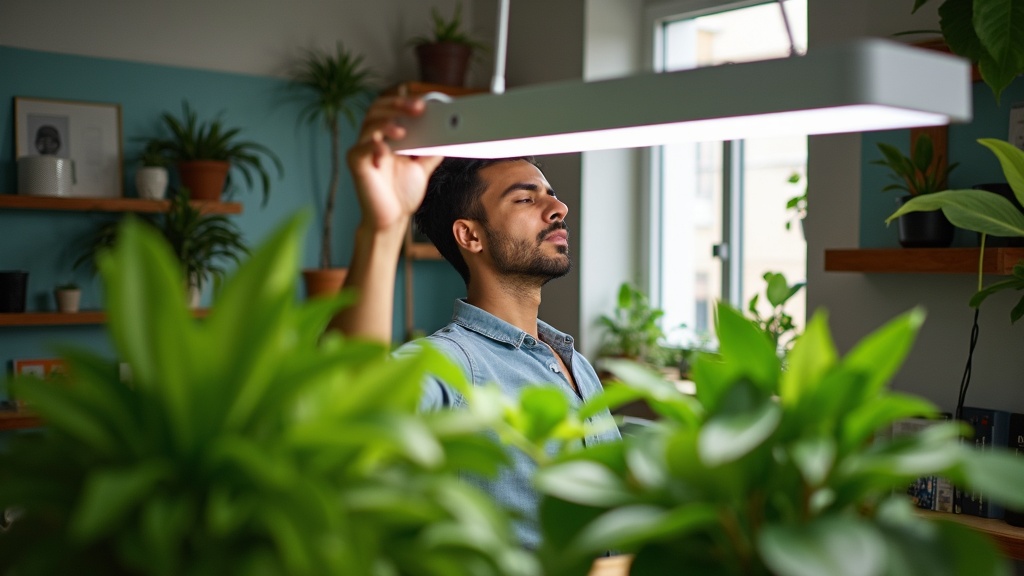
Think about the room itself too. A bright purple glow might be fine in a spare room, but it’s going to drive you crazy in your bedroom at night or make your living room look like a nightclub. If the light will live somewhere you spend a lot of time, look for options that either turn off easily or produce a softer white glow instead of that intense magenta.
The format of the light should match your furniture. Clamp lights grip onto edges. Gooseneck models twist into position. Under-shelf bars hide above your plants. Slim panels lean against walls or hang from hooks. Pick the shape that actually fits into your space without rearranging your entire apartment.
Choose a grow light type that matches your plants and tolerance for fuss
Most apartment gardeners will run into four common types of grow lights, and the good news is that they’re all pretty straightforward. LED bulbs screw into regular lamps and desk fixtures you already own. LED panels are thin, flat rectangles that hang or prop up near your plants. LED bars or strips are narrow and sleek, often mounted under shelves or clipped along edges. And clip-on lights do exactly what they sound like: clamp onto a shelf, pot rim, or table edge and aim light where you need it.
LED lights for indoor plants have become the apartment standard because they stay cool, run quietly, and don’t spike your electric bill. You won’t wake up to a glowing red bedroom or a buzzing fixture at three in the morning. They also last for years without needing replacement, which matters when you’re juggling rent and groceries.
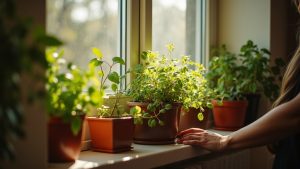
If you’re keeping a pothos or snake plant happy in a dim corner, a single LED bulb in a reading lamp works fine. Starting seedlings on a windowsill? A small clip-on light gives them the boost they need without taking up counter space. Growing herbs for cooking? An LED bar tucked under a kitchen cabinet keeps basil and parsley thriving without cluttering your countertop.
For a small collection spread across a bookshelf or plant stand, an LED panel covers more ground without the tangle of multiple bulbs. The key is matching the light to your setup, not the other way around. You don’t need to become an expert in light spectrums or worry about engineering specs. Just think about where your plants live and how much visual fuss you’re willing to tolerate.
Make sure it’s bright enough for the area you’re lighting
A tiny clip-on light won’t do much for a five-foot bookshelf crammed with plants. It sounds obvious, but mismatched light and space is one of the most common mistakes apartment gardeners make. The fix is understanding coverage, which is just a fancy way of asking how much area the light can actually serve.
Think of it like a ceiling lamp in your bedroom. Stand right underneath and it’s bright. Walk into the corner and suddenly you’re squinting at your book. Grow lights work the same way. Most products will list a coverage area in their description, something like “ideal for a two-foot by two-foot space.” Take that number seriously, and when in doubt, assume the real coverage is a bit smaller than advertised.
Hanging height matters too. The closer the light hangs to your plants, the smaller the area it covers but the stronger the light. Pull it higher and you get wider coverage but weaker intensity. Most manufacturers suggest a range, like twelve to twenty-four inches above your plants, so you have room to adjust.
For a single potted plant or two small succulents, a compact bulb or small panel works fine. A shelf full of herbs or a row of seedlings? You’ll want a bar-style light or a larger panel that spreads evenly across the length. And if you’re setting up a dedicated plant corner with a dozen pots, consider a panel or even two smaller lights to cover the whole space.
One last thing: a pothos or snake plant tolerates lower light than basil or tomato seedlings. If you’re growing low-light houseplants, you can get away with less powerful options. Herbs and anything you plan to harvest need stronger, more focused light to actually thrive.
Prioritize low heat and quiet operation in small rooms
Small rooms heat up faster than you’d think. A grow light that runs hot can turn a cozy bedroom or studio into a stuffy space within an hour or two. That extra warmth also dries out your plants faster, which means you’ll be watering more often and worrying about whether they’re getting stressed.
LED lights are your friend here. They produce much less heat than older bulb types, so they won’t turn your living room into a sauna. Even better, look for fanless designs that rely on what’s sometimes called passive cooling. That just means the light has metal fins or a flat panel that lets heat escape naturally, without any moving parts.
Why does that matter? Fans make noise. Even a quiet hum can get annoying when you’re trying to sleep or read on the couch. A fanless LED sits there silently, doing its job without drawing any attention.
When you’re browsing product listings, check whether a fan is mentioned in the specs. If you see phrases like “fanless design” or “passive cooling,” that’s a good sign. It’s also worth skimming reviews for any complaints about heat or noise. People are quick to mention if a light made their room uncomfortable or kept them awake at night.
Lower heat also gives you more freedom with placement. You don’t have to worry as much about positioning a cool-running light near curtains, wooden shelves, or anything else that shouldn’t get warm. Your watering routine stays predictable, and your apartment stays comfortable. It’s one less thing to think about, which is exactly what you want when you’re adding plants to a smaller space.
Keep the light visually unobtrusive
Nobody wants their living room to look like a research lab. The good news is that grow lights don’t have to scream “science experiment” if you choose the right type and position them thoughtfully.
The biggest visual offender is that intense purple glow you’ve probably seen. It comes from older LED models that use only red and blue diodes. They work fine for plants, but they cast a harsh, unnatural light that makes everything look a bit dystopian. Instead, look for full-spectrum white LEDs. These produce light that looks much closer to natural daylight, so your plants get what they need without turning your space purple.
Glare and light spill are the other common issues. A bright bulb aimed at eye level can be uncomfortable, and stray light bouncing around the room at night gets annoying fast. The fix is simple: direct the beam downward onto your plants, not outward into the room. Use fixtures with built-in hoods or shades that focus light where you want it. If your light doesn’t have one, you can add a small reflector or position it so nearby surfaces block the spill.
Placement makes a big difference too. Mounting a light strip under a shelf keeps it out of sight while illuminating the plants below. For kitchen herbs on a windowsill, a small clamp light tucked behind the pots stays hidden. If you have a bedroom plant corner, aim the light toward the wall and keep it lower to avoid that harsh spotlight effect.
Adjusting the height helps as well. The closer a light sits to your plants, the less it needs to blast brightness everywhere else. You get better growing results and a calmer-looking space at the same time.
Pick a setup you can mount without drilling or clutter
If you’re renting, drilling holes into walls probably isn’t an option. The good news is that most grow lights don’t need permanent installation. Clamp fixtures attach directly to shelves or table edges and hold surprisingly well. Tension poles wedge between floor and ceiling without any hardware, giving you a vertical track to hang lights from. Adhesive strips work too, but make sure they’re rated for the actual weight of your light plus a safety margin.
Simple floor stands are often the easiest route. They look like regular lamps, blend into your space, and you can move them around as your plants grow. If you already have a bookshelf or shelving unit near a window, under-shelf brackets let you tuck a light bar right underneath without tools. The light shines down on plants sitting on the shelf below.
Cords are where things get messy fast. Shorter cables mean less tangling and fewer trip hazards. Route them behind furniture when you can, or use small adhesive clips along the back edge of a shelf to keep everything tidy. A single power strip tucked out of sight beats having adapters scattered across the room.
Stability matters more than it seems. A wobbly clamp can tip over, and a tension pole that’s too loose might slide down over time. Give everything a gentle shake after you set it up. Keep cords out of walkways, especially in tight spaces where you move around in the dark. And don’t plug four high-wattage devices into one outlet. Spread the load across different outlets if you’re running multiple lights.
Look for controls that make daily use effortless
Plants need consistent light schedules to thrive. Too much variation confuses their internal rhythms and weakens growth. The problem is that remembering to turn lights on and off at the same time every day is nearly impossible when you’re juggling work, errands, and everything else.
That’s why a timer is the single most valuable feature you can look for. A built-in timer lives right on the light itself, usually with a simple button to set your schedule. A plug-in outlet timer sits between your wall socket and the light cord, and you set it once using little plastic tabs or a digital screen. Both options mean you never have to think about it again. Your plants get their light whether you’re home, at work, or away for the weekend.
If you want more flexibility, a smart plug connects to your phone and lets you adjust schedules from anywhere. You don’t need a fancy system, just a basic model that works with your WiFi. This is helpful if your routine changes or you want to make quick tweaks without getting up.
Dimming matters more in apartments than you might expect. If your grow light shares a room where you watch TV or wind down in the evening, full brightness can feel harsh and intrusive. A dimmer switch or multiple brightness modes let you drop the intensity without turning the light off completely. This also helps if you’re mixing plants with different needs on the same shelf. Seedlings might want gentler light while mature plants soak up everything you give them.
The goal is simple: pick controls that fit into your actual routine without adding another thing to remember.
Match the light to what you’re trying to grow
Not all plants need the same amount of light, and that matters when you’re picking a grow light. There’s a big difference between keeping a pothos alive and trying to coax basil into putting out lots of leaves. The first is about maintenance. The second is about production.
Low-light houseplants like snake plants or philodendrons are pretty forgiving. If they’re near a window, even a north-facing one, a small grow light can fill in the gaps during winter or on cloudy days. You’re not asking much from the light here, just a little help so the plant doesn’t start looking sad. A single clip-on or desktop light is usually enough.
Medium-light plants like fiddle leaf figs or prayer plants need more consistent brightness. If your apartment doesn’t get strong natural light, a grow light becomes more important. You’re not replacing the sun entirely, but you’re making sure the plant gets what it needs to stay healthy and maybe put out new leaves now and then.
Herbs and seedlings are where things get more demanding. These plants want a lot of light to grow quickly and produce harvestable leaves or strong stems. A single bulb probably won’t cut it. You’ll want something with more coverage, like a panel light or a small multi-tier shelf setup with lights mounted above each level.
The good news is that windows still count. If you have decent daylight for part of the day, your grow light can work as a supplement rather than doing all the heavy lifting. That means you can get away with a smaller, simpler setup and still see real results.
Balance upfront cost with what you’ll live with long term
When you’re shopping for the best grow lights for apartments, it’s tempting to grab the cheapest option and call it done. But price tags tell only part of the story. What really drives the cost is what you’re actually getting: sturdy build quality that doesn’t wobble or tip over, better diffusers that spread light evenly without harsh spots, and reflectors that make sure your plants get the light instead of your ceiling.
Features like timers and dimmers add to the upfront price, but they’re worth thinking about. A timer means you won’t forget to turn the light on or off, and a dimmer lets you adjust intensity as your plants grow or as seasons change. Nicer-looking designs cost more too, but if you’re staring at it every day in your living room, that matters.
Don’t forget about what happens after you buy it. LED lights for indoor plants use way less electricity than older bulb types, so cheaper lights with outdated tech can quietly cost you more over time. Some lights need replacement bulbs or parts down the road, while others last for years without any fuss.
Here’s a practical tip: think in terms of cost per plant corner or shelf, not per light. Buying one solid light that covers your whole setup usually makes more sense than cluttering your space with three or four weak ones. Multiple small lights mean more cords, more outlets, and more visual mess. One well-chosen light keeps things simple and often works out cheaper in the long run anyway.