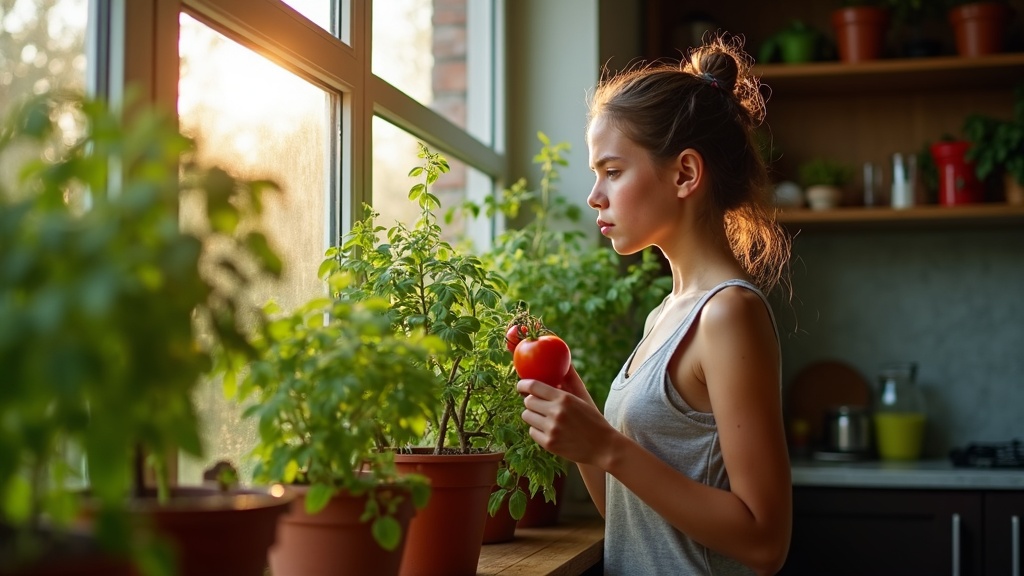
Your tomato plant looks perfect. Deep green leaves, strong stems, maybe even a few cheerful yellow flowers. You’ve kept it alive for months in your apartment, which honestly feels like a small miracle. But here’s the frustrating part: no tomatoes. Not one.
If this sounds familiar, you’re not alone. Indoor tomato plants are surprisingly good at looking healthy while refusing to produce any actual fruit. It’s one of the most common complaints from apartment gardeners, and it drives people absolutely crazy.
The tricky thing is that growing a tomato plant and getting tomatoes from that plant are two different challenges. Your plant might have everything it needs to survive and look great. But fruiting requires a few specific conditions that indoor spaces don’t naturally provide.
Think of it this way: keeping a tomato plant alive is like maintaining a car. Getting it to fruit is like actually driving somewhere. You need a bit more than just a full tank of gas.
The good news? Most indoor tomato fruiting problems come down to just a handful of fixable issues. We’re talking about things like pollination, light intensity, and temperature swings. Nothing exotic or expensive. Once you know what’s missing, you can usually turn things around within a few weeks.
This isn’t about starting over or admitting defeat. It’s about understanding that your healthy plant is actually waiting for you to flip a few switches you didn’t know existed.
Fruiting is a different job than growing leaves
Here’s the thing that confuses most indoor tomato growers: a plant can be absolutely thriving and still refuse to give you a single tomato. Your plant might be tall, bushy, and covered in gorgeous green leaves. It might even be flowering. But then those flowers just fall off, and you’re left wondering what you did wrong.
The answer is usually nothing. You’re just learning that growing leaves and making fruit are two completely different jobs for a tomato plant.
Think of it this way. Growing leaves is easy for a plant. Give it some light, water, and a comfortable spot, and it’ll happily pump out stems and foliage all day long. That’s its default mode. But making fruit? That’s expensive. It takes a lot more energy, and the plant needs very specific conditions before it’s willing to commit.
Fruiting requires strong, consistent light, not just enough light to stay alive. It needs successful pollination, which doesn’t happen automatically when you’re inside an apartment with no bees or wind. The plant needs enough root space to support the extra work. And it needs to feel like conditions are stable enough that investing in fruit makes sense.
This is why you’ll see so many indoor tomatoes that look picture-perfect but produce nothing. They’re comfortable enough to grow, but they’re not getting the signals they need to switch into fruiting mode. The flowers appear, hang around for a few days looking promising, then drop off without forming anything. It’s not plant failure. It’s just the plant saying it’s not ready yet.
Pollination indoors is often the missing link
Your tomato plant might be covered in cheerful yellow flowers, but if those flowers keep dropping off without forming fruit, you’re probably dealing with a pollination problem. Tomato flowers are actually self-pollinating, meaning they don’t need another plant to make fruit happen. But here’s the catch: the pollen still needs to move from one part of the flower to another, and that usually requires a little shake or vibration.
Outdoors, this happens naturally. A breeze rustles the plant. A bumblebee buzzes by and creates vibrations as it lands. Even gentle wind through an open field does the job. Indoors, though, your apartment is probably very still. No bees are visiting your kitchen window. If your windows stay closed or you don’t have much cross-breeze, those flowers are just sitting there waiting for help that never comes.
The good news is you can become the breeze. Every day or two when you see open flowers, give the whole plant a gentle shake. You can also tap the flower clusters directly with your finger, or hold a buzzing electric toothbrush near the blossoms for a few seconds. The vibration mimics what a bee would do. Some people set up a small fan to create constant airflow, which helps with pollination and keeps the air around the plant healthier overall.
You’ll know it’s working when flowers stop dropping off and you start seeing tiny green tomatoes forming right where the flower was attached. That little bulge at the base of a fading flower is your first sign of success. Once you see that, you’re past the hardest part.
Temperature swings can stop fruit set even when the plant looks fine
Your tomato plant might be tall, green, and covered in cheerful yellow flowers. But if those flowers keep drying up and falling off without forming fruit, temperature swings are probably the culprit.
Tomatoes are surprisingly picky about when they’ll actually set fruit. They need things to stay within a comfortable range, not too hot and not too cold. When temperatures bounce around too much, the pollen inside those flowers stops working properly. The plant looks healthy because leaves can handle a lot more stress than the delicate business of making fruit.
Apartments are notorious for this problem. That sunny windowsill might feel like a sauna by two in the afternoon, then drop twenty degrees when the sun goes down and the glass radiates cold back into the room. Your tomato experiences what feels like a different season twice a day.
Look around your apartment for the trouble spots. Plants sitting directly against a window in winter get blasted with cold at night, even if the room feels fine. Tomatoes perched above a radiator or heating vent ride a roller coaster every time the heat kicks on and off. That spot near your exterior door? It gets a cold draft every time you come home with groceries.
When you see flowers that look papery and brown before dropping, or buds that yellow and fall off while still closed, temperature stress is usually talking. The plant keeps trying to bloom because it looks healthy. But behind the scenes, those swings are quietly sabotaging every attempt to make fruit.
Bright to you may still be dim to a tomato plant
Here’s the uncomfortable truth: what feels like a sunny spot in your apartment is probably nowhere near enough light for a tomato plant to make fruit. Your eyes are amazing at adjusting to different brightness levels, so a room that seems flooded with light might only be getting a fraction of what outdoor plants enjoy.
Tomatoes evolved in full sun. They need hours of strong, direct light every day to power the whole process of flowering and fruiting. Without that intensity, the plant will grow leaves just fine but won’t bother investing energy in fruit. It’s not being difficult. It just doesn’t have enough fuel in the tank.
The problem is that indoor light drops off fast. A plant on a windowsill might do okay, but move it three feet back into the room and the light intensity can fall by half or more. North-facing windows never get direct sun. Sheer curtains soften the light beautifully for human eyes but block a surprising amount of what plants need. Winter days are short and weak. And if your balcony is shaded by the building next door, you’re basically indoors anyway.
The fix doesn’t have to be complicated. Start by moving your tomato as close to your brightest window as possible, ideally one that faces south or west. You can bounce extra light back onto the plant by placing something white or reflective nearby, like a piece of poster board or even a white dish towel draped over a chair.
If that’s still not cutting it, a simple grow light can make all the difference. You’ll know things are improving when your plant grows stockier instead of tall and spindly, and when those little flowers actually stick around instead of dropping off.
A too-small pot can stall fruiting even with lots of flowers
Your tomato plant might be blooming like crazy but still refusing to set fruit. One of the sneakiest culprits? The pot is just too small for what the plant has become.
When roots run out of room, they start circling the inside of the container, tangling into a tight mat. This is called being root-bound, and it creates chaos for the plant. The soil dries out within hours of watering. Nutrients get used up fast. The plant can’t maintain a stable supply of water and food, so it goes into survival mode and drops its flowers instead of turning them into tomatoes.
You can spot an under-potted tomato pretty easily. Does it wilt just a day after you watered it? Does water seem to run straight through the drainage holes without soaking in? Is the plant tall and leafy but tipping over because it’s too heavy for its base? These are all signs the roots have maxed out their space.
Another giveaway is when growth slows down even though the plant looks healthy. Lots of flowers appear, but they just fall off without forming fruit. The plant is spending all its energy trying to survive in cramped quarters instead of reproducing.
Think of the container as your tomato’s fuel tank. A bigger pot with fresh potting mix gives the roots room to spread out and access a steadier supply of moisture and nutrients. That stability is what allows the plant to relax and finally commit to making fruit. Sometimes the fix really is that simple.
Too much of the wrong fertilizer can keep tomatoes in leaf mode
You might think more fertilizer equals more fruit. That’s not how it works with indoor tomatoes, and overfeeding is one of the sneakiest reasons plants look gorgeous but stay stubbornly fruitless.
Here’s the pattern many apartment gardeners see: their tomato plant shoots up fast, develops deep green leaves that look almost too healthy, and grows bushier by the week. Flowers appear, which feels promising. But then those flowers drop off without forming fruit, or they produce tiny tomatoes that never really develop.
The problem is often too much nitrogen-heavy fertilizer. Nitrogen is what pushes leafy, green growth. It’s great for lettuce and herbs, but tomatoes that get too much of it think their job is to keep building more stems and leaves instead of switching gears to make fruit. You’ve essentially told the plant to stay in teenager mode when you want it to settle down and start a family.
Indoor containers make this worse because fertilizer salts build up over time. There’s nowhere for them to go. Every time you feed, you’re adding more, and unlike outdoor gardens where rain washes excess nutrients away, your pot becomes increasingly concentrated.
The fix is gentler feeding with products designed to support flowering and fruiting, not just lush foliage. Look for options that mention blooms or fruit on the label. And feed less often than you think you should. Once every two weeks is usually plenty for a container tomato.
If your plant already looks like a small jungle, hold off on fertilizer entirely for a few weeks. Let it use what’s already there. Sometimes the best thing you can do is simply stop helping quite so much.
Inconsistent watering stresses the plant and it drops blossoms
Your tomato plant doesn’t need perfect watering. It needs predictable watering. When the soil swings from dust-dry to waterlogged and back again, the plant panics. It’s trying to make fruit, which takes a lot of energy and resources, but it can’t tell if there will be enough water tomorrow to finish the job. So it does the safe thing: it drops those flowers and tiny fruits before investing more.
Indoors, inconsistency sneaks up on you in ways that don’t happen in a garden bed. Small pots dry out shockingly fast, especially near a sunny window or heating vent. You might water thoroughly on Monday, then forget over a busy weekend. Or you water generously, but there’s a saucer underneath that turns into a little swamp, and the roots sit in it for days.
Sometimes it’s the soil itself. Those light, fluffy potting mixes drain beautifully, which is usually good, but in a small container they can go from moist to bone-dry in less than a day during summer.
What you’re aiming for is even moisture, not extremes. The soil should feel like a wrung-out sponge most of the time. Not dripping, not cracking. When you get into that rhythm, you’ll notice the plant stops wilting between waterings. The flowers stay on the vine longer instead of turning yellow and falling off. The leaves look sturdier.
You don’t need a strict schedule or fancy tools. Just check the soil more often than you think you need to, especially at first. Your tomato will tell you it’s happier by actually holding onto those blossoms long enough to turn them into fruit.





