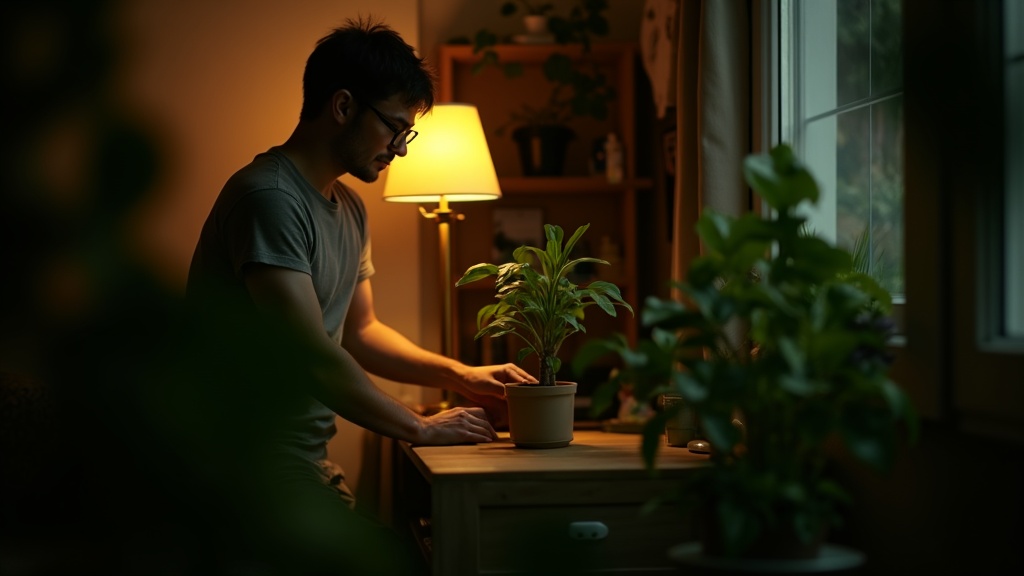
That dim corner in your apartment doesn’t have to feel sad. You know the one. Maybe it’s the hallway that never gets direct sunlight, or the spot beside your bookshelf where nothing seems to thrive. You’ve probably tried putting a plant there before, watching it slowly lose its will to live while you feel quietly guilty about it.
Here’s the thing: you weren’t doing anything wrong. You were just asking the wrong plants to do an impossible job.
Decorating with low light plants isn’t about forcing sun-loving greenery to tolerate the shadows. It’s about working with plants that actually prefer those conditions, then styling them in ways that make your space feel intentional and alive. There’s a whole world of shade-tolerant beauties that will happily call your dark corner home.
The difference between a plant corner that looks like an afterthought and one that becomes a genuine feature comes down to two things. First, choosing plants that are genuinely happy in low light, not just barely surviving. And second, arranging them with the same care you’d give any other part of your decor.
This isn’t about becoming a plant expert or turning your apartment into a jungle. It’s about understanding that those shadowy spots can actually showcase some of the most interesting foliage out there. With the right approach, that forgotten corner can become the part of your home that makes visitors ask where you found such a peaceful little retreat.
Choose shade tolerant indoor plants that still look lively
The trick to decorating with low light plants is picking varieties that look intentionally sculptural or lush, not like they’re hanging on for dear life. You want that corner to feel designed, not tolerated.
Start with a tall anchor plant to give your space vertical interest. A dracaena works beautifully here. Its strappy leaves grow upward in a fountain shape, and many varieties have subtle stripes or edges in cream or dark red. It adds height without needing a sunny window.
For your middle layer, try a pothos. This one’s a workhorse. It trails gracefully from a shelf or climbs if you give it something to grab onto. The heart-shaped leaves come in shades from deep green to variegated cream and green, and it genuinely thrives in dim spots. Just note that pothos is toxic to cats and dogs if they nibble it, so keep it out of reach if you have curious pets.
Round things out with something fuller at medium height. A peace lily fits perfectly here. Its dark green leaves arch elegantly, and it occasionally sends up white blooms even in shade. It fills space without looking cluttered.
Here’s the reality check: these plants won’t explode with new growth like they would in bright light. They’ll grow slowly and steadily. That’s actually useful when you’re styling a small apartment because you won’t constantly need to prune or repot. The goal is a corner that looks complete and calm, not one that demands weekly maintenance.
Many popular shade tolerant indoor plants do carry some toxicity to pets, so if you have animals who taste-test everything, double-check your choices or stick to safer options like spider plants or Boston ferns.
Plan the corner like decor, not storage
Before you drag a plant into that shadowy corner, take a minute to think about what you actually want that space to do. Is it softening a blank wall that feels too bare? Balancing out a heavy sofa on the opposite side? Filling an awkward gap between furniture? When you know the job, you can set up the corner in a way that looks intentional instead of accidental.
Pick a simple visual theme for the spot. You don’t need a mood board or a fancy concept. Just decide if you want it to feel calm and minimal, a bit jungle-ish with layered leaves, or sculptural with one striking plant shape. This little decision keeps you from adding random bits that don’t quite fit together.
The biggest mistake is letting the corner become a catch-all. You tuck in one plant, then another, then a stack of books, then a basket of things you don’t know where else to put. Suddenly it’s not a feature anymore. It’s just stuff in shadow.
Limit what goes in there. Plants need breathing room to actually look good. Empty space around them makes their shapes stand out instead of blending into clutter. Think about using one supporting piece, like a simple plant stand, a small stool, or a side table. That single item gives you height or structure without turning the corner into a furniture showroom.
You’re not filling every inch. You’re framing a few plants so they feel like they belong there on purpose. That shift from storage corner to styled corner makes all the difference, even in low light.
Arrange indoor plants with height, layering, and direction
A dark corner stops feeling like a forgotten spot when you arrange plants so your eye moves through them naturally. The trick is creating depth instead of letting everything flatten into a shadowy lump.
Start by placing your tallest plant slightly toward the back. This gives you a vertical anchor. Then bring a medium-height plant with broader leaves forward and to one side. The height difference lets you see both plants clearly, and their leaves won’t tangle into one confusing silhouette. If you have a trailing plant, set it higher—on a stack of books, a small stool, or even the floor if it can drape off something nearby. The cascading foliage adds movement and fills space without crowding.
Grouping in threes or fives tends to feel more natural than pairs or even numbers. Your brain reads odd groups as a casual gathering rather than a formal arrangement. But this isn’t a strict rule. What matters more is that each plant has room to show its shape.
Angle the plants slightly toward the room, not pressed flat against the wall. This small shift makes the corner feel like it’s opening up to welcome you in, rather than hiding in the shadows. When leaves face outward, they catch whatever ambient light is available and the whole grouping reads as brighter.
Try pairing an upright snake plant with a broad-leafed pothos and a trailing philodendron above. Or combine a slim dracaena, a rounded peperomia, and a string of hearts spilling down. The mix of shapes keeps things interesting, and the layered heights give your corner real presence.
Use pots and materials that brighten a shady corner
A dark corner doesn’t have to feel heavy or forgotten. The pots you choose can make a huge difference, sometimes even more than the plants themselves.
Light-colored pots are your friend here. White, cream, soft gray, or even pale terracotta naturally reflect what little light is available and make the whole area feel more open. Dark pots can disappear into shadow, which might be fine if you want the plant to be the star, but in a dim corner you usually want all the visual lift you can get.
Think about texture and finish too. Matte surfaces give off a calm, modern vibe that works beautifully in quiet spaces. Glossy pots catch and bounce light around, which can add a little sparkle. Woven baskets bring warmth and softness, perfect if the corner feels cold or stark. Just make sure there’s a plastic liner inside to catch any water.
Here’s a simple trick that makes any grouping look more intentional: stick to one or two types of materials. Maybe all ceramic, or ceramic plus natural fiber. When everything matches loosely, the arrangement feels curated instead of random.
Size matters too. A pot should look stable under its plant, not tippy or swallowed up. If the plant is top-heavy or wide, go for a pot with some visual weight at the base. And if you’re worried about drainage, use a cachepot. That’s just a decorative outer pot with no holes. You keep your plant in its basic plastic nursery pot inside, water it in the sink, let it drain, then tuck it back into the pretty one. You get style and function without any fuss.
Add gentle lighting and a backdrop so the corner reads as a feature
A dark corner doesn’t have to feel gloomy. The right lighting can completely change how the space feels, even if you’re not adding much actual brightness. Think warm, not clinical. A simple floor lamp with a soft bulb placed near your plants creates a cozy glow that makes the whole corner feel inviting instead of forgotten.
You can also use a small accent light aimed at the wall behind your plants. This creates a gentle wash of light that highlights the shapes of the leaves without being harsh. Some people use discreet grow lights that double as mood lighting. Modern ones come in warm tones and don’t look like science equipment. They help your plants and make the corner feel alive at the same time.
Here’s where a backdrop makes a big difference. A mirror propped against the wall will bounce whatever light you have around the space, making it feel brighter and more open. If mirrors aren’t your style, try a piece of light-colored wall art or even just painting that section of wall in a pale shade. The contrast between dark green leaves and a light background makes your plants pop visually.
Think of it this way: you’re not trying to flood the corner with light. You’re creating a little stage. The lighting and backdrop frame your plants and tell your eye that this spot matters. It becomes something you notice and enjoy, not just a place where a few hardy plants are quietly surviving.
Keep it looking good with low-effort care habits
The beauty of decorating with low light plants is that they naturally want less fuss. Your biggest adjustment will be watering far less often than you think. Plants in dim corners use water much more slowly because they’re not photosynthesizing as hard. Before you water, stick your finger into the soil up to your second knuckle. If it feels damp, wait a few more days.
Dust is the silent styling killer. A thin layer makes leaves look dull and grey, which defeats the whole point of creating a bright feature. Every few weeks, gently wipe down each leaf with a damp cloth. It takes five minutes and makes an enormous visual difference. Your plants will also absorb light better through clean leaves.
Give each plant a quarter turn every couple of weeks so all sides get some light exposure. This keeps growth balanced instead of letting everything lean dramatically toward the nearest window. You’ll end up with fuller, more attractive shapes that look intentional rather than desperate.
Watch for yellowing leaves or stems that stretch out thin and leggy. These are your early warning signs that something’s off, usually too much water or truly insufficient light. Catching these signals early means you can adjust before the whole corner starts looking sad again.
Slow growth is completely normal in low light, so don’t panic if nothing seems to be happening for months. That’s just how shade tolerant indoor plants roll. If maintaining your corner starts feeling like a chore, it’s okay to simplify. Swap out a fussy plant for a hardier one, or reduce the number of plants until it feels manageable again. A corner with three thriving plants always looks better than one with seven struggling ones.