You’ve probably heard it before: growing tomatoes indoors is impossible. People say you need a yard, or at least a sunny balcony. They’ll tell you that tomatoes are too big, too needy, or just plain wrong for apartment life.
Here’s the truth. You absolutely can grow tomatoes inside a regular rental apartment. No backyard required. No special equipment that costs hundreds of dollars. Just a decent window or a basic grow light, some containers, and the right type of tomato plant.
The catch is that indoor tomatoes won’t look like the sprawling jungle plants you see in outdoor gardens. You’re not going to harvest bushels of beefsteak tomatoes from your studio apartment. But that’s okay, because success looks different indoors.
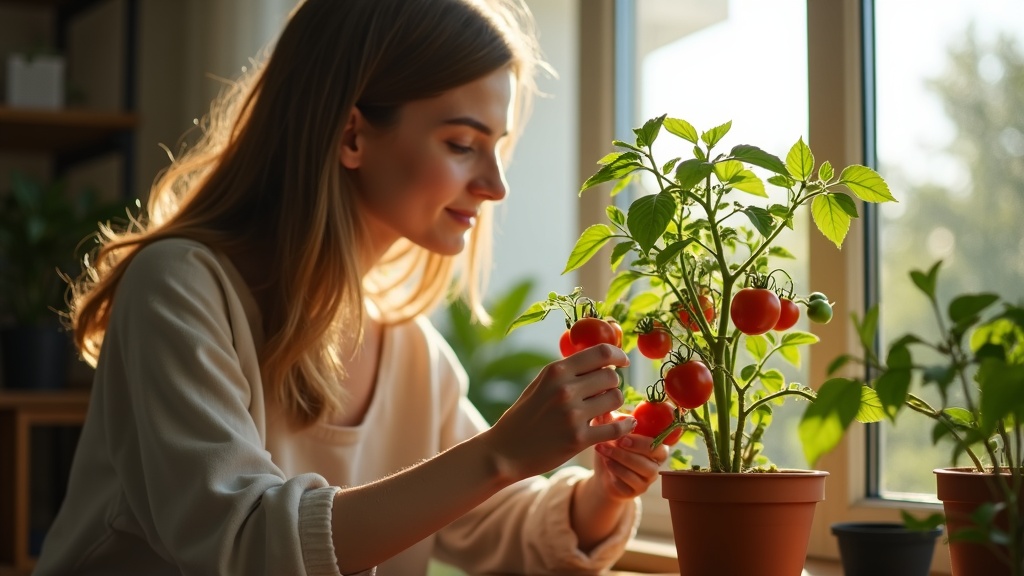
What you can realistically expect are compact plants that fit on a windowsill or shelf. You’ll get real, edible tomatoes—sometimes a handful per plant, sometimes more if conditions are good. They might be smaller varieties like cherry or grape tomatoes, but they’ll taste fresh and sweet because you grew them yourself.
The key is choosing plants that are naturally small and understanding what your space can actually support. Some tomato varieties are bred specifically for containers and limited light. They stay manageable, they don’t sprawl everywhere, and they’re perfectly happy living their entire lives in a pot on your kitchen counter.
If you’ve been told that indoor tomatoes are a fantasy, it’s time to ignore that advice. Thousands of apartment dwellers are already doing this successfully. You just need to know which myths to ignore and which techniques actually work in a small space.
What indoor tomato success looks like in an apartment
If you’re picturing those sprawling backyard tomato plants with dozens of fruit hanging from every branch, it’s time to adjust that mental image. Indoor apartment tomatoes are their smaller, quieter cousins. Your plant might reach knee height instead of chest height. You might get three to five ripe tomatoes in a good week, not armfuls.
And that’s actually great news. It means success is much more achievable than you think.
A win looks like seeing the first tiny yellow flowers appear after a few weeks. It’s watching a green marble-sized fruit slowly turn orange or red on your windowsill. It’s picking a handful of cherry tomatoes every week or two once the plant gets going. These aren’t commercial farm results, but they’re real homegrown tomatoes that you grew yourself in a rental apartment.
Your plant will also grow more slowly than outdoor ones. That’s normal. The main limiting factors indoors are light, space, and airflow. Even a sunny window gives less light than direct sunshine outside. Your pot can only be so big before it becomes impractical. And indoor air sits still compared to the breeze a garden plant gets.
These limits mean your tomato plant will be compact, your harvest will trickle in gradually, and the whole process takes patience. But here’s what matters: it absolutely works. People grow tomatoes in apartments all the time, and with reasonable expectations, you’ll find it surprisingly rewarding. You’re not trying to feed your whole building. You’re trying to grow something real and tasty in the space you have.
Pick tomato types that actually fit indoors
The biggest mistake people make with apartment garden tomatoes is choosing a variety that belongs in a backyard, not a living room. Most tomato plants sold at garden centers are bred to sprawl six feet tall or more. They need stakes, cages, and serious square footage. Indoors, they’ll hit your ceiling and still refuse to make fruit.
You need compact tomato plants instead. Look for words like “dwarf,” “micro-dwarf,” “patio,” or “determinate” on the seed packet or plant tag. These aren’t watered-down versions of regular tomatoes. They’re just bred to stay small and actually produce fruit in tight spaces.
Determinate tomatoes grow to a set height, then stop and focus on making fruit. Think of them like a bush. They’re much easier to manage indoors than indeterminate types, which keep growing taller as long as they’re alive, like a vine that never got the memo to quit.
Micro-dwarf varieties are the real superstars for container gardening indoors. They max out around eight to twelve inches tall. You can grow them in a pot on a sunny windowsill without any staking at all. The tomatoes are small, usually cherry-sized, but they’re real tomatoes and they actually ripen.
When you’re shopping, labels that say “patio tomato” or “balcony tomato” usually mean the plant will stay under three feet. That’s manageable in most apartments if you have a bright spot and a decent-sized pot. Avoid anything labeled “beefsteak” or “heirloom” unless it specifically says dwarf. Those are almost always too big for indoor fruiting vegetables.
Solve the light problem without a balcony
Light is the real dealbreaker for growing tomatoes indoors. These plants evolved in sunny climates, and they need serious brightness to make fruit. If you stick a tomato in a corner across the room from a window, it will survive for a while, but it won’t give you tomatoes.
Start by finding your brightest window. South-facing windows get the most light in the northern hemisphere, followed by west and east. North windows are usually too dim. Stand at the window around midday and see if direct sunlight actually hits the glass and comes inside. You want at least six hours of that direct light, though eight is better.
Distance matters more than most people realize. A tomato sitting right against the glass gets dramatically more light than one three feet back into the room. If you can, keep your plant within a foot of the window.
Your plant will tell you if it’s not getting enough light. Stems grow long and thin, stretching desperately toward the window. Leaves turn pale yellow-green instead of deep green. Flowers form but drop off before making fruit. If you see these signs, you need more light.
Rotating your plant every few days helps it grow evenly instead of leaning hard toward the glass. Just turn the pot a quarter turn each time you water.
If your windows just aren’t bright enough, a simple grow light fixes the problem. Look for an LED panel or bulb labeled for plants. You don’t need anything fancy or expensive. Set it on a timer for 14 to 16 hours a day, positioned about six inches above the plant. Most plug into a regular outlet and sit on a small stand or clip onto a shelf.
Use containers and potting mix that make indoor watering easier
The biggest reason people hesitate to grow tomatoes indoors isn’t light or space. It’s the fear of making a mess. Water pooling on the floor, soggy carpets, or a plant that suddenly wilts because the soil dried out overnight. The good news is that most of these problems come from using the wrong container or the wrong growing medium, not from any flaw in your gardening skills.
Start with a pot that has drainage holes at the bottom. This sounds obvious, but decorative containers often don’t have them. Without drainage, water sits at the bottom and the roots essentially drown. Pair every pot with a saucer or tray that catches runoff. You want something with a lip high enough to hold water without spilling onto your floor.
Size matters more than you’d think. A compact tomato variety still needs a container that holds at least two gallons of soil. Smaller pots dry out fast and force you to water constantly. Bigger pots give the roots room to spread and hold moisture more evenly, which means less stress for both you and the plant.
Skip garden soil entirely. It’s too heavy for containers and often stays waterlogged indoors where there’s no sun or wind to dry it out. Use a bagged potting mix instead. These mixes are lighter and designed to hold moisture while still letting air reach the roots. Look for one labeled for vegetables or containers.
If you’re worried about spills or stains, put a waterproof mat under your setup. An old baking sheet works just as well as anything marketed for plants. And if you travel often or forget to water, consider a self-watering container. These have a reservoir at the bottom that lets the plant drink as needed without you hovering over it daily.
Support the plant without turning your living room into a jungle
Here’s something that surprises most first-time indoor tomato growers: even those cute little compact varieties need help standing up once they start producing fruit. A tomato the size of a cherry might not sound heavy, but ten of them on thin branches? Your plant will start flopping over.
The good news is you don’t need the giant metal cages your neighbor uses in their backyard garden. A simple bamboo stake about two feet tall works perfectly for most compact varieties. Just push it gently into the soil near the stem and loosely tie the main stem to it with soft twine or even strips of old t-shirt. The goal is to give the plant something to lean on, not to lock it in place.
If you want something sturdier, look for small tomato cages designed for containers. They’re usually about half the height of outdoor versions and fit nicely around a plant without dominating your counter or windowsill. Some even come with feet that rest on the pot rim instead of going into the soil.
Stability matters more indoors than you might think. A top-heavy plant can tip its whole pot over, especially when you’re watering. Choose a pot with a wide base, or if you’re using something tall and narrow, add a few clean rocks to the bottom for weight before you fill it with soil.
One more trick that keeps things manageable: pinch off the little shoots that sprout where branches meet the main stem. These are called suckers, and removing them when they’re tiny keeps your plant from turning into a bushy mess. You’re not hurting the plant, just helping it focus its energy on the fruit instead of extra leaves.
Help flowers turn into tomatoes indoors
Outdoor tomato plants get a lot of help from nature. Wind shakes the flowers. Bees bump into them. Even a light breeze creates enough vibration to move pollen around inside each bloom. That movement is what turns flowers into tiny green tomatoes.
Inside your apartment, none of that happens. The air is still. There are no bees. Your tomato plant can make perfect flowers, but without that little shake, many of them just dry up and fall off instead of forming fruit.
The fix is surprisingly easy. Once you see yellow flowers open up, give the plant a gentle shake every day or two. You can tap the stem right behind each flower cluster with your finger. Some people use a clean electric toothbrush turned on and held near the blooms for a few seconds. The vibration does the same job wind would do outside.
You can also set up a small fan to create gentle airflow across your plants. This helps with pollination and keeps the air from getting stagnant, which tomatoes don’t love. Just aim for a light breeze, not a windstorm.
Sometimes flowers drop even after you’ve helped with pollination. The usual reasons are things the plant is stressed about. Big swings in temperature between day and night can cause it. So can inconsistent watering, where the soil goes from bone dry to soaking wet. And if your plant isn’t getting enough light, it might decide it doesn’t have the energy to make fruit and drop the flowers instead. Keep conditions steady, and you’ll see more flowers turn into actual tomatoes.
Keep watering and feeding consistent in a rental-friendly way
Container tomatoes don’t ask for much, but they do need steady care. The biggest mistake people make is watering in extremes—letting the soil go bone-dry for days, then flooding it until water pours out the bottom. This stresses the plant and often leads to cracked fruit or tomatoes that taste watery and bland.
Think of consistent moisture as keeping the soil lightly damp, like a wrung-out sponge. Not soggy, not dusty. The simplest way to check is to stick your finger into the top inch of soil. If it feels dry, it’s time to water. If it still feels cool and slightly moist, wait another day.
You can also lift the pot. A dry container feels surprisingly light. Once you’ve watered a few times, you’ll recognize the difference in weight without thinking about it. If leaves start to droop slightly in the afternoon, that’s usually thirst. But if they look droopy and the soil is still wet, you might be overdoing it.
Feeding is just as important, but indoors you want to go lighter than the fertilizer bottle suggests. Tomatoes in pots can’t flush out excess nutrients the way garden soil does, so too much fertilizer can build up and actually hurt the plant. Use a basic tomato or vegetable fertilizer, and apply it at half strength every week or two once flowers appear.
You’re aiming for steady, gentle nourishment. Think of it like eating regular meals instead of bingeing once a week. Your plant will reward consistency with stronger growth and better-tasting fruit, all without any fancy equipment or strict schedules.
Manage heat, airflow, and indoor messes before they become problems
Tomatoes don’t love the same conditions you do. That cozy spot near the radiator that feels perfect in winter? Too hot and too dry for a plant trying to set fruit. Indoor air that sits still for days can create problems with fungal issues and weak stems that never quite toughen up.
Keep your tomato plants at least three feet away from heating vents and radiators. Room temperature is fine, but direct heat will dry them out fast and stress the flowers. If you notice leaves curling or browning at the edges, heat stress is often the culprit.
A small clip-on fan makes a bigger difference than you’d expect. Run it on low for a few hours each day, aimed so it gently rustles the leaves without blasting them. This strengthens stems, discourages mold, and mimics the natural outdoor breeze tomatoes evolved with. You don’t need anything fancy or loud.
If you can crack a window occasionally without freezing yourself out, do it. Fresh air helps, especially in bathrooms or kitchens where humidity swings wildly.
Now for the mess control. Tomato plants drop leaves as they grow, and those leaves get everywhere. Sweep or vacuum around your plants weekly so you’re not tracking soil bits through the apartment. Use saucers under every pot, and check them after each watering. Overflow stains windowsills and hardwood fast.
If you’re growing on a windowsill or shelf you care about, put down a waterproof mat or an old towel. A little protection now beats explaining water damage to your landlord later. Keep a small rag nearby to wipe up spills immediately, and your indoor garden stays as tidy as the rest of your space.