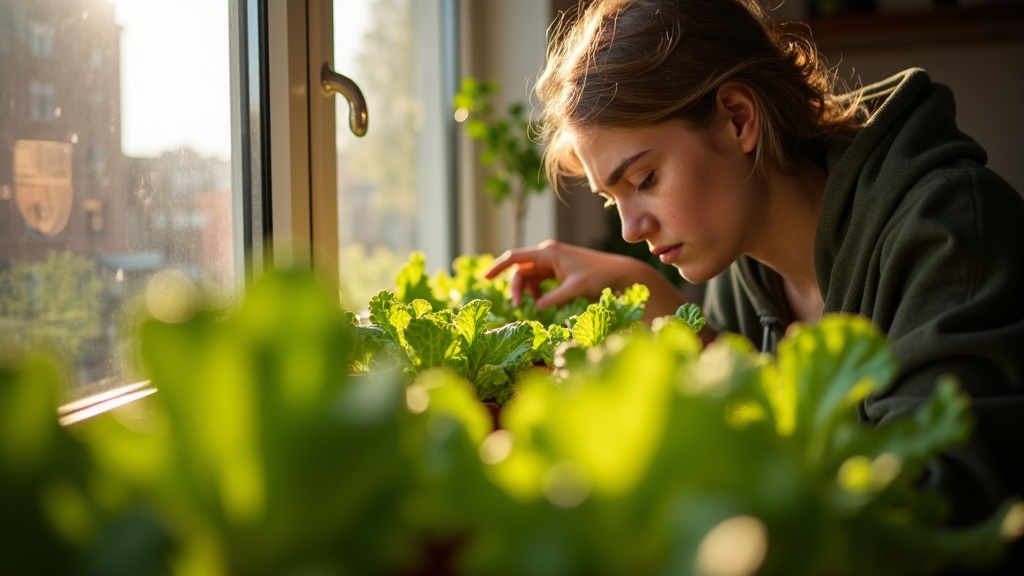
If you live in an apartment without a balcony or yard, you might think fresh greens are off the table. But here’s the good news: lettuce is one of the easiest vegetables to grow indoors, and all you really need is a sunny windowsill.
Unlike tomatoes or peppers, lettuce doesn’t ask for much. It grows quickly, stays compact, and thrives in the kind of bright light that pours through a south-facing window. You don’t need fancy grow lights or a dedicated setup. Just a pot, some soil, and a spot where the sun hangs out for most of the day.
Now, let’s be honest about what indoor lettuce looks like. You’re not going to harvest giant heads like the ones at the grocery store. What you will get are tender, flavorful leaves you can snip as you need them. Think of it as a living salad bar on your windowsill. A handful here, a few leaves there, all fresher than anything you’d buy in a plastic clamshell.
The whole process takes about four to six weeks from seed to first harvest, and you can keep cutting leaves for weeks after that. It’s low-pressure, forgiving, and honestly kind of satisfying to watch something green grow in the middle of winter or in a city where dirt is hard to come by.
If you’ve been curious about growing your own food but felt stuck by space or experience, lettuce is a great place to start. Let’s walk through exactly how to make it happen.
Choose the best windowsill for lettuce
Lettuce needs more light than you probably think. It won’t survive in that corner spot where you can comfortably read a book. It needs actual direct sunlight hitting the leaves for at least four to six hours each day. Bright indirect light, the kind that makes a room feel airy and pleasant, isn’t enough.
Here’s how to tell the difference. Direct sun means you can see the sun’s rays landing on the windowsill itself. You’ll feel warmth on your hand if you hold it there. Bright shade means the room feels well-lit, but the sun never actually shines through that window. Lettuce in bright shade will struggle and eventually give up.
South-facing windows work best in most apartments because they get the longest stretch of direct sun throughout the day. East or west windows can work too, but you’ll get fewer hours of strong light. North-facing windows rarely provide enough direct sun for healthy lettuce, though this changes depending on where you live and what season it is.
Watch your lettuce closely during the first two weeks. If the stems start stretching tall and thin, reaching desperately toward the window, that’s called leggy growth. It means the plant isn’t getting enough light. The leaves will also grow slowly and look pale or weak.
If your best window is just barely bright enough, you can help your lettuce along. Move the pots to follow the sun as it shifts across the sill during the day. Rotate each pot a quarter turn every few days so all sides get equal light. These small adjustments can make a real difference when you’re working with limited sun.
Use a container and soil that make watering easier
The right container makes all the difference when you grow lettuce indoors. You need drainage holes at the bottom. Without them, water sits at the roots and things get soggy fast. Soggy roots attract fungus gnats, those tiny flies that hover around your plants and drive you crazy.
Put a saucer or shallow tray under your pot to catch drips. This keeps your windowsill dry and saves you from worrying about water damage. Just remember to empty the saucer after watering so your lettuce isn’t sitting in a puddle.
For size, lettuce has fairly shallow roots. A container about six inches deep works well. If you have limited windowsill space, one long planter box beats three or four small pots. You can fit several lettuce plants in a single rectangle, and you only have one container to water and move around. It also looks tidier.
Skip regular garden soil for indoor pots. It’s too heavy and compact, which means it holds water too long in a container. You want potting mix instead. This is the fluffy, lightweight stuff sold in bags at garden centers. It drains well and lets air reach the roots.
Here’s a neat trick to cut down on mess. Add a thin layer of sand or fine gravel on top of your potting mix. This keeps the surface from getting muddy when you water, and it discourages fungus gnats from laying eggs. Or you can water from the bottom by pouring water into the saucer and letting the soil soak it up. The surface stays dry, and you avoid splashing dirt around your apartment.
Pick lettuce types that actually like indoor conditions
Not all lettuce is created equal when it comes to windowsill life. Those big, tight heads of iceberg or romaine you see at the grocery store? They’re honestly a pain to grow indoors. They need a lot of space, consistent cool temperatures, and more light than most windows can offer. Even if you get one going, it’ll probably bolt, which means it shoots up a tall stem and turns bitter before forming a proper head.
Your best friends for indoor growing are loose-leaf varieties and baby greens. These are the lettuces that don’t form tight heads at all. Instead, they grow as individual leaves from a central point, kind of like a fountain. You can start snipping leaves when they’re just a few inches tall, and the plant keeps making more. This is called cut-and-come-again harvesting, and it’s perfect for a small space because you get multiple meals from one pot.
When you’re looking at seed packets, watch for helpful phrases. Anything labeled “baby leaf” or “salad mix” is usually a good bet. “Compact” means it won’t sprawl all over your windowsill. “Slow to bolt” tells you the plant won’t rush to flower and turn bitter the first time your apartment gets warm.
Butterhead lettuces can work indoors too, especially smaller varieties. They form loose, tender heads that are much more forgiving than their tight-headed cousins. The key is choosing plants bred to stay small and productive in less-than-perfect conditions. Your windowsill isn’t a farm field, so don’t try to grow lettuce that thinks it is.
Plant seeds in a way that fits a windowsill
Lettuce seeds are tiny, so you don’t need to bury them deep. Press each seed gently into moist soil, then cover it with just a pinch of dirt. About a quarter inch is plenty. If you pile on too much, the seeds struggle to push through.
After planting, the surface needs to stay damp until you see green shoots poking up. That usually takes about a week. Use a spray bottle to mist the soil once or twice a day. A gentle spray keeps things moist without washing seeds around or creating soggy spots.
Spacing matters more than you’d think. If you want baby greens to toss in salads, you can sprinkle seeds fairly close together, maybe an inch apart. But if you’re hoping for full heads of lettuce, give each plant three to four inches of breathing room. Crowded plants compete for light and end up pale and floppy.
Even with careful spacing, you’ll probably end up with more sprouts than you need. That’s normal. Once your seedlings have a couple of leaves, thin them out by snipping extras at the soil line with scissors or gently pulling them. It feels wasteful, but the remaining plants will actually grow better.
Here’s a simple trick to avoid feast or famine. Instead of planting a whole container at once, sow just a small patch every two weeks. That way, when one batch is ready to harvest, another is just starting to grow. You’ll have fresh lettuce coming in waves instead of too much all at once, then nothing for weeks.
Water for steady growth without soggy soil
Watering lettuce indoors is a bit like Goldilocks and her porridge. Too little and your leaves wilt. Too much and the roots start to rot. You want the soil evenly moist, which means it should feel like a wrung-out sponge when you stick your finger about an inch down into the pot.
Check the soil every day by poking it with your finger. If it feels dry below the surface, it’s time to water. If it still feels cool and slightly damp, wait another day. Sunny windowsills and heated apartments dry out soil faster than you might expect, especially in winter when the radiator is running full blast.
When you do water, pour slowly until you see a little bit draining out the bottom. Then wait five or ten minutes and empty the saucer underneath. Lettuce hates sitting in standing water. If you leave it there, the roots can’t breathe and they’ll start to rot.
Try watering in the morning if you can. It gives the leaves time to dry off during the day, which helps prevent mold and pests. Some people like bottom watering, where you fill the saucer and let the soil soak it up from below. This works well if your soil has gotten really dry and water is just running straight through.
Watch your plants for clues. Wilted, droopy leaves that perk up after watering mean you waited too long. Yellowing lower leaves and soft, mushy stems usually mean too much water. Adjust your routine as the seasons change and you’ll find the rhythm that works for your particular windowsill.
Keep lettuce comfortable near the glass
Lettuce is a cool-weather lover. It feels happiest somewhere between sweater weather and light jacket weather—roughly the temperature of a comfortably cool room. When things get too warm, your lettuce starts to panic a little. It might taste bitter, or it might suddenly shoot up a tall stalk and try to make seeds. That’s called bolting, and it means your salad days are over.
Windowsills can be tricky because they swing between extremes. A sunny afternoon can turn the glass into a little oven, especially in spring or summer. If you have a radiator or heating vent nearby, that adds even more warmth. Your lettuce might look fine in the morning, then start wilting or tasting off by evening.
At night, the opposite problem shows up. Glass gets cold fast once the sun goes down, and that chill radiates right into the soil. If your lettuce sits too close to freezing glass for hours, it can slow down or even get damaged.
The easiest fix is to pull your pots back from the window during the hottest part of the day, then move them closer again when things cool off. You can also slide something insulating under the pot—a folded kitchen towel, a cork trivet, anything that creates a small buffer between the cold glass and the soil.
One more thing: stagnant air near a window can encourage mold, especially if your soil stays damp. A small fan pointed in the general direction of your plants, running on low for a few hours a day, keeps the air moving gently. You’re not trying to create a windstorm. Just a light breeze is enough.
Feed lightly if growth slows
When you first plant your lettuce, the potting mix already contains enough nutrients to keep things going for several weeks. You usually don’t need to add anything right away. Just water and watch it grow.
After a while, especially if you’ve been snipping leaves regularly, you might notice the new growth coming in pale or yellowish instead of bright green. Or the plants might seem to stall out and barely put on new leaves. That’s your signal that they’re running low on food.
The fix is simple. Grab a general-purpose liquid fertilizer, the kind sold for houseplants or vegetables. Mix it at about half the strength the bottle recommends. That means if it says one teaspoon per gallon, use half a teaspoon instead. Feed your lettuce with this diluted mix every two weeks or so.
Why go light? Lettuce doesn’t need much, and too much fertilizer actually causes problems. Overfed plants grow fast but floppy, with weak stems and watery leaves that don’t taste as good. They’re also more prone to pests and diseases. Think of it like seasoning a dish—a little goes a long way.
If your lettuce looks healthy and keeps producing nice green leaves, you don’t need to feed it at all. Only add fertilizer when the plant tells you it needs help. This isn’t a strict schedule. It’s more about paying attention and responding when growth slows or color fades.
Keep it simple, keep it mild, and your windowsill lettuce will keep producing fresh greens without any fuss.
Harvest in a way that keeps leaves coming
Your lettuce is ready for its first harvest when the leaves are about three to four inches tall. You don’t need to wait for a full head to form. In fact, picking leaves early and often is exactly what keeps your windowsill garden productive.
The easiest method is called cut-and-come-again harvesting. Use clean scissors or kitchen shears to snip off leaves about an inch above the soil line. This leaves the base and growing point intact, so new leaves can sprout from the center. You can harvest this way every week or two, depending on how fast your lettuce grows in your particular spot.
If you let your plants get bigger, switch to picking outer leaves instead. Grab a leaf near the base and gently pull it away, or use scissors to cut it off. Always leave the inner younger leaves alone. They’ll keep growing and replace what you took. Think of it like picking petals from the outside of a flower, leaving the center untouched.
Don’t get too greedy on any single harvest. Take no more than about a third of the plant at once. This gives it time to recover and keeps producing for weeks longer than if you stripped it bare.
Once you’ve gathered your leaves, give them a quick rinse under cool water to remove any dust or soil. Pat them dry with a clean towel or use a salad spinner if you have one. Store them in the fridge in a container with a paper towel to absorb moisture. They’ll stay crisp for several days, ready whenever you want fresh greens on your plate.
Fix the most common windowsill lettuce problems
If your lettuce seedlings look tall and thin with lots of space between leaves, they’re stretching toward the light. This happens when they don’t get enough brightness. Move them closer to the window or add a small grow light. Rotate your containers every day or two so all sides get equal light and the plants grow straight instead of leaning.
Bitter, unpleasant-tasting leaves usually mean your lettuce got too warm. Indoor temperatures above 75 degrees can stress the plants and change the flavor. Try moving them to a cooler spot or harvest in the morning when leaves are crispest. The outer, older leaves always taste more bitter than the young inner ones, so pick those first.
A white fuzzy layer on your soil surface is mold, and it loves damp, still air. Let the top half-inch of soil dry out between waterings. Point a small fan nearby to keep air moving gently around your plants. The mold won’t hurt your lettuce, but fixing airflow prevents it from coming back.
Tiny flying insects around your pots are probably fungus gnats. They breed in moist soil but don’t harm mature plants much. Let the soil surface dry out completely before watering again. You can also set out a small yellow sticky trap near the pots to catch the adults.
If you spot small green or white bugs clustered on leaves, those are aphids. Catch them early and they’re easy to handle. Rinse the leaves gently under the tap or wipe them off with a damp cloth. Check your plants every few days and remove any new ones you find before they multiply.





