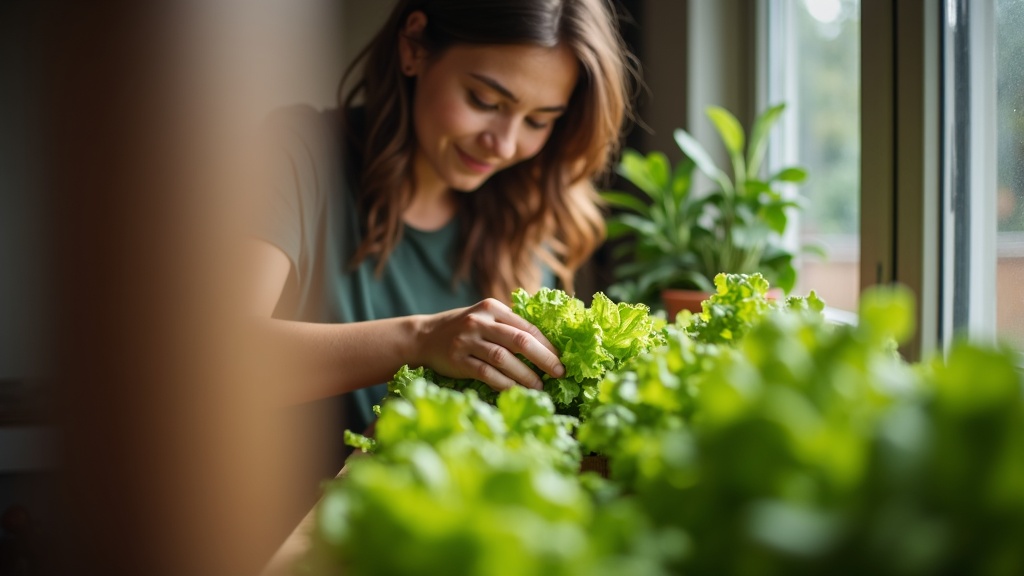
Most people treat lettuce like a one-and-done crop. You plant it, let it grow, pull up the whole plant, and start over. But here’s something that changes the game: if you cut your container lettuce the right way, it will grow back. Again and again.
This isn’t some gardening trick that only works with fancy equipment or a big outdoor space. You can do this in your apartment, on a windowsill, or under a simple grow light. The secret is all in how you harvest.
When you cut lettuce leaves instead of yanking out the whole plant, you leave the growing center intact. That center keeps producing new leaves for weeks, sometimes months. It’s like having a little salad factory that refills itself every few days.
The method is simple enough that anyone can do it, even if you’ve never grown anything before. You don’t need perfect timing or expert knowledge. Just a container, some lettuce plants, and the right cutting technique.
In small spaces, this approach makes even more sense. Instead of needing dozens of plants to keep salad greens on hand, you can work with just a few containers and harvest them in rotation. Fresh lettuce whenever you want it, without replanting constantly or running to the store.
Let’s walk through exactly how to cut your container lettuce so it keeps producing. You’ll be surprised how easy it is to keep your plants going strong.
Know when your container lettuce is ready to cut
The good news is that container lettuce doesn’t need to be fully grown before you can harvest it. You’re actually better off cutting it young and letting it regrow than waiting for those giant heads you see at the grocery store.
Look for leaves that are at least three to four inches long. That’s big enough to be worth eating and small enough that the plant still has plenty of energy to push out new growth. You should see at least five or six true leaves on the plant before you start cutting. True leaves are the ones that look like actual lettuce, not those tiny rounded starter leaves that popped up first.
Healthy container lettuce has a bright, even color and leaves that stand up on their own. If your leaves look pale or limp, give the plant a few more days and make sure it’s getting enough water. The leaves should feel crisp when you touch them, not papery or wilted.
Keep in mind that indoor lettuce grows more slowly than the outdoor kind. If you’re growing near a window or under basic indoor lighting, your lettuce might take twice as long to reach cutting size compared to what the seed packet says. That’s completely normal. Cooler indoor temperatures also slow things down, which is actually fine because lettuce prefers it on the cool side anyway.
Don’t stress about perfect timing. Once your leaves hit that three to four inch mark and the plant looks perky and green, you’re in the harvest window. Waiting an extra few days won’t hurt anything, as long as the leaves aren’t starting to taste bitter or the plant isn’t trying to send up a tall flowering stalk.
Pick a harvest method that matches how you want it to regrow
There are two simple ways to harvest lettuce from containers so it keeps producing. The method you pick depends mostly on how much space your plant has and how patient you want to be between harvests.
The first approach is leaf-by-leaf harvesting. You pluck individual outer leaves from the plant, leaving the smaller inner leaves and the center crown untouched. The plant keeps growing new leaves from that center, so you get a steady trickle of greens over several weeks. This works beautifully indoors with loose-leaf varieties like buttercrunch or oak leaf lettuce. Just grab a few leaves when you need them for a sandwich or salad.
The second method is cut-and-come-again. You take scissors or a sharp knife and trim the entire plant about an inch above the soil line. What’s left is a stubby base with the growing point still intact. Within a week or two, new leaves sprout from that base. You can usually get two or three full cuts from a healthy plant before it starts to slow down or taste bitter. This approach gives you more lettuce at once, which is handy if you’re making salads for the whole household.
Indoors, leaf-by-leaf tends to stretch your harvest longer because the plant isn’t recovering from a big trim. But cut-and-come-again is faster and tidier if your container has multiple plants growing close together. Either way, your lettuce will keep producing as long as it gets enough light and doesn’t get too warm or stressed. Pick whichever rhythm fits how you cook and eat.
Cut the leaves without damaging the growth point
The biggest mistake people make when harvesting lettuce is cutting too low and accidentally damaging the crown. The crown is the pale, tightly packed center where all the new leaves emerge. If you cut into it or crush it, your lettuce stops growing. That’s it. Game over.
Think of the crown as the engine that keeps producing leaves. It sits right at the base of the plant where all the leaves connect together. Your job is to take the outer leaves while leaving that center untouched.
For a trim harvest where you’re just cutting the tops, keep your scissors or knife at least two inches above the soil line. You want to snip through the leafy part, not get anywhere near the pale stem area at the bottom. Make one clean cut straight across. Don’t saw back and forth, which tears the tissue and invites rot.
If you’re removing whole outer leaves instead, grip each leaf near its base and cut it off cleanly where it meets the crown. Don’t yank or twist. A sharp pair of small scissors works better than a knife for this because you can see exactly where you’re cutting.
In tight containers where your hands barely fit, kitchen scissors with pointed tips are your best friend. Angle them down along the side of the pot so you can reach the base of outer leaves without smashing everything else. If your scissors are too big, try nail scissors. Seriously. They’re the perfect size for navigating crowded lettuce without accidentally beheading the whole plant.
The key is always the same: cut clean, cut high enough, and leave that center alone. Everything else will sort itself out.
Adjust your harvest for small pots and limited soil
Container lettuce has a smaller root system and less soil to pull nutrients from than plants growing in the ground. That means it can’t bounce back as quickly when you cut too many leaves at once. Think of it like asking someone to sprint after they’ve skipped breakfast—they just don’t have the fuel reserves.
A good rule of thumb is to leave at least half the plant intact every time you harvest. If your lettuce has eight decent-sized outer leaves, take three or four and leave the rest. The leaves you leave behind act like solar panels, capturing energy so the plant can grow new ones. Cut away too much and the plant stalls out, sometimes for a week or more.
If you have several lettuce plants in separate pots, rotate your harvesting between them instead of stripping one bare. Harvest from plant A on Monday, plant B on Thursday, and by the time you circle back to plant A the following week, it’s recovered. You can use the same approach with a single large pot by harvesting leaves from one side at a time.
Watch for warning signs that you’ve taken too much. Leaves that droop within a day or two of cutting usually mean the plant is struggling to keep up. Slow regrowth—like waiting ten days and seeing only tiny new sprouts—tells the same story. If the new leaves coming in look pale or yellowish instead of vibrant green, the plant is running low on resources and needs more time between harvests.
When in doubt, harvest less and wait longer. Your lettuce will reward patience with steady, reliable growth instead of fizzling out after one or two cuttings.
Do a few small things right after harvesting to speed regrowth indoors
Right after you cut your lettuce, take a minute to tidy up the plant. Pull off any leaves that look damaged, brown, or slimy. These won’t recover, and leaving them on can attract mold or pests in the humid air of most indoor spaces. A quick cleanup helps the plant focus its energy on the healthy leaves that are left.
Next, check the soil moisture. Cutting leaves is stressful for the plant, and it needs steady water to bounce back. The soil should feel like a wrung-out sponge—damp all the way through, but not sitting in a puddle. If the top inch feels dry, water gently until you see a little drip from the drainage holes. Don’t flood it. Soggy roots can rot, especially indoors where air circulation is weaker than outside.
Keep your container in the same spot it was before harvest. Moving it to a darker corner or suddenly blasting it with stronger light can slow regrowth. Plants do best when their routine stays consistent. If it was happy in that spot before you cut it, leave it there.
When everything stays calm and steady, most lettuce varieties will start pushing out new leaves within a week or two. The exact timing depends on the type of lettuce, how much light it gets, and how warm your space is. But the pattern holds: less stress after harvest means faster regrowth. Think of it like giving the plant a smooth runway instead of asking it to climb a hill right after a haircut.