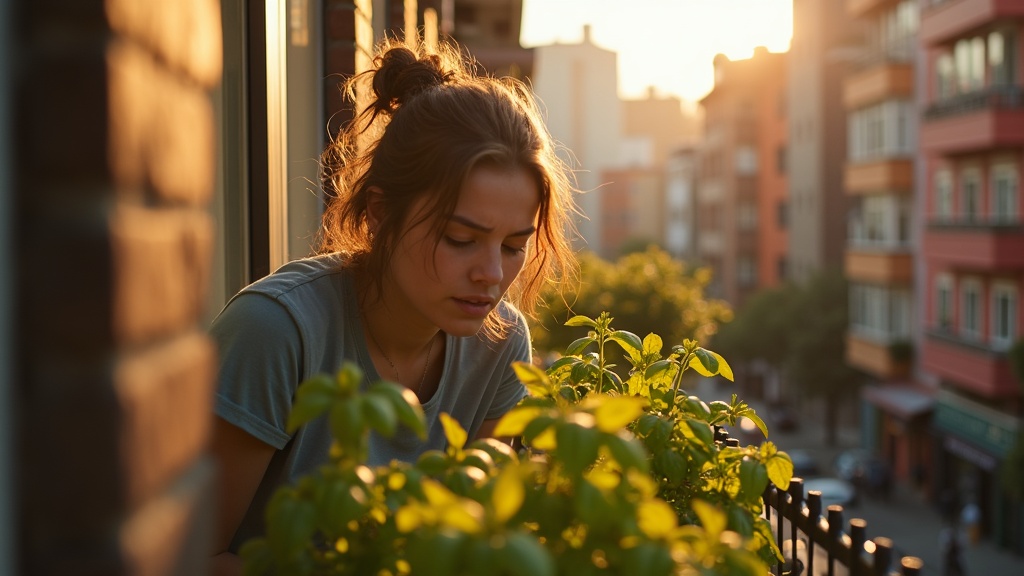
You brought home a beautiful green basil plant, set it on your balcony, and checked on it every day with hope. Then one morning you noticed it. A few leaves had gone pale. By the end of the week, they were unmistakably yellow.
If this sounds familiar, you’re not alone. Balcony basil has a habit of throwing tantrums, and yellow leaves are usually the first sign something’s off. The tricky part is that yellowing can mean a dozen different things, from too much sun to not enough water to a pot that’s just too small.
Here’s the good news. Balconies create very specific conditions that narrow down the list of suspects fast. Your basil isn’t living in a garden bed with steady soil and shade from nearby plants. It’s in a container, exposed to wind, trapped between a hot wall and open air, maybe getting blasted by afternoon sun or stuck in a shady corner.
These quirks make balcony basil more sensitive than you’d expect, but they also make troubleshooting easier. Once you understand how your particular balcony affects your plant, fixing the problem becomes straightforward. You don’t need to be a gardening expert or memorize a textbook. You just need to look at a few key things that almost always explain what’s going wrong.
Let’s walk through the most common reasons balcony basil leaves turn yellow, so you can figure out what’s happening with yours and get those leaves green again.
First, notice what kind of yellowing you’re seeing
Before you do anything else, take a close look at your basil. The pattern of yellowing tells you a lot about what’s going wrong.
Start at the bottom of the plant. Are the lowest, oldest leaves turning yellow while the newer growth at the top stays green? That’s one pattern. Or is it the opposite, with the newest leaves at the tips coming in pale or yellow while the older ones look fine? These two patterns point to completely different problems.
Now look at the yellow leaves themselves. Is the whole leaf an even yellow color? Or is it yellow between the veins while the veins themselves stay green, like a road map? That difference matters too.
Check the edges and texture. Some yellowing comes with brown, crispy edges that crumble when you touch them. Other times the yellow leaves feel soft and droopy, maybe even a bit wet or mushy at the base. Pay attention to how the leaf feels, not just how it looks.
Think about how fast this is happening. Did you notice a few yellow leaves last week and now half the plant is affected? Or has it been a slow creep over the past month?
Finally, walk around your balcony and look at all sides of the plant. Is the yellowing worse on the side that faces the sun all afternoon? Or on the side that gets hit by wind? Sometimes the problem isn’t evenly distributed, and that location clue is the most helpful thing you’ll notice.
These observations take less than a minute, but they’ll point you toward the real cause much faster than guessing.
Balcony pots swing between too wet and too dry
Most balcony basil doesn’t die from one big mistake. It suffers from whiplash. Your pot bakes in afternoon sun, dries out completely, then gets drenched during watering or a rainstorm. The roots can’t keep up with the back-and-forth, and the leaves start turning yellow as a distress signal.
When soil stays too wet for too long, basil roots essentially drown. They need air pockets in the soil to breathe. Trapped water fills those spaces, and the roots start to rot. You’ll notice the yellowing starts at the bottom of the plant, often with soft or mushy stems near the soil line. Growth slows down or stops completely.
On the flip side, when your pot dries out hard, the roots can’t pull up enough water even if you drench it later. The damage is already done. Yellow leaves might also look wilted or develop brown, crispy edges. This happens fast on balconies where hot containers and constant wind act like a hairdryer on your soil.
The trap many people fall into is the saucer underneath the pot. It’s meant to catch extra water, but on a balcony it often becomes a little swamp, especially after rain. The bottom of your pot sits in that puddle, keeping the lowest roots soggy even when the top inch of soil feels dry.
Evenly moist soil should feel like a wrung-out sponge when you stick your finger in about an inch deep. Not dripping, not dusty. For most balcony pots in warm weather, that means checking every day or two and watering when the top starts to dry. Skip the rigid schedule. Let the soil tell you what it needs.
Shifting sun and shade can wash basil out
Balconies play tricks with sunlight that gardens never do. Your railing casts moving shadows. The building across the street blocks morning sun but not afternoon sun. Glass doors filter light even when it looks bright. All of this means your basil might be sitting in what looks like a sunny spot but is actually getting far less direct light than it needs.
Basil wants around six hours of direct sunlight each day. Not just brightness. Not just daylight. Actual sun hitting the leaves. When it doesn’t get enough, the plant starts to look pale and washed out. The leaves might turn light green first, then yellow, especially the lower ones. The whole plant looks tired and stretched.
Here’s the tricky part: you need to measure sun where the pot actually sits, not where you stand. Crouch down to plant level. Watch for a full day if you can. That sunny balcony might only give your basil two hours of real sun because the railing blocks the rest.
But too much sun all at once causes problems too. If you move your basil from a shaded spot into full blast sunshine, or if the seasonal angle changes and suddenly your plant is getting roasted all afternoon, the leaves can yellow or develop brown scorched patches. It’s basically sunburn. The plant was adapted to less light, and the sudden change stresses it out.
The fix is gradual adjustment. If your basil isn’t getting enough light, move it slowly over a week or two. If it’s getting scorched by new sun exposure, give it some shade during the hottest part of the day until it toughens up.
Wind and heat create a mini desert on upper floors
If your balcony sits on the fifth floor or higher, you’re dealing with conditions that would make any basil plant nervous. Up there, wind doesn’t just breeze past. It flows constantly, pulling moisture out of leaves faster than the roots can replace it. Think of it like standing in front of a fan after getting out of the pool. Your skin dries quickly, right? Basil leaves do the same thing.
That steady airflow is especially rough on the side of the plant facing the wind. You might notice yellowing shows up more on one side than the other, or leaves on the exposed edge start to look pale and tired. Some might even curl slightly at the edges, like they’re trying to protect themselves.
Now add heat into the mix. Your balcony isn’t just catching direct sun. Concrete walls soak up warmth all day and radiate it back at your plants well into the evening. Brick does the same. Metal railings can get hot enough to make the air around them shimmer. If there’s a window nearby reflecting afternoon sun onto your basil, that’s like adding a second sun to the equation.
The combination turns your balcony into a mini desert. Your soil dries out way faster than you’d expect. You might water in the morning and find bone-dry soil by late afternoon. When basil can’t keep up with that kind of water loss, it starts to ration resources. Older leaves get sacrificed first, turning yellow and dropping off so the plant can focus on younger growth.
Pay attention to where the yellowing appears. If it’s concentrated on the windward side or the side getting the most reflected heat, you’ve found your culprit.
Limited soil runs out of food faster than you think
Your balcony basil lives in a much smaller world than garden plants do. A typical pot holds maybe a few liters of soil, while ground plants can send roots deep and wide to find what they need. That tiny container is basically your basil’s entire pantry, and it empties faster than most people realize.
Basil grows quickly when it’s happy. All those fresh leaves you’ve been picking require a steady supply of nutrients to keep coming. Meanwhile, every time you water your pot, some of those nutrients wash right out through the drainage holes. It’s a bit like running the tap while trying to fill a bucket with a hole in the bottom.
After a few weeks of this cycle, the potting mix starts running low on the good stuff. You’ll notice the plant looks generally paler, not just at the bottom but overall. New leaves might come in smaller than before. Growth slows down even though everything else seems fine. These signs suggest your basil is simply running out of food, which is different from the sudden yellowing you’d see from overwatering or the scorched tips from too much sun.
There’s another quirk with container soil. Over time, potting mix can get compacted and tired. It starts holding water in weird ways, either staying soggy too long or repelling water entirely. When that happens, roots struggle even if nutrients are technically present. The whole system gets out of balance, and yellow leaves often follow.
The good news is nutrient depletion is one of the easier problems to fix once you know it’s happening.
A too-small pot can trigger yellow leaves even with good care
Your basil might be stuck in a container that looked fine when you planted it but has become a prison for its roots. When roots run out of room, they start circling around the inside of the pot like a hamster on a wheel. This cramped situation creates a chain reaction that often shows up as yellowing leaves.
Here’s what happens underground. A root-bound plant can’t hold onto water properly anymore. The soil dries out fast because there’s more root than dirt in there. When you water, it runs straight through and out the drainage holes instead of soaking in. You might find yourself watering more and more often, sometimes daily, and the plant still looks thirsty and pale.
The nutrition problem kicks in too. Even if you’re feeding your basil, there’s simply not enough soil left to hold nutrients. The roots have filled every available space. What little soil remains gets depleted quickly, and those yellow leaves are your plant waving a flag for help.
Check for the telltale signs. Lift your basil gently and peek at the drainage holes at the bottom. See roots poking through or coiled around down there? That’s your answer. If the plant has stopped putting out new growth even though it’s the growing season, or if it needs water twice as often as it did a month ago, the pot is probably too small.
This issue is especially common with those cute decorative pots that look perfect on a balcony railing. They’re often shallow or narrow, prioritizing style over root space. Sometimes they don’t even have proper drainage, which makes the whole situation worse.
When yellowing comes with spots, fuzz, or sticky leaves
Sometimes yellow leaves come with uninvited guests. If you notice fine webbing between stems or tiny speckles on the leaves, you might be dealing with spider mites. These microscopic pests love hot, dry balconies with still air. The webbing looks almost like dust caught between branches, and the leaves develop a stippled, faded appearance before turning yellow.
Aphids are easier to spot. Look for tiny green, black, or white insects clustering around new growth at the top of your plant. They leave behind a sticky residue that can coat lower leaves, and those leaves often turn yellow and curl. You might notice ants farming them for that sticky stuff, which is a weird but telltale sign.
Balconies create strange microclimates. A corner that gets no breeze but stays damp from your neighbor’s dripping air conditioner becomes a perfect setup for powdery mildew. This shows up as white or grayish patches on leaves, usually starting on the undersides. Affected leaves often turn yellow around the infected areas and eventually brown.
The problem with balconies is they can be both too windy and not windy enough, sometimes in the same space. A sheltered corner traps humidity and invites fungal problems. An exposed edge dries out plants and stresses them, making them vulnerable to pests. Your basil is dealing with conditions that shift dramatically over just a few feet.
The good news is that all of these issues are visible without special tools. Walk around your plant from different angles. Lift a few leaves and look underneath. If something looks fuzzy, sticky, or has unexpected texture, that’s your clue.
Small balcony habits that quietly cause yellow leaves
Sometimes the problem isn’t what you’re doing wrong. It’s what you’re doing without noticing.
That saucer under your pot might be the culprit. After a rain shower, it fills with water and sits there for days. Your basil roots are soaking in it, slowly suffocating. The plant can’t tell you it’s drowning, so it just turns yellow from the bottom up.
Watering time matters more than you’d think. If you water in the evening during a cool week, the soil stays damp all night. Basil hates cold, wet feet. Morning watering gives the sun a chance to dry things out before temperatures drop.
Balconies near doors get blasted with cold air every time someone goes in or out. Your basil might look fine in the afternoon sun, but those brief chills add up. The plant responds by yellowing older leaves first, trying to conserve energy.
Weather swings hit balconies hard. A sunny week followed by three grey, cool days can shock your basil. It’s not sick, just stressed and confused.
When basil starts flowering, it shifts gears. Energy goes to making seeds instead of keeping leaves green. A few flowers won’t ruin everything, but if you let it bloom freely, lower leaves often yellow and thin out.
Here’s the tricky part: if you harvest a lot of lower leaves for pesto, the remaining yellowing leaves suddenly look more obvious. It’s not necessarily a new problem. You just removed the healthy greenery that was hiding normal leaf turnover. Basil naturally drops its oldest leaves eventually. One or two yellow leaves near the bottom, when everything else looks healthy, is just the plant being a plant.





