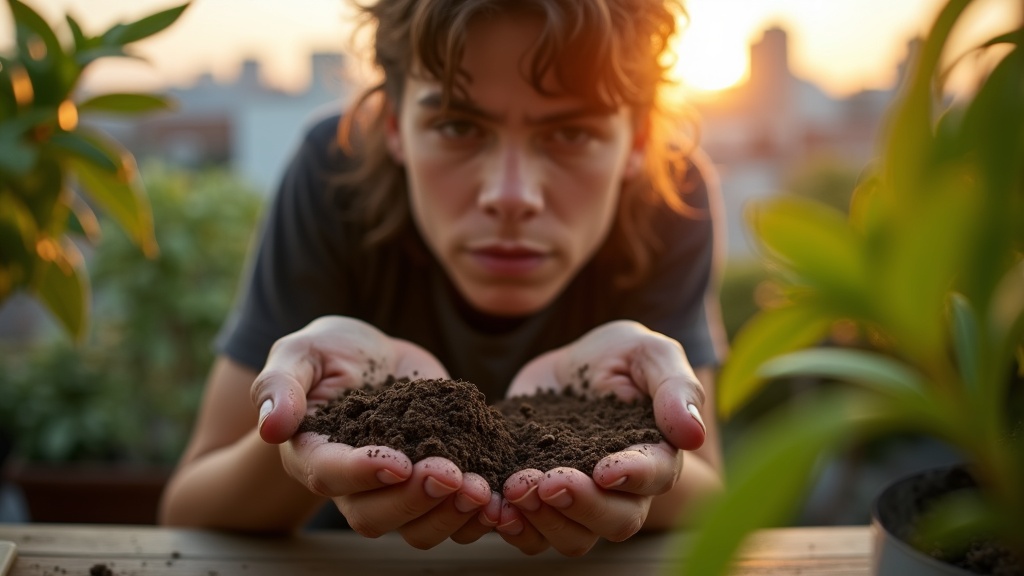
If you’ve ever tried filling balcony pots with soil from a garden center bag labeled “garden soil” or “topsoil,” you probably noticed something went wrong. The soil turned rock-hard after a few waterings, or it stayed soggy for days, or your plants just looked sad despite your best efforts.
Here’s the thing most gardening guides won’t tell you: balcony gardening soil needs to work completely differently than ground soil. When you garden in containers several floors up, you’re dealing with a unique set of challenges that regular dirt simply can’t handle.
Weight matters more than you’d think. A large planter filled with heavy soil can add hundreds of pounds to your balcony. That’s not just hard on your back when you’re setting things up. It’s a real structural concern for older buildings.
Then there’s drainage. Ground soil has the whole earth beneath it to drain into. Your containers have a few small holes and nowhere else for water to go. Regular soil gets waterlogged fast, and waterlogged roots rot. It’s one of the fastest ways to kill an otherwise healthy plant.
Balconies also get more extreme conditions than gardens. More wind means soil dries out faster. More direct sun means containers heat up. Less natural moisture means you’re the only water source your plants have.
The right balcony gardening soil solves all of these problems at once. It stays light, drains quickly but holds just enough moisture, and gives roots the air they need to thrive. Getting this foundation right makes everything else about container gardening so much easier.
Why balcony soil needs are different from backyard soil
When you plant something in a backyard garden, the roots can spread out. They reach down into the ground, exploring for water and nutrients. If one spot dries out, roots grow toward moisture elsewhere. The soil stays cool because it’s insulated by all that earth around it.
On a balcony, your plants live in what you might call a soil bubble. Everything they need has to fit inside a pot. The roots can’t escape to find better conditions. They’re working with whatever you give them in that limited space.
This changes how water behaves. In the ground, extra water drains away naturally into deeper layers. In a pot, water can only escape through drainage holes at the bottom. If your soil is too dense, water sits there with nowhere to go. The roots essentially drown, even though you’re trying to help them.
Here’s where many people make a costly mistake. They fill containers with dirt from their yard or buy heavy topsoil meant for gardens. This stuff acts like a brick in a pot. It compacts down, squeezing out the air pockets that roots need to breathe. Water can’t move through it properly.
What you actually want is soil that works more like a sponge. It should hold moisture when roots need a drink, but also let excess water drain away quickly. It needs to stay light and airy even after you’ve watered it dozens of times.
There’s another factor too. Pots heat up fast in direct sun. Dark containers especially can get surprisingly hot. Soil that drains well and doesn’t pack down tight will help keep roots cooler and happier through those long summer afternoons.
How to think about weight, load limits, and wet soil on a balcony
Here’s something most balcony gardening guides don’t mention upfront: soil gets shockingly heavy when it’s wet. A bag of dry potting mix might feel manageable, but fill a few large containers and give them a good watering, and you’ve added serious weight to your balcony. Rain makes it even worse. All that water sits in the soil for hours or days, and if you have five or six pots out there, the total load adds up faster than you’d think.
Most balconies can handle typical furniture and a few people without issue, but they weren’t necessarily designed for the sustained weight of multiple heavy planters sitting in the same spot year-round. If you’re unsure about your balcony’s limits, it’s worth checking your building rules or asking your property manager. They might have guidelines, or at least they can point you toward someone who knows.
The smart approach is to plan for the worst case scenario. That means thinking about your containers after a rainstorm or a deep watering session, not when everything’s bone dry. Choose a lightweight potting mix instead of dense garden soil or topsoil. Those traditional soils are far too heavy for container gardening anyway, and they don’t drain well in pots.
Also think about container size. Bigger isn’t always better. An oversized planter filled to the brim with wet soil can weigh a surprising amount, and most plants don’t actually need that much root space. Right-sizing your containers helps you avoid unnecessary weight.
One more thing: drainage water has to go somewhere. If your pots drip onto the balcony below, you might stain surfaces or annoy your neighbors. Choosing soil that drains well without turning into muddy runoff makes everyone’s life easier.
What to look for on the bag: potting mix, container soil, and what the words usually mean
When you’re standing in the garden center staring at bags of dirt, the labels can feel like a secret language. But there’s one simple rule that matters most for balconies: look for bags that say “potting mix” or “container soil.” These are designed specifically for pots. They’re not the same as “garden soil” or “topsoil,” which are meant to go in the ground and will usually turn into a dense, heavy brick in a container.
What makes potting mix different? It’s engineered to do three things at once. It needs to drain well so your plants don’t drown. It needs to stay light and airy so roots can breathe. And it needs to hold just enough moisture so you’re not watering ten times a day. Garden soil doesn’t balance these things because it doesn’t need to. In the ground, it has help from earthworms and natural drainage.
When you’re reading the bag, phrases like “for containers” or “indoor/outdoor pots” are green lights. If you see “moisture control,” that usually means the mix includes something to help retain water a bit longer, which can be handy if you travel or forget to water. Just know it won’t work miracles.
You might also see “lightweight” on some bags. This matters more than you’d think on a balcony, especially if you’re filling large pots or your balcony has weight limits. Lightweight mixes use less heavy material and more things like peat or coconut coir to keep the load down. Just remember that not all potting mixes labeled the same way will feel identical. Formulas vary, and that’s normal.
Drainage that works without creating a balcony mess
Plant roots need two things to survive: water and air. When water sits at the bottom of a pot with nowhere to go, it pushes out all the air. The roots effectively drown, then rot. That’s why drainage matters in any container, but balconies add a twist most gardening guides skip over.
On a balcony, draining water has to go somewhere. It might drip onto the neighbor’s patio furniture below. It might pool on your balcony’s waterproof surface and stain it. Or it might just sit there looking like a mess every time you water. You need soil that drains well, but you also need a plan for where that water ends up.
Good balcony gardening soil has an open, airy structure. It’s not packed tight. When you water, excess moisture flows through quickly instead of pooling around the roots. This is why lightweight potting mixes work better than dense garden soil. They’re designed to hold enough water for the plant while letting the rest escape.
Now for the setup. Every pot needs a drainage hole at the bottom. Place a saucer or drip tray underneath to catch runoff. If you want to get fancy, raise your pots slightly on pot feet or a small grid so air can circulate and water doesn’t sit directly on the balcony surface.
You might have heard that putting rocks or gravel at the bottom of pots improves drainage. It doesn’t. Water actually clings to the boundary between soil and rocks, creating a soggy layer right where roots sit. Skip the rocks. A good airy mix plus a drainage hole does the job without the extra weight or hassle.
Match the soil mix to your plants and your balcony’s conditions
There’s no single perfect balcony gardening soil because every balcony behaves differently. A windy 15th-floor balcony in full sun will dry out pots much faster than a sheltered ground-floor spot that gets afternoon shade. Small containers dry faster than large ones. And different plants have different opinions about how much moisture they want around their roots.
The trick is matching your potting mix to how quickly your balcony dries out and what you’re trying to grow.
For most balcony plants like tomatoes, herbs, peppers, and flowers, a standard container soil works well. These mixes balance drainage with moisture retention, so roots don’t sit in water but don’t dry out the moment you turn your back.
If you’re growing succulents, cacti, or lavender, or if your balcony stays damp because it’s shaded and protected, you want a faster-draining mix. Look for potting soil labeled for cacti and succulents, or just add extra perlite or coarse sand to regular container mix. This prevents roots from rotting in soil that stays wet too long.
On the flip side, if your balcony is hot, windy, or gets blasted by afternoon sun, or if you’re using small pots or hanging baskets that dry out in hours, choose a mix that holds moisture longer. Some container soils include coconut coir or extra peat to help them stay moist between waterings. You’re not trying to create a swamp, just buying yourself a bit more time before everything wilts.
Read your balcony’s behavior for a week or two. Notice how fast pots dry out. Then pick a potting mix that works with your conditions, not against them.





